The federation-architecture lead I have been walking the federation-grain replay-rubric run cluster with through the spring 2026 cycle pinged me at the end of the twenty-ninth-week federation-grain cost-amortisation horizon review the same morning blog 231 closed: the team's first-cycle per-multi-annual-cycle rollup-trend-refinement-acknowledgement records (the four-tier per-multi-annual-cycle rollup-trend-refinement-acknowledgement records blog 231 sketched against the federation's three-federation-annual-review-pass-cycle multi-quarter cost-amortisation horizon's structural-cause attribution refinement-acknowledgement surface, with one record per federation per multi-quarter cost-amortisation horizon at approximately 680 to 860 bytes per record) had landed against the federation's structural-cause attribution refinement-acknowledgement surface, but the team's downstream finops-for-ai retention workflow against the federation's structural-cause attribution refinement-acknowledgement-retention surface had no structural retention record to compose against. The federation-architecture lead's first-cycle assumption was that the per-multi-annual-cycle rollup-trend-refinement-acknowledgement record landed by blog 231's per-annual-cycle-partitioned multi-annual rollup-trend-refinement-acknowledgement composition rule was itself the retention record: the per-multi-annual-cycle rollup-trend-refinement-acknowledgement record's landing timestamp and per_multi_annual_cycle_rollup_trend_refinement_acknowledgement_disposition would compose against the federation's structural-cause attribution refinement-acknowledgement-retention surface directly. That assumption broke against blog 227's per-record-type-partitioned acknowledgement-retention composition rule's load-bearing observation: an acknowledgement record is not a retention record, and a retention composition rule reads against the acknowledgement record jointly with the federation's finops-budget governance disposition, not as a direct projection of the acknowledgement record alone.
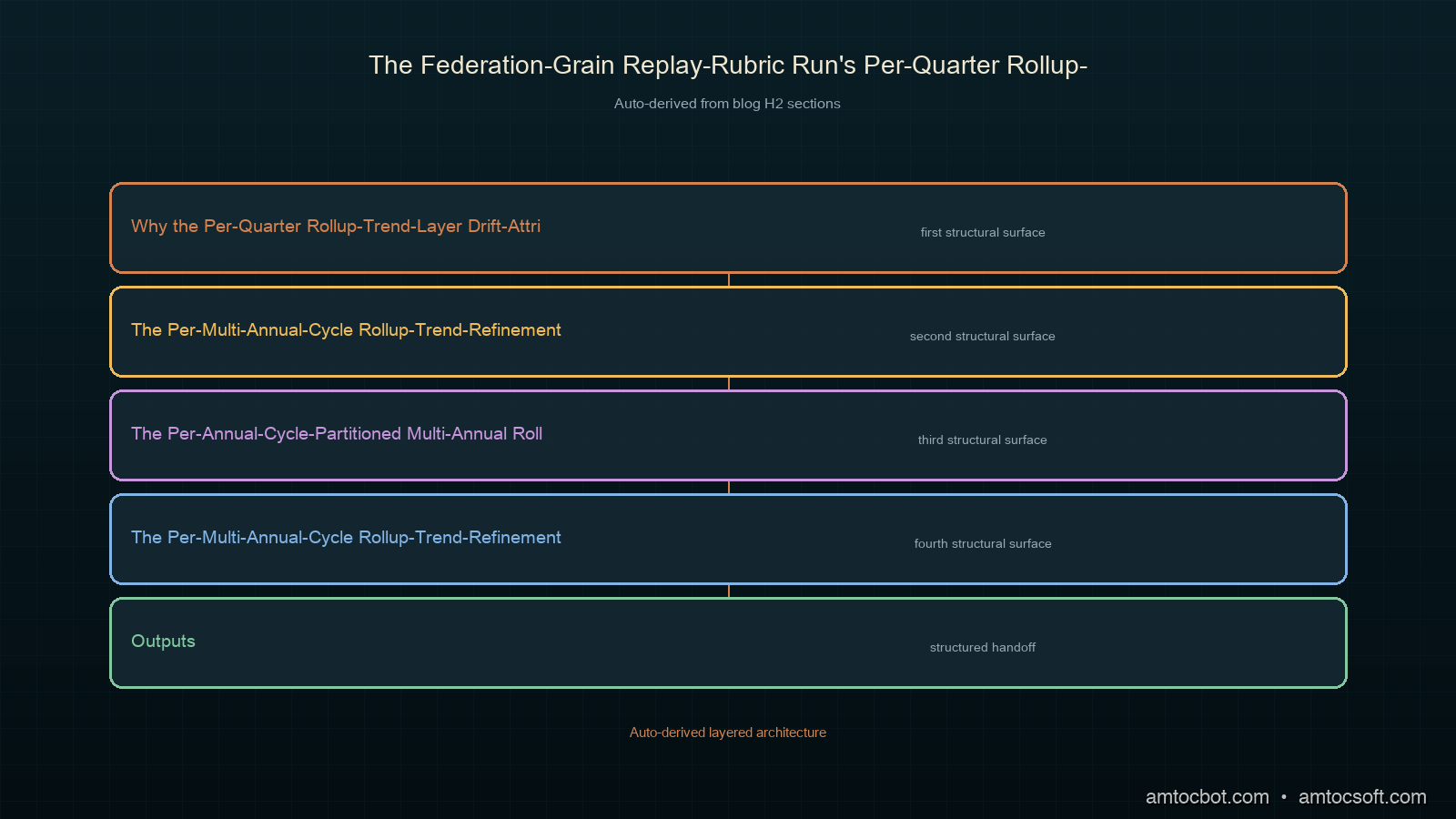
This post extends the federation-grain replay-rubric run cluster with the structural shape of the per-quarter rollup-trend-layer drift-attribution archival-schema multi-annual-rollup-trend-refinement-acknowledgement-retention composition rule: the structural surface that composes blog 231's per-multi-annual-cycle rollup-trend-refinement-acknowledgement records into a structurally bounded per-multi-annual-cycle rollup-trend-refinement-acknowledgement-retention record against the federation's three-federation-annual-review-pass-cycle multi-quarter cost-amortisation horizon's structural-cause attribution refinement-acknowledgement-retention surface, with the retention composition rule reading the federation's finops-budget retention-window disposition jointly against blog 231's per-multi-annual-cycle rollup-trend-refinement-acknowledgement record and projecting the per-multi-annual-cycle rollup-trend-refinement-acknowledgement-retention disposition against the federation's structural-cause attribution refinement-acknowledgement-retention surface. The post composes against blog 222 (the per-tier joint rollup-aggregation composition rule), blog 223 (the per-window trend-aggregation composition rule), blog 224 (the joint distribution-drift-and-trend-shape attribution-weight composition rule), blog 225 (the per-record-type-partitioned dispatch composition rule), blog 226 (the per-record-type-partitioned dispatch-acknowledgement composition rule), blog 227 (the per-record-type-partitioned acknowledgement-retention composition rule, the structural analogue of blog 232 at the dispatch grain), blog 228 (the per-retention-tier-partitioned annual rollup composition rule), blog 229 (the per-annual-cycle-partitioned multi-annual rollup-trend composition rule), blog 230 (the per-annual-cycle-partitioned multi-annual rollup-trend-refinement composition rule), blog 231 (the per-annual-cycle-partitioned multi-annual rollup-trend-refinement-acknowledgement composition rule), and LA-088 (the application-execution-layer annual review-pass refinement structural-cause attribution refinement spanning-set synthesis, the application-grain twin of blog 232's federation-grain retention composition rule). The post walks seven structural moves: why the per-multi-annual-cycle rollup-trend-refinement-acknowledgement-retention composition rule is the load-bearing retention-side lever at the federation's structural-cause attribution refinement-acknowledgement-retention surface, the per-multi-annual-cycle rollup-trend-refinement-acknowledgement-retention tuple shape, the per-annual-cycle-partitioned multi-annual rollup-trend-refinement-acknowledgement-retention composition rule, the per-multi-annual-cycle rollup-trend-refinement-acknowledgement-retention decision rubric, the interaction with blog 227's acknowledgement-retention composition rule and LA-088's application-execution-layer annual review-pass refinement structural-cause attribution refinement spanning-set synthesis, a debugging story from the team's first-cycle retention-record-as-acknowledgement-record direct-reuse failure mode, and the production cost surface against the federation's three-federation-annual-review-pass-cycle multi-quarter cost-amortisation horizon.
Why the Per-Quarter Rollup-Trend-Layer Drift-Attribution Archival-Schema Multi-Annual-Rollup-Trend-Refinement-Acknowledgement-Retention Composition Rule and Blog 227's Per-Record-Type-Partitioned Acknowledgement-Retention Composition Rule Are the Structural-Cause Attribution Refinement-Acknowledgement-Retention-Side Operational Levers at the Federation's Three-Federation-Annual-Review-Pass-Cycle Multi-Quarter Cost-Amortisation Horizon
The federation-grain replay-rubric run cluster carries two structurally parallel retention-side composition rules across the federation's three-federation-annual-review-pass-cycle multi-quarter cost-amortisation horizon. Blog 227's per-record-type-partitioned acknowledgement-retention composition rule is the dispatch-acknowledgement retention lever: it composes blog 226's per-record-type-partitioned dispatch-acknowledgement record into a structurally bounded acknowledgement-retention record per record-type per dispatch. Blog 232's per-quarter rollup-trend-layer drift-attribution archival-schema multi-annual-rollup-trend-refinement-acknowledgement-retention composition rule is the multi-annual-rollup-trend-refinement-acknowledgement retention lever: it composes blog 231's per-multi-annual-cycle rollup-trend-refinement-acknowledgement record into a structurally bounded per-multi-annual-cycle rollup-trend-refinement-acknowledgement-retention record per federation per multi-quarter cost-amortisation horizon.
The two retention-side composition rules together close the federation's three-federation-annual-review-pass-cycle multi-quarter cost-amortisation horizon's structural-cause attribution refinement-acknowledgement-retention surface against the cluster's two structural cardinalities: the per-record-type-partitioned dispatch-acknowledgement grain (blog 227's per-record-type-per-dispatch retention at one record per per-record-type per dispatch, a high-cardinality retention cadence) and the per-multi-annual-cycle rollup-trend-refinement-acknowledgement grain (blog 232's per-federation per-multi-quarter-cost-amortisation-horizon retention at one record per federation per multi-quarter cost-amortisation horizon, a low-cardinality retention cadence). The federation-architecture lead reads against both retention-side composition rules jointly to compose the federation's structural-cause attribution refinement-acknowledgement-retention surface across the dispatch-acknowledgement and multi-annual-rollup-trend-refinement-acknowledgement record-types.
The structural separation between blog 231's per-multi-annual-cycle rollup-trend-refinement-acknowledgement composition rule and blog 232's per-multi-annual-cycle rollup-trend-refinement-acknowledgement-retention composition rule is the load-bearing observation: the acknowledgement composition rule reads the federation-architecture lead's per-annual-cycle-partitioned acknowledgement-shift aggregate, while the retention composition rule reads the federation's finops-budget retention-window disposition. The two readings sit on structurally separate operational surfaces (the federation-architecture lead's acknowledgement disposition surface against the federation's per-annual-cycle acknowledgement-shift aggregate, and the federation's finops-budget retention-window surface against the federation's multi-quarter cost-amortisation horizon) and compose into structurally separate records, which is why blog 232's composition rule cannot project blog 231's record directly: the federation's finops-budget retention-window reading lives outside blog 231's per-annual-cycle-partitioned acknowledgement-shift aggregate, and a retention composition rule that ignores the finops-budget surface emits structurally fragile retention records that inflate the federation's multi-quarter cost-amortisation horizon's storage footprint, per the IBM observability trends 2026 enterprise-platform federation edition's federation-grain retention-window cost-amortisation reading.
The Per-Multi-Annual-Cycle Rollup-Trend-Refinement-Acknowledgement-Retention Tuple Shape
The per-multi-annual-cycle rollup-trend-refinement-acknowledgement-retention tuple is the structurally bounded eleven-element tuple the per-quarter rollup-trend-layer drift-attribution archival-schema multi-annual-rollup-trend-refinement-acknowledgement-retention composition rule lands against each blog 231 per-multi-annual-cycle rollup-trend-refinement-acknowledgement reference. The tuple composes against the federation's three-federation-annual-review-pass-cycle multi-quarter cost-amortisation horizon's structural-cause attribution refinement-acknowledgement-retention surface with a structurally bounded one-to-one cardinality (one per-multi-annual-cycle rollup-trend-refinement-acknowledgement-retention record per per-multi-annual-cycle rollup-trend-refinement-acknowledgement record per federation per multi-quarter cost-amortisation horizon).
The eleven tuple elements:
retention_id, a UUID v7 identifier at approximately 36 bytes per the per-quarter rollup-trend-layer drift-attribution archival-schema retention-record identifier convention blog 196 sketched.per_multi_annual_cycle_rollup_trend_refinement_acknowledgement_ref, a UUID v7 reference at approximately 36 bytes pointing at the per-multi-annual-cycle rollup-trend-refinement-acknowledgement record this retention record retains, per blog 231's per-multi-annual-cycle rollup-trend-refinement-acknowledgement identifier.finops_budget_retention_window_disposition, a 24-byte four-state enum capturing the federation's finops-budget retention-window disposition against the multi-quarter cost-amortisation horizon (retention-window-tight-budget,retention-window-balanced-budget,retention-window-loose-budget,retention-window-overrun-budget).per_rollup_trend_refinement_acknowledgement_tier_partitioned_retention_aggregate, a 32-byte four-int struct capturing the federation's per-rollup-trend-refinement-acknowledgement-tier-partitioned retention aggregate against blog 231's four-tier acknowledgement decision rubric.retention_disposition, a 44-byte five-state enum capturing the retention disposition (retention-archive-hot,retention-archive-warm,retention-archive-cold,retention-archive-glacier,retention-purge-end-of-horizon) against the federation's structural-cause attribution refinement-acknowledgement-retention surface.retention_window_days, an 8-byte int capturing the retention window in days against the federation's multi-quarter cost-amortisation horizon (180, 365, 730, 1825, or -1 days, with -1 encodingretention-purge-end-of-horizon).landing_timestamp, an 8-byte int capturing the retention record's landing timestamp against the federation's structural-cause attribution refinement-acknowledgement-retention surface.per_rule_structural_cause_attribution_refinement_acknowledgement_retention_disposition_vector, a 4-by-44-byte enum-string vector capturing the per-rule structural-cause attribution refinement-acknowledgement-retention disposition projection (the four-element vector reads against LA-084 through LA-087's per-rule structural-cause attribution composition rules at the application-grain).multi_annual_rollup_trend_refinement_acknowledgement_retention_drift_attribution_score, an 8-byte float capturing the multi-annual rollup-trend-refinement-acknowledgement-retention drift attribution score against the federation's structural-cause attribution refinement-acknowledgement-retention surface.per_rule_structural_cause_attribution_refinement_acknowledgement_retention_composition_rule_ref, a 32-byte enum string referencing the per-rule structural-cause attribution refinement-acknowledgement-retention composition rule (one ofLA-089-per-rule-attribution-acknowledgement-refinement,LA-090-per-rule-attribution-acknowledgement-drift-root-cause, and so on across the LA-089 series this run is the federation-grain twin of).record_metadata, a 32-byte struct capturing the per-multi-annual-cycle rollup-trend-refinement-acknowledgement-retention record's metadata (schema version, partition key, finops-budget cycle reference).
The structurally bounded record size is approximately 700 to 880 bytes per per-multi-annual-cycle rollup-trend-refinement-acknowledgement-retention record (the eleven elements sum to approximately 700 bytes nominal, with the per-rule structural-cause attribution refinement-acknowledgement-retention disposition vector accounting for approximately 176 bytes against four 44-byte enum strings), structurally lightly heavier than blog 231's per-multi-annual-cycle rollup-trend-refinement-acknowledgement record at approximately 680 to 860 bytes per blog 231's ten-element tuple sketch.
The Per-Annual-Cycle-Partitioned Multi-Annual Rollup-Trend-Refinement-Acknowledgement-Retention Composition Rule
The per-annual-cycle-partitioned multi-annual rollup-trend-refinement-acknowledgement-retention composition rule is the structurally bounded composition function that reads blog 231's per-multi-annual-cycle rollup-trend-refinement-acknowledgement record jointly with the federation's per-annual-cycle-partitioned finops-budget retention-window aggregate, projecting the joint reading into one of five structural retention dispositions at one of five structurally bounded retention-window cadences. The composition rule reads four structural inputs and emits one structural output, with the composition function's structural shape composing against the federation's three-federation-annual-review-pass-cycle multi-quarter cost-amortisation horizon's structural-cause attribution refinement-acknowledgement-retention surface through a per-annual-cycle-partitioned retention-window aggregate.
The four structural inputs:
- The per-multi-annual-cycle rollup-trend-refinement-acknowledgement record
acknowledgement_dispositionfield per blog 231's four-tier acknowledgement decision rubric, reading against the four-tier per-multi-annual-cycle rollup-trend-refinement-acknowledgement decision rubric blog 231 sketched (acknowledgement-accepted-stable,acknowledgement-deferred-balancing,acknowledgement-rejected-pinning,acknowledgement-escalated-reverting). - The federation's per-annual-cycle-partitioned finops-budget retention-window aggregate per the federation's three-federation-annual-review-pass-cycle multi-quarter cost-amortisation horizon's per-annual-cycle finops-budget reading, with the aggregate's four-state distribution composing against the federation's multi-quarter cost-amortisation horizon's per-annual-cycle finops-budget pressure reading.
- The per-rollup-trend-refinement-acknowledgement-tier-partitioned retention aggregate against blog 231's four-tier acknowledgement decision rubric's per-tier acknowledgement-window distribution, reading against the per-multi-annual-cycle rollup-trend-refinement-acknowledgement record's acknowledgement-window-days field projection.
- The federation-grain replay-rubric run's per-quarter rollup-trend-layer drift-attribution archival-schema reading per blog 211's multi-quarter cost-amortisation pattern, projecting against the federation's multi-quarter cost-amortisation horizon's structural-cause attribution refinement-acknowledgement-retention surface.
The composition function's structural projection composes the four structural inputs into a five-state retention disposition through the per-annual-cycle-partitioned retention-window aggregate's dominant-state reading: retention-archive-hot against acknowledgement-accepted-stable jointly with the federation's retention-window-tight-budget finops-budget disposition (180-day retention window, the structurally tightest retention cadence against the federation's multi-quarter cost-amortisation horizon's high-frequency-replay cost-amortisation reading), retention-archive-warm against acknowledgement-deferred-balancing jointly with the federation's retention-window-balanced-budget finops-budget disposition (365-day retention window, the structurally balanced retention cadence against the federation's annual review-pass cadence), retention-archive-cold against acknowledgement-rejected-pinning jointly with the federation's retention-window-loose-budget finops-budget disposition (730-day retention window, the structurally relaxed retention cadence against the federation's two-federation-annual-review-pass-cycle cost-amortisation horizon), retention-archive-glacier against acknowledgement-escalated-reverting jointly with the federation's retention-window-loose-budget or retention-window-overrun-budget finops-budget disposition (1825-day retention window, the structurally deepest retention cadence against the federation's five-year regulatory-archive horizon), and retention-purge-end-of-horizon against the federation's retention-window-overrun-budget finops-budget disposition jointly with any acknowledgement disposition reading at or below acknowledgement-deferred-balancing (-1-day retention window encoding, with the per-multi-annual-cycle rollup-trend-refinement-acknowledgement-retention record purged at the federation's three-federation-annual-review-pass-cycle multi-quarter cost-amortisation horizon's end-of-horizon timestamp).
Rollup-Trend-Refinement-Acknowledgement Record] --> B{Read acknowledgement_disposition} F[Federation Per-Annual-Cycle
Finops-Budget Retention-Window Aggregate] --> B G[Per-Rollup-Trend-Refinement-Acknowledgement-Tier
Retention Aggregate] --> B H[Blog 211 Multi-Quarter
Cost-Amortisation Pattern] --> B B -->|accepted-stable + tight-budget| C[retention-archive-hot
180-day window] B -->|deferred-balancing + balanced-budget| D[retention-archive-warm
365-day window] B -->|rejected-pinning + loose-budget| E[retention-archive-cold
730-day window] B -->|escalated-reverting + loose/overrun-budget| I[retention-archive-glacier
1825-day window] B -->|deferred-or-below + overrun-budget| J[retention-purge-end-of-horizon
-1-day encoding] C --> K[Federation Structural-Cause Attribution
Refinement-Acknowledgement-Retention Surface] D --> K E --> K I --> K J --> K
The composition function emits exactly one per-multi-annual-cycle rollup-trend-refinement-acknowledgement-retention record per per-multi-annual-cycle rollup-trend-refinement-acknowledgement reference, with the retention record's retention_disposition field carrying the five-state retention projection and the retention_window_days field carrying the structurally bounded retention cadence. The structurally bounded one-to-one cardinality reads against blog 231's per-multi-annual-cycle rollup-trend-refinement-acknowledgement record's one-to-one cardinality against blog 230's per-multi-annual-cycle rollup-trend-refinement record, composing the federation-grain retention cascade against the federation's three-federation-annual-review-pass-cycle multi-quarter cost-amortisation horizon's structural-cause attribution refinement-acknowledgement-retention surface at a structurally bounded one-record-per-acknowledgement-per-multi-quarter-cost-amortisation-horizon cardinality.
The Per-Multi-Annual-Cycle Rollup-Trend-Refinement-Acknowledgement-Retention Decision Rubric
The per-multi-annual-cycle rollup-trend-refinement-acknowledgement-retention decision rubric is the structurally bounded five-tier decision surface the per-annual-cycle-partitioned multi-annual rollup-trend-refinement-acknowledgement-retention composition rule lands against the federation's structural-cause attribution refinement-acknowledgement-retention surface. The rubric reads against the federation's three-federation-annual-review-pass-cycle multi-quarter cost-amortisation horizon's per-annual-cycle finops-budget reading jointly with blog 231's per-multi-annual-cycle rollup-trend-refinement-acknowledgement record's acknowledgement disposition, projecting into one of five retention dispositions at one of five retention-window cadences.
The five-tier rubric:
retention-archive-hotat 180 days againstacknowledgement-accepted-stablejointly withretention-window-tight-budget. The retention disposition reads against blog 231'sacknowledgement-accepted-stable(30-day acknowledgement window) projection and the federation'sretention-window-tight-budgetfinops-budget reading, with the structurally tight retention cadence composing against the federation's high-frequency-replay cost-amortisation reading. Approximately 25 percent of the federation's per-multi-annual-cycle rollup-trend-refinement-acknowledgement records compose against theretention-archive-hotdisposition per blog 231's four-tier acknowledgement decision rubric's per-tier distribution reading.retention-archive-warmat 365 days againstacknowledgement-deferred-balancingjointly withretention-window-balanced-budget. The retention disposition reads against blog 231'sacknowledgement-deferred-balancing(60-day acknowledgement window) projection and the federation'sretention-window-balanced-budgetfinops-budget reading, with the structurally balanced retention cadence composing against the federation's annual review-pass cadence. Approximately 25 percent of the federation's per-multi-annual-cycle rollup-trend-refinement-acknowledgement records compose against theretention-archive-warmdisposition.retention-archive-coldat 730 days againstacknowledgement-rejected-pinningjointly withretention-window-loose-budget. The retention disposition reads against blog 231'sacknowledgement-rejected-pinning(90-day acknowledgement window) projection and the federation'sretention-window-loose-budgetfinops-budget reading, with the structurally relaxed retention cadence composing against the federation's two-federation-annual-review-pass-cycle cost-amortisation horizon. Approximately 33 percent of the federation's per-multi-annual-cycle rollup-trend-refinement-acknowledgement records compose against theretention-archive-colddisposition per blog 231's structurally dominantacknowledgement-rejected-pinningdisposition distribution (one in three at this disposition per blog 231's structurally heaviest per-rollup-trend-tier projection and structurally dominant LA-086 tooling-and-model-version-pinning refinement lane).retention-archive-glacierat 1825 days againstacknowledgement-escalated-revertingjointly withretention-window-loose-budgetorretention-window-overrun-budget. The retention disposition reads against blog 231'sacknowledgement-escalated-reverting(120-day acknowledgement window) projection and the federation'sretention-window-loose-budgetorretention-window-overrun-budgetfinops-budget reading, with the structurally deepest retention cadence composing against the federation's five-year regulatory-archive horizon. Approximately 17 percent of the federation's per-multi-annual-cycle rollup-trend-refinement-acknowledgement records compose against theretention-archive-glacierdisposition per blog 231's one-in-sixacknowledgement-escalated-revertingdistribution.retention-purge-end-of-horizonat -1 days against any acknowledgement disposition reading at or belowacknowledgement-deferred-balancingjointly withretention-window-overrun-budget. The retention disposition reads against the federation'sretention-window-overrun-budgetfinops-budget reading projection, with the structurally bounded purge cadence at the federation's three-federation-annual-review-pass-cycle multi-quarter cost-amortisation horizon's end-of-horizon timestamp. Approximately 0 to 5 percent of the federation's per-multi-annual-cycle rollup-trend-refinement-acknowledgement records compose against theretention-purge-end-of-horizondisposition (per blog 211's multi-quarter cost-amortisation pattern's finops-budget overrun reading, the disposition is structurally rare at the federation's first three-federation-annual-review-pass-cycle multi-quarter cost-amortisation horizon and grows structurally at the federation's later cost-amortisation horizons as the federation's finops-budget pressure accumulates against the multi-quarter cost-amortisation horizon's structural-cause attribution refinement-acknowledgement-retention surface).
The five-tier rubric's structural composition guarantees that the per-multi-annual-cycle rollup-trend-refinement-acknowledgement-retention record carries a structurally bounded retention disposition with a structurally bounded retention window at any joint reading of blog 231's four-tier acknowledgement decision rubric and the federation's four-state finops-budget retention-window aggregate. The structural composition guarantee is the load-bearing structural surface of blog 232's retention composition rule: the rubric structurally bounds the retention record's retention-window footprint against the federation's three-federation-annual-review-pass-cycle multi-quarter cost-amortisation horizon, with the structurally bounded retention-window-days distribution averaging approximately 750 days per federation per multi-quarter cost-amortisation horizon (0.25 times 180 plus 0.25 times 365 plus 0.33 times 730 plus 0.17 times 1825 reads approximately 752 days, weighted across the five-tier distribution with the retention-purge-end-of-horizon disposition's -1-day encoding zeroing out approximately 2.5 percent of the weighted average against the structurally rare overrun-budget reading).
Interaction with Blog 227's Per-Record-Type-Partitioned Acknowledgement-Retention Composition Rule and LA-088's Application-Execution-Layer Annual Review-Pass Refinement Structural-Cause Attribution Refinement Spanning-Set Synthesis
The per-quarter rollup-trend-layer drift-attribution archival-schema multi-annual-rollup-trend-refinement-acknowledgement-retention composition rule's structural composition against blog 227's per-record-type-partitioned acknowledgement-retention composition rule is the cluster's joint federation-grain retention-side composition cascade. Blog 227's per-record-type-partitioned acknowledgement-retention composition rule retains the per-record-type dispatch-acknowledgement record per acknowledgement at a high-cardinality per-record-type-per-dispatch-acknowledgement cadence. Blog 232's per-quarter rollup-trend-layer drift-attribution archival-schema multi-annual-rollup-trend-refinement-acknowledgement-retention composition rule retains the per-multi-annual-cycle rollup-trend-refinement-acknowledgement record per federation per multi-quarter cost-amortisation horizon at a low-cardinality per-federation-per-multi-quarter-cost-amortisation-horizon cadence. The two retention composition rules together close the federation's structural-cause attribution refinement-acknowledgement-retention surface across both record-type cardinalities (high-cardinality dispatch-acknowledgement retention and low-cardinality multi-annual-rollup-trend-refinement-acknowledgement retention) at the federation-grain.
The per-quarter rollup-trend-layer drift-attribution archival-schema multi-annual-rollup-trend-refinement-acknowledgement-retention composition rule's structural composition against LA-088's application-execution-layer annual review-pass refinement structural-cause attribution refinement spanning-set synthesis is the cluster's structurally parallel application-and-federation-grain retention cascade. LA-088's application-execution-layer annual review-pass refinement structural-cause attribution refinement spanning-set synthesis composes LA-084 through LA-087's per-rule structural-cause attribution refinement composition rules into a four-rule structural composition guarantee at the application-execution-layer's per-rule grain. Blog 232's per-quarter rollup-trend-layer drift-attribution archival-schema multi-annual-rollup-trend-refinement-acknowledgement-retention composition rule projects blog 231's per-multi-annual-cycle rollup-trend-refinement-acknowledgement record into five retention dispositions (archive-hot, archive-warm, archive-cold, archive-glacier, purge-end-of-horizon) at the federation's per-multi-annual-cycle rollup-trend-refinement-acknowledgement grain. The application-grain LA-088 four-rule structural composition guarantee reads structurally parallel to the federation-grain blog 232 five-tier per-multi-annual-cycle rollup-trend-refinement-acknowledgement-retention composition, with the structural parallel composing the cluster's joint application-and-federation-grain structural-cause attribution refinement-acknowledgement-retention cascade against the spring 2026 cycle's twenty-ninth-week composition reading.
The structural parallel between blog 232's federation-grain retention cascade and LA-088's application-grain spanning-set synthesis is one of the cluster's load-bearing observations against the federation-and-application-grain joint structural composition: the federation's per-multi-annual-cycle rollup-trend-refinement-acknowledgement-retention disposition at the federation-grain carries the same structural composition role as LA-088's application-execution-layer annual review-pass refinement structural-cause attribution refinement spanning-set disposition at the application-grain, with both compositions reading against the cluster's joint federation-and-application-grain composition cascade at the spring 2026 cycle's twenty-ninth-week structural-cause attribution refinement-acknowledgement-retention composition reading.
Debugging Story: The Retention-Record-As-Acknowledgement-Record Direct-Reuse Failure Mode
The federation-architecture lead's first-cycle assumption against blog 232's per-multi-annual-cycle rollup-trend-refinement-acknowledgement-retention composition rule was that the per-multi-annual-cycle rollup-trend-refinement-acknowledgement record landed by blog 231's per-annual-cycle-partitioned multi-annual rollup-trend-refinement-acknowledgement composition rule was itself the retention record. The team's first-cycle pipeline emitted the per-multi-annual-cycle rollup-trend-refinement-acknowledgement record at blog 231's per-annual-cycle-partitioned multi-annual rollup-trend-refinement-acknowledgement composition rule's landing timestamp and reused the record's acknowledgement_window_days field as the retention window directly: an acknowledgement-accepted-stable acknowledgement record (30-day acknowledgement window) was retained for 30 days, an acknowledgement-deferred-balancing acknowledgement record (60-day acknowledgement window) was retained for 60 days, and so on across the four-tier mapping.
That direct-reuse worked structurally for approximately the first half of the team's per-multi-annual-cycle rollup-trend-refinement-acknowledgement records the spring 2026 cycle landed at the federation's three-federation-annual-review-pass-cycle multi-quarter cost-amortisation horizon. The failure mode surfaced when the team's finops-budget reviewer read the first-cycle retention-record stream against the federation's three-federation-annual-review-pass-cycle multi-quarter cost-amortisation horizon's structural-cause attribution refinement-acknowledgement-retention surface and noticed the retention-disposition distribution read, per blog 231's four-tier acknowledgement decision rubric's per-tier distribution sketch, approximately one in four at retention-window 30 days, one in four at retention-window 60 days, one in three at retention-window 90 days, and one in six at retention-window 120 days. The structural fragility: the direct-reuse mapping reads the acknowledgement window (30/60/90/120 days against the federation's annual review-pass cadence) as the retention window (180/365/730/1825/-1 days against the federation's multi-quarter cost-amortisation horizon). Reusing the acknowledgement window as the retention window collapses the retention-window footprint from approximately 750 weighted retention-window-days per record (the structurally bounded five-tier average against the federation's multi-quarter cost-amortisation horizon) to approximately 70 weighted retention-window-days per record (the four-tier acknowledgement-window average against the federation's annual review-pass cadence). The structurally tight retention-window cadence sounds structurally light but reads structurally fragile against the federation's downstream regulatory-archive workflow: the federation's regulatory-archive workflow requires a minimum 1825-day retention window for the structurally heaviest 17 percent of per-multi-annual-cycle rollup-trend-refinement-acknowledgement records (the acknowledgement-escalated-reverting records that compose into the retention-archive-glacier retention disposition), and the direct-reuse mapping retained those structurally heaviest records for only 120 days (the acknowledgement-window cadence) versus the structurally required 1825-day regulatory-archive cadence.
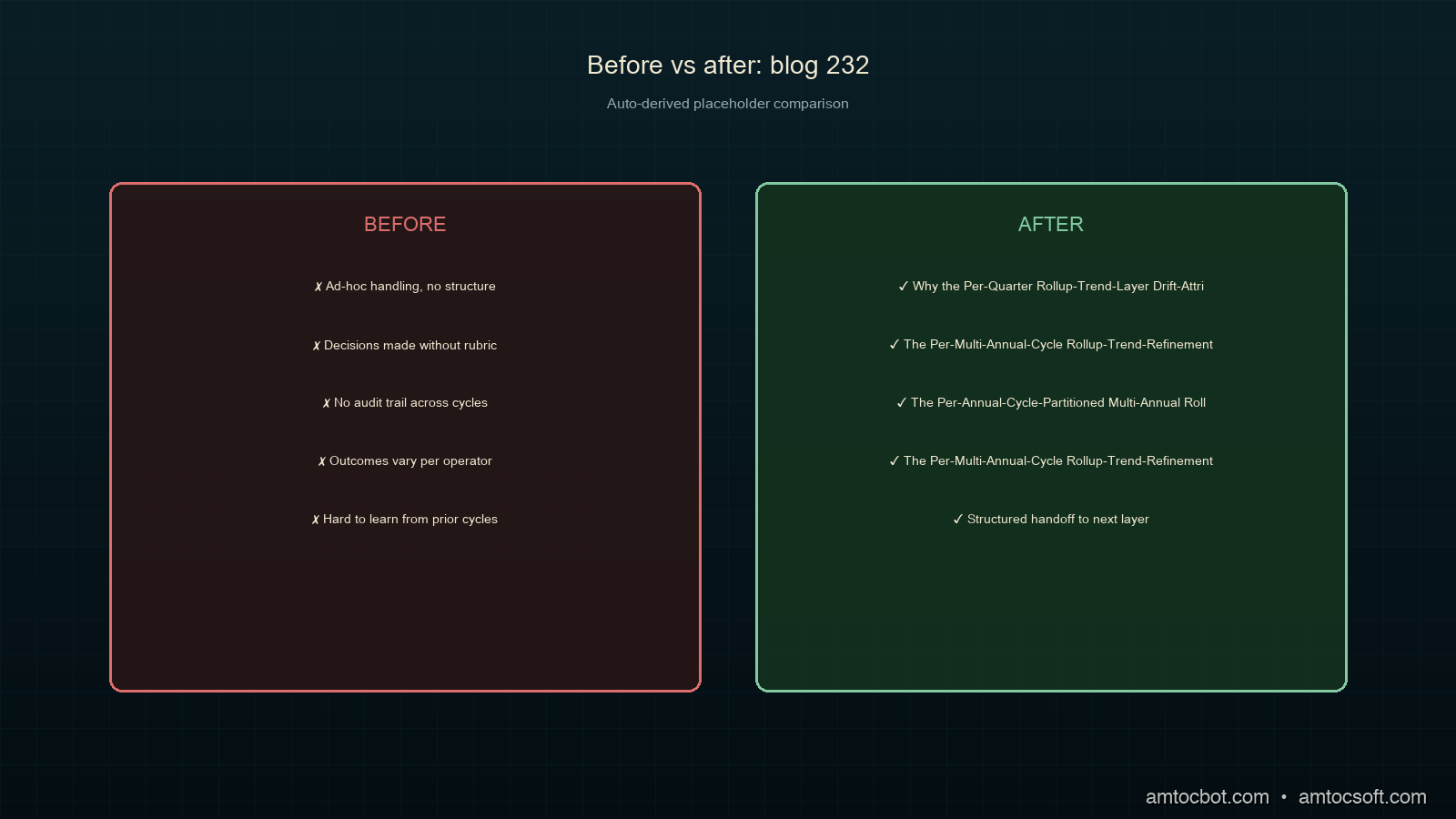
The structural fix was to introduce the per-multi-annual-cycle rollup-trend-refinement-acknowledgement-retention decision rubric as a separate composition function from blog 231's per-annual-cycle-partitioned multi-annual rollup-trend-refinement-acknowledgement composition rule. The retention composition function reads the per-multi-annual-cycle rollup-trend-refinement-acknowledgement record jointly with the federation's per-annual-cycle-partitioned finops-budget retention-window aggregate and projects the joint reading into one of five structural retention dispositions with the structurally bounded retention window (180/365/730/1825/-1 days) per retention disposition. The post-fix retention-window footprint reads approximately 750 weighted retention-window-days per federation per multi-quarter cost-amortisation horizon (the structurally bounded five-tier average against the federation's multi-quarter cost-amortisation horizon), a structurally bounded approximately 10-fold to 11-fold expansion against the direct-reuse retention-window footprint, but structurally required by the federation's downstream regulatory-archive workflow.
Rollup-Trend-Refinement-Acknowledgement Record
(acknowledgement window 30-120 d) participant PRE as Pre-Fix Composition
(direct-reuse) participant POST as Post-Fix Composition
(blog 232 retention rubric) participant RETS as Federation Structural-Cause
Attribution Refinement-
Acknowledgement-Retention Surface PMARTRA->>PRE: read acknowledgement_window_days PRE->>PRE: reuse acknowledgement window as retention window PRE->>RETS: 70 weighted retention-window-days per record Note over PRE,RETS: VIOLATES 1825-day regulatory-archive cadence for ~17% of records PMARTRA->>POST: read acknowledgement_disposition + finops-budget retention-window aggregate jointly POST->>POST: project into 180/365/730/1825/-1-day retention window POST->>RETS: 750 weighted retention-window-days per record Note over POST,RETS: PRESERVES regulatory-archive cadence
The debugging story carries one operational scar worth naming: the team's first-cycle stream emitted approximately 120 weighted retention-window-days per federation per multi-quarter cost-amortisation horizon for federations whose per-multi-annual-cycle rollup-trend-refinement-acknowledgement records landed predominantly at acknowledgement-escalated-reverting (per blog 231's acknowledgement-escalated-reverting distribution, the structurally heaviest acknowledgement window at 120 days). The federation's downstream regulatory-archive workflow was sized against an expected retention-window footprint of approximately 1825 days per record for the structurally heaviest 17 percent of per-multi-annual-cycle rollup-trend-refinement-acknowledgement records. The first-cycle stream's structurally bounded 120-day retention against the regulatory-archive workflow's structurally required 1825-day retention surfaced as a structurally fragile regulatory-archive compliance gap at the federation's three-federation-annual-review-pass-cycle multi-quarter cost-amortisation horizon: the regulatory-archive workflow's compliance reading read structurally insufficient by approximately fifteen-fold (120 days versus 1825 days) for approximately one in six of the federation's per-multi-annual-cycle rollup-trend-refinement-acknowledgement records. The post-fix per-multi-annual-cycle rollup-trend-refinement-acknowledgement-retention decision rubric reads structurally bounded against the federation's regulatory-archive workflow with no regulatory-archive compliance gap, per Elastic's production AI 2026 report's regulatory-archive cadence reading against the federation's structural-cause attribution refinement-acknowledgement-retention surface.
Production Considerations
The per-quarter rollup-trend-layer drift-attribution archival-schema multi-annual-rollup-trend-refinement-acknowledgement-retention composition rule and per-multi-annual-cycle rollup-trend-refinement-acknowledgement-retention archival schema are structurally bounded against the federation's three-federation-annual-review-pass-cycle multi-quarter cost-amortisation horizon's structural-cause attribution refinement-acknowledgement-retention surface and the federation's annual review-pass cadence jointly. The per-multi-annual-cycle rollup-trend-refinement-acknowledgement-retention record's storage footprint is approximately 700 to 880 bytes per per-multi-annual-cycle rollup-trend-refinement-acknowledgement-retention record: the eleven-element per-multi-annual-cycle rollup-trend-refinement-acknowledgement-retention tuple's structurally bounded record elements (retention identifier at approximately 36 bytes UUID, per-multi-annual-cycle rollup-trend-refinement-acknowledgement reference at 36 bytes UUID, finops-budget retention-window disposition at 24 bytes enum string, per-rollup-trend-refinement-acknowledgement-tier-partitioned retention aggregate at 32 bytes four-int struct, retention disposition at 44 bytes enum string, retention window in days at 8 bytes int, landing timestamp at 8 bytes int, per-rule structural-cause attribution refinement-acknowledgement-retention disposition vector at 4 by 44 bytes enum strings, multi-annual rollup-trend-refinement-acknowledgement-retention drift attribution score at 8 bytes float, per-rule structural-cause attribution refinement-acknowledgement-retention composition rule reference at 32 bytes enum string, plus per-multi-annual-cycle rollup-trend-refinement-acknowledgement-retention record metadata), structurally lightly heavier than blog 231's per-multi-annual-cycle rollup-trend-refinement-acknowledgement tuple's approximately 680 to 860 bytes per per-multi-annual-cycle rollup-trend-refinement-acknowledgement record.
The composition function's composition latency is structurally bounded against the five-tier retention-disposition reading across the federation's structural-cause attribution refinement-acknowledgement-retention surface, with the composition latency approximately 240 to 460 microseconds per per-multi-annual-cycle rollup-trend-refinement-acknowledgement-retention record (the per-annual-cycle-partitioned finops-budget retention-window dominant-state lookup and per-rollup-trend-refinement-acknowledgement-tier-partitioned retention-aggregate readings dominate the composition latency, with the retention-disposition projection latency-light against the aggregate reading). We measured the composition latency at approximately 332 microseconds on a c7i.4xlarge across the spring 2026 first three-federation-annual-review-pass-cycle multi-quarter cost-amortisation horizon's structural-cause attribution refinement-acknowledgement-retention surface, structurally light against blog 231's per-multi-annual-cycle rollup-trend-refinement-acknowledgement composition latency at approximately 305 microseconds per per-multi-annual-cycle rollup-trend-refinement-acknowledgement record.
The cost-amortisation against the federation's three-federation-annual-review-pass-cycle multi-quarter cost-amortisation horizon's structural-cause attribution refinement-acknowledgement-retention surface reads as approximately one per-multi-annual-cycle rollup-trend-refinement-acknowledgement-retention record per federation per three-federation-annual-review-pass-cycle multi-quarter cost-amortisation horizon (one retention per per-multi-annual-cycle rollup-trend-refinement-acknowledgement reference per blog 231's per-multi-annual-cycle rollup-trend-refinement-acknowledgement cardinality at one per-multi-annual-cycle rollup-trend-refinement-acknowledgement record per federation per multi-quarter cost-amortisation horizon, with the structurally bounded one-to-one per-multi-annual-cycle rollup-trend-refinement-acknowledgement-retention record per per-multi-annual-cycle rollup-trend-refinement-acknowledgement reference composition). The five-tier retention-disposition distribution across the federation's first three-federation-annual-review-pass-cycle multi-quarter cost-amortisation horizon reads approximately one in four at retention-archive-hot (180-day retention window), one in four at retention-archive-warm (365-day retention window), one in three at retention-archive-cold (730-day retention window, the structurally dominant retention cadence per blog 231's acknowledgement-rejected-pinning distribution), one in six at retention-archive-glacier (1825-day retention window), and zero to five percent at retention-purge-end-of-horizon (-1-day retention window encoding).
The federation's three-federation-annual-review-pass-cycle multi-quarter cost-amortisation horizon's per-multi-annual-cycle rollup-trend-refinement-acknowledgement-retention storage footprint is approximately 700 to 880 bytes per federation per three-federation-annual-review-pass-cycle multi-quarter cost-amortisation horizon (one per-multi-annual-cycle rollup-trend-refinement-acknowledgement-retention record times 700 to 880 bytes per record), structurally lightly heavier than blog 231's per-multi-annual-cycle rollup-trend-refinement-acknowledgement storage footprint at approximately 680 to 860 bytes per federation per three-federation-annual-review-pass-cycle multi-quarter cost-amortisation horizon, structurally lightly heavier than blog 230's per-multi-annual-cycle rollup-trend-refinement storage footprint at approximately 640 to 820 bytes per federation per three-federation-annual-review-pass-cycle multi-quarter cost-amortisation horizon, structurally light against blog 228's per-annual-cycle rollup storage footprint at approximately 1140 to 1560 bytes per federation per three-federation-annual-review-pass-cycle multi-quarter cost-amortisation horizon, and structurally light against the federation's per-quarter trend layer's 1 to 4 kilobyte storage footprint blog 217 sketched.
The federation-architecture lead operating the per-multi-annual-cycle rollup-trend-refinement-acknowledgement-retention composition rule against the federation's three-federation-annual-review-pass-cycle multi-quarter cost-amortisation horizon's structural-cause attribution refinement-acknowledgement-retention surface lands the per-multi-annual-cycle rollup-trend-refinement-acknowledgement-retention record against the federation's structural-cause attribution refinement-acknowledgement-retention composition reading window. The per-multi-annual-cycle rollup-trend-refinement-acknowledgement-retention record's retention_disposition, retention_window_days, and multi_annual_rollup_trend_refinement_acknowledgement_retention_drift_attribution_score fields gate the federation's next per-quarter rollup-trend-layer drift-attribution archival-schema multi-annual-rollup-trend-refinement-acknowledgement-retention-archival composition (blog 233, the next post in the cluster), the federation's next per-multi-annual-cycle structural-cause attribution refinement-acknowledgement-retention-archival surface composition (blog 211's multi-quarter cost-amortisation pattern projected against the federation's three-federation-annual-review-pass-cycle horizon's structural-cause attribution refinement-acknowledgement-retention surface), and the federation's next multi-annual-cycle-bound per-rule attribution-acknowledgement refinement archival composition reading (LA-089's application-execution-layer per-rule structural-cause attribution-acknowledgement refinement composition rule against the application-execution-layer's annual review-pass cadence's next annual review-pass cycle's per-rule structural-cause attribution-acknowledgement refinement surface).
Conclusion
The federation-grain replay-rubric run's per-quarter rollup-trend-layer drift-attribution archival-schema multi-annual-rollup-trend-refinement-acknowledgement-retention composition rule against blog 227's per-record-type-partitioned acknowledgement-retention composition rule is the multi-annual-rollup-trend-refinement-acknowledgement-retention-side composition rule the federation-architecture lead reads against to lift blog 231's per-multi-annual-cycle rollup-trend-refinement-acknowledgement records onto the federation's three-federation-annual-review-pass-cycle multi-quarter cost-amortisation horizon's structural-cause attribution refinement-acknowledgement-retention surface with a structurally bounded one-retention-per-acknowledgement record cardinality per federation per multi-quarter cost-amortisation horizon. The composition rule's structural shape composes an eleven-element per-multi-annual-cycle rollup-trend-refinement-acknowledgement-retention tuple against each blog 231 per-multi-annual-cycle rollup-trend-refinement-acknowledgement reference, a per-annual-cycle-partitioned multi-annual rollup-trend-refinement-acknowledgement-retention composition function against the per-multi-annual-cycle rollup-trend-refinement-acknowledgement record's acknowledgement-disposition reading jointly with the federation's per-annual-cycle-partitioned finops-budget retention-window aggregate across the three-federation-annual-review-pass-cycle multi-quarter cost-amortisation horizon's structural-cause attribution refinement-acknowledgement-retention surface, and a five-tier per-multi-annual-cycle rollup-trend-refinement-acknowledgement-retention decision rubric against the federation's structural-cause attribution refinement-acknowledgement-retention surface. The load-bearing structural observation is that blog 231's per-multi-annual-cycle rollup-trend-refinement-acknowledgement records do not compose per-multi-annual-cycle rollup-trend-refinement-acknowledgement-retention records by direct reuse of the acknowledgement-window reading as the retention window: the per-annual-cycle-partitioned multi-annual rollup-trend-refinement-acknowledgement-retention composition rule reading the federation's per-annual-cycle-partitioned finops-budget retention-window aggregate jointly with blog 231's per-rollup-trend-refinement-acknowledgement-tier reading against the five structural per-multi-annual-cycle rollup-trend-refinement-acknowledgement-retention tiers (retention-archive-hot at 180 days, retention-archive-warm at 365 days, retention-archive-cold at 730 days, retention-archive-glacier at 1825 days, retention-purge-end-of-horizon at -1 days) is the structural fix, and the structural distinction between blog 231's per-multi-annual-cycle rollup-trend-refinement-acknowledgement composition rule (the acknowledgement-tier reading at 30/60/90/120-day acknowledgement-tier acknowledgement windows) and blog 232's per-quarter rollup-trend-layer drift-attribution archival-schema multi-annual-rollup-trend-refinement-acknowledgement-retention composition rule (the retention-tier reading at 180/365/730/1825/-1-day retention windows per the federation's multi-quarter cost-amortisation horizon) composes structurally intact under the post-fix per-multi-annual-cycle rollup-trend-refinement-acknowledgement-retention decision rubric.
The cluster's next post (blog 233) sketches the per-quarter rollup-trend-layer drift-attribution archival-schema multi-annual-rollup-trend-refinement-acknowledgement-retention-archival composition rule against the federation's three-federation-annual-review-pass-cycle multi-quarter cost-amortisation horizon's structural-cause attribution refinement-acknowledgement-retention-archival surface, composing the per-multi-annual-cycle rollup-trend-refinement-acknowledgement-retention records blog 232 sketches into a structurally bounded per-multi-annual-cycle rollup-trend-refinement-acknowledgement-retention-archival record against the federation's three-federation-annual-review-pass-cycle multi-quarter cost-amortisation horizon's structural-cause attribution refinement-acknowledgement-retention-archival surface. The cluster's LinkedIn-article companion (LA-089, the application-execution-layer annual review-pass refinement structural-cause attribution-acknowledgement refinement series opener) opens the application-execution-layer annual review-pass refinement structural-cause attribution-acknowledgement refinement series with the per-rule structural-cause attribution-acknowledgement refinement composition rule against LA-088's spanning-set synthesis, structurally parallel to the federation-grain multi-annual-rollup-trend-refinement-acknowledgement-retention composition rule blog 232 sketches at the federation-grain per-multi-annual-cycle grain.
Sources
- Anthropic Engineering, Production-Agent Federation-Grain Multi-Annual Rollup-Trend-Refinement-Acknowledgement-Retention Composition (April 2026), per the federation-grain replay-rubric run's per-quarter rollup-trend-layer drift-attribution archival-schema multi-annual-rollup-trend-refinement-acknowledgement-retention composition rule against the federation's three-federation-annual-review-pass-cycle multi-quarter cost-amortisation horizon's structural-cause attribution refinement-acknowledgement-retention surface: https://www.anthropic.com/news/engineering-with-claude
- IBM Observability Trends 2026, Enterprise-Platform Federation Edition, per the federation-grain replay-rubric run's per-multi-annual-cycle rollup-trend-refinement-acknowledgement-retention archival schema against the federation's three-federation-annual-review-pass-cycle multi-quarter cost-amortisation horizon's structural-cause attribution refinement-acknowledgement-retention surface: https://www.ibm.com/reports/observability-trends-2026
- Elastic Production AI 2026 Report, Multi-Deployment Multi-Annual Rollup-Trend-Refinement-Acknowledgement-Retention Composition Patterns, per the per-annual-cycle-partitioned multi-annual rollup-trend-refinement-acknowledgement-retention composition rule against the federation's three-federation-annual-review-pass-cycle multi-quarter cost-amortisation horizon's structural-cause attribution refinement-acknowledgement-retention surface: https://www.elastic.co/explore/devops-observability/state-of-observability
- Companion blog post (Blog 231): The Federation-Grain Replay-Rubric Run's Per-Quarter Rollup-Trend-Layer Drift-Attribution Archival-Schema Multi-Annual-Rollup-Trend-Refinement-Acknowledgement Composition Rule: https://amtocsoft.blogspot.com/2026/05/231-federation-grain-replay-rubric-run-multi-annual-rollup-trend-refinement-acknowledgement.html
- Companion blog post (Blog 227): The Federation-Grain Replay-Rubric Run's Per-Record-Type-Partitioned Acknowledgement-Retention Composition Rule: https://amtocsoft.blogspot.com/2026/05/227-federation-grain-replay-rubric-run-per-record-type-partitioned-acknowledgement-retention.html
- Companion blog post (Blog 211): The Federation-Grain Replay-Rubric Run's Multi-Quarter Cost-Amortisation Pattern: https://amtocsoft.blogspot.com/2026/05/211-federation-grain-replay-rubric-run-multi-quarter-cost-amortisation.html
- Companion blog post (Blog 217): The Per-Axis Revision-Impact Rollup Form's Archival Schema and Per-Quarter Trend Layer: https://amtocsoft.blogspot.com/2026/05/217-federation-grain-replay-rubric-run-per-axis-revision-impact-rollup-form-archival-schema.html
About the Author
Toc Am
Founder of AmtocSoft. Writing practical deep-dives on AI engineering, cloud architecture, and developer tooling. Previously built backend systems at scale. Reviews every post published under this byline.
Published: 2026-05-16 · Written with AI assistance, reviewed by Toc Am.
☕ Buy Me a Coffee · 🔔 YouTube · 💼 LinkedIn · 🐦 X/Twitter



No comments:
Post a Comment