Showing posts with label SPIFFE. Show all posts

Tuesday, April 7, 2026

Machine Identity Management: Securing AI Agents at Scale

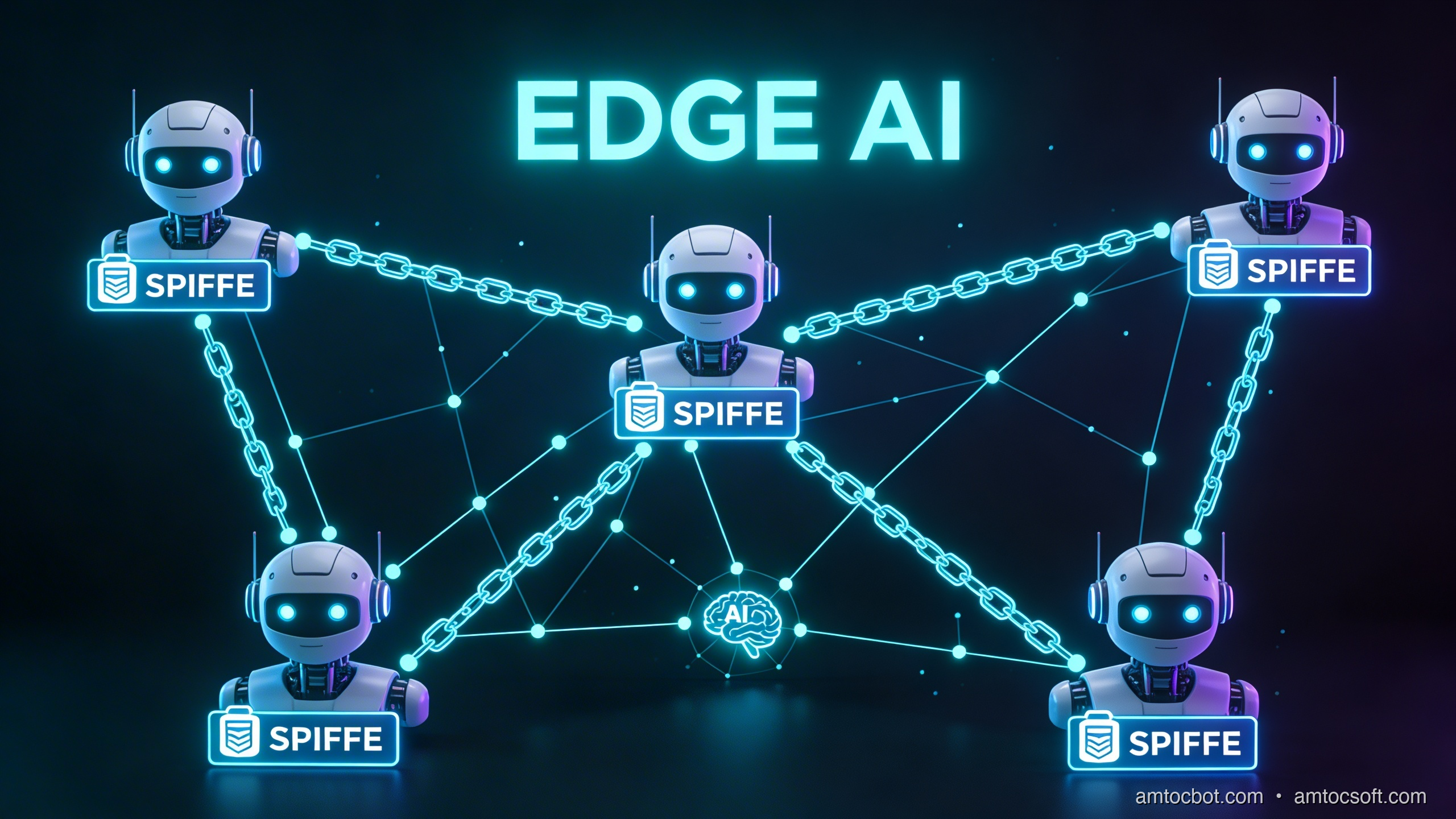
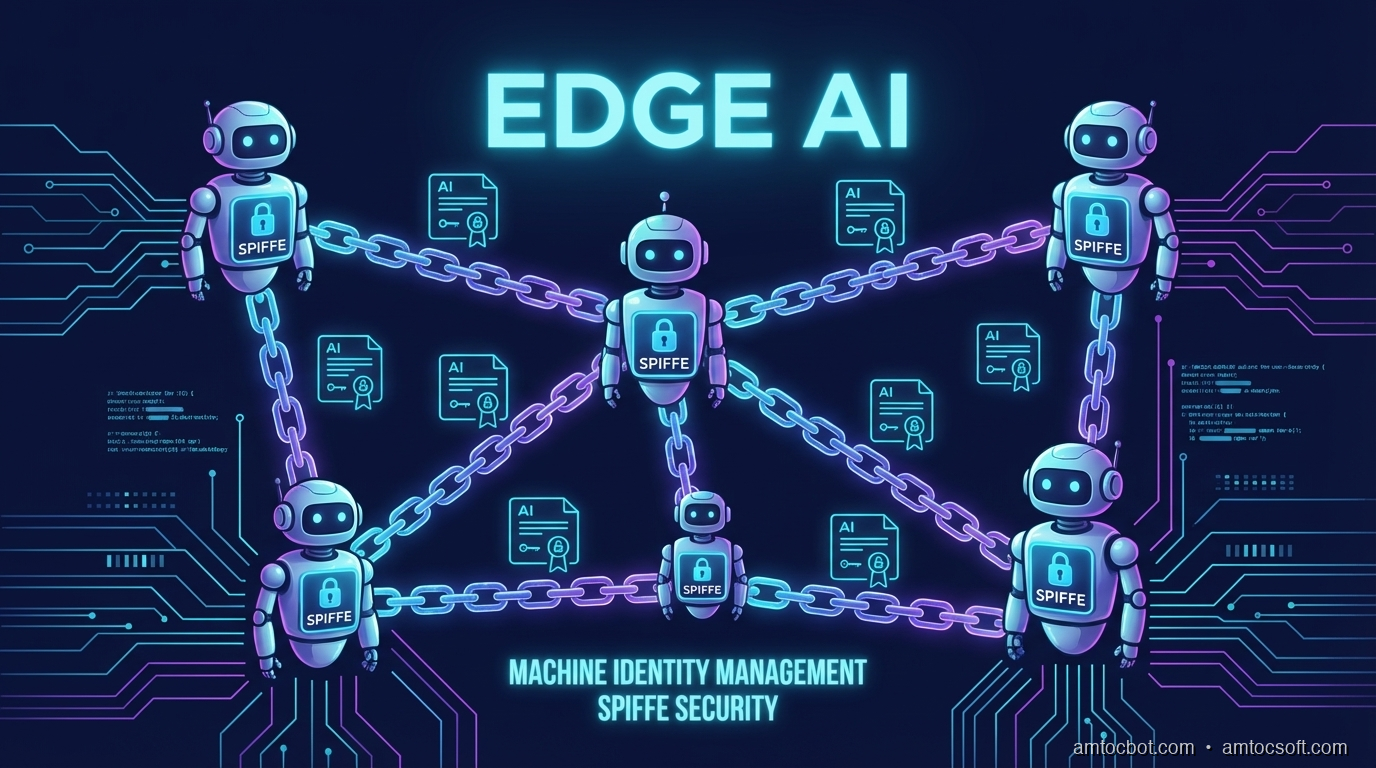
Hero image showing a network of AI agents connected by cryptographic identity chains

Introduction

The identity crisis in modern infrastructure is not about humans forgetting their passwords. It is about the explosive proliferation of non-human actors — AI agents, microservices, CI/CD pipelines, IoT sensors, and automated workflows — that now outnumber human users by a ratio of 45:1 in enterprise API traffic. For every request a developer makes to a production API, forty-five come from machines.

This imbalance has been building for years, but the rise of autonomous AI agents has accelerated it into a full-blown architectural emergency. Traditional identity systems were designed around the assumption that a person sits at the keyboard. They rely on passwords a human can remember, MFA codes a human can receive, and login sessions a human can initiate. None of these primitives translate cleanly to a containerized Python agent that spins up, executes a task, and terminates in under thirty seconds.

The consequences of getting machine identity wrong are severe. In 2023, the CircleCI breach traced back to a single compromised machine identity — a long-lived token with broad access that sat dormant in a developer's environment until an attacker exfiltrated it. In 2024, researchers catalogued over 12 million hardcoded credentials in public GitHub repositories, the overwhelming majority of them machine credentials: API keys, service account tokens, and database passwords embedded directly in source code.

The problem is not that engineers are careless. The problem is that the tooling for machine identity has historically been immature, painful to operate, and poorly integrated with the platforms where modern workloads run. When rotating a certificate requires filing a ticket and waiting three days, engineers reach for a static API key that never expires.

This post is a professional-level deep-dive into machine identity management for AI agent deployments at scale. We will cover the cryptographic foundations — X.509 certificates, SPIFFE IDs, and workload attestation — then move into concrete implementation patterns using SPIRE, Kubernetes projected service account tokens, and HashiCorp Vault dynamic secrets. We will examine tradeoffs across identity strategies, address the operational challenges of managing 10,000+ agent identities, and close with production guidance on monitoring, revocation, and compliance.

If you are building or operating AI agent infrastructure at scale, machine identity is the security primitive you cannot afford to treat as an afterthought.


The Problem: Why Machine Identity Is Broken
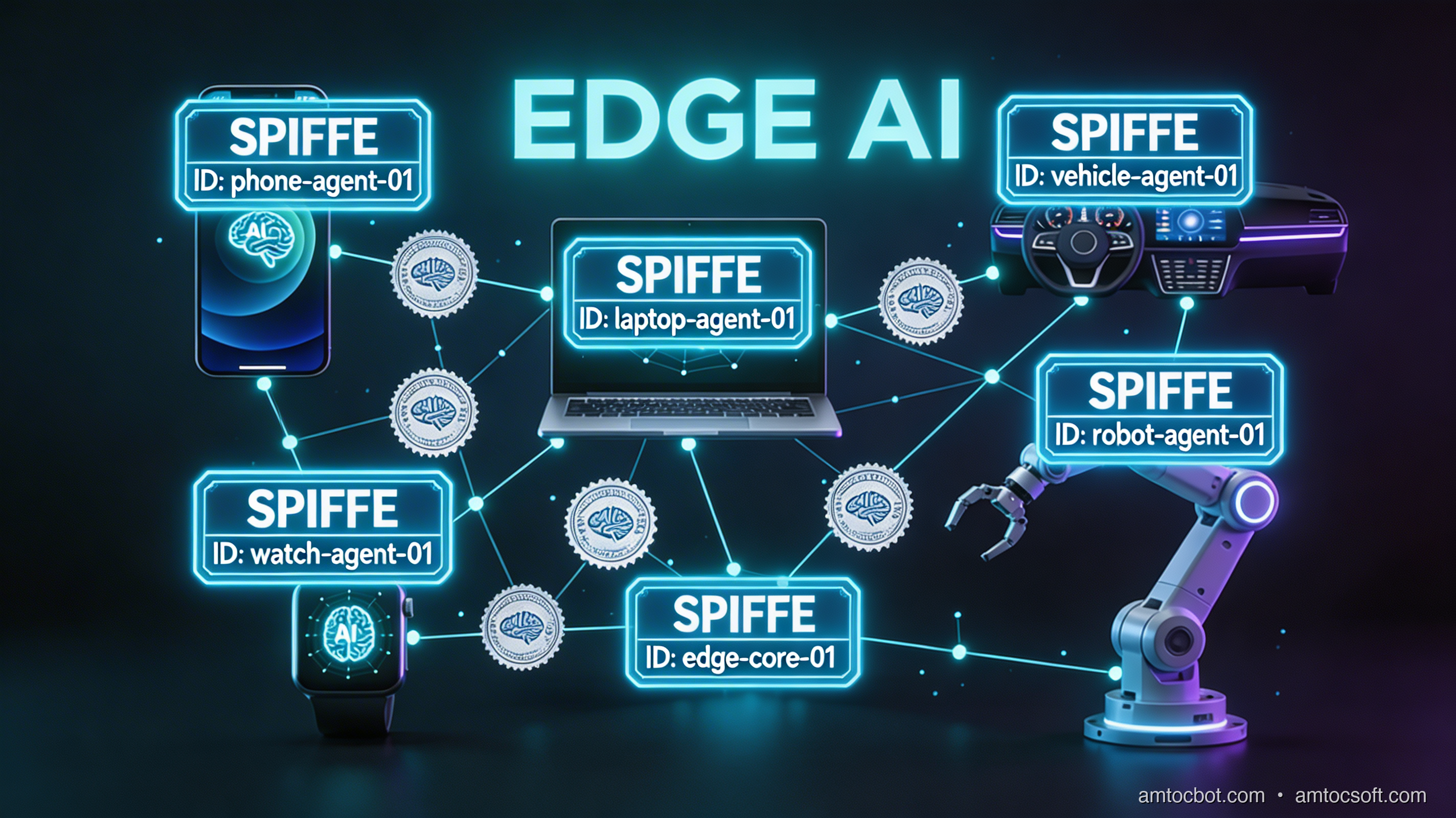
Architecture diagram showing the identity sprawl problem across AI agent deployments

The Static Credential Trap

The default path for giving a machine access to a resource is still, in 2026, to generate a static credential and paste it into an environment variable. This approach is understandable — it works immediately, requires no infrastructure, and is familiar to every engineer. It is also a slow-motion security disaster.

Static credentials have four compounding problems. First, they do not expire. A credential issued to a decommissioned agent three years ago may still be valid today, sitting in a rotation's worth of former employees' dotfiles, old CI artifacts, and forgotten S3 buckets. Second, they are hard to scope. Most platforms that issue API keys do so at a coarse level — you get one key per service account, and that key carries all of that account's permissions. Third, they are hard to rotate. In a world where a microservices deployment has 200 services each with 5 credentials, rotation becomes a coordinated effort involving dozens of teams. Fourth, they are easy to leak. Environment variables appear in crash dumps, log aggregators, Docker inspect output, and Kubernetes pod specs that get accidentally committed to version control.

The AI Agent Amplification Effect

AI agents make all of these problems worse by introducing new identity patterns that static credential systems were never designed to handle.

A traditional microservice has a fixed identity: it runs on a known set of hosts, maintains a persistent connection pool, and its traffic patterns are predictable. An AI agent might be ephemeral (spawned on demand, terminated after task completion), dynamic (scaled from zero to thousands of instances based on queue depth), distributed (running across multiple cloud regions and on-premises environments simultaneously), and polyglot (spawning sub-agents in different runtimes that each need their own identities).

The lifecycle of an AI agent identity is fundamentally different from a human identity. There is no onboarding meeting, no IT ticket, no badge photo. An agent needs a valid cryptographic identity within milliseconds of starting, needs that identity to be automatically revoked when it terminates, and needs to be able to prove to every downstream service that it is who it claims to be — without any human in the loop.

The Scale Inflection Point

At small scale — say, fifty agents — you can manage this manually. At 500 agents it becomes painful. At 5,000 agents it becomes impossible. At 50,000 agents, which is not an unrealistic deployment size for enterprises running large-scale AI orchestration platforms, you need a dedicated identity infrastructure that can issue, rotate, and revoke credentials automatically, in real time, without human intervention.

The identity infrastructure must also be resilient. A certificate authority that goes down does not just break authentication — it breaks every agent that needs to renew its credential, which in a short-lived credential system can be every agent in the fleet simultaneously. This is the "certificate storm" problem, and it is one of the most dangerous failure modes in machine identity systems.

Threat Model

The threats that machine identity management must defend against include: credential theft (an attacker obtains a valid credential and uses it to impersonate a legitimate agent), identity spoofing (an attacker creates a fake agent that claims to be a legitimate one), privilege escalation (a compromised agent uses its identity to obtain credentials for resources it should not access), and lateral movement (an attacker pivots from a compromised agent to other parts of the infrastructure by reusing or forging its credentials).

Defending against all of these requires more than just issuing credentials. It requires a system that can attest workload identity (prove that the entity requesting a credential is actually the workload it claims to be), enforce least-privilege scoping, detect anomalous usage patterns, and revoke credentials in real time when a compromise is detected.


How It Works: Cryptographic Identity for Machines

X.509 Certificates and PKI

The foundation of machine identity is Public Key Infrastructure. Each machine gets a unique cryptographic keypair — a private key that never leaves the machine and a public key embedded in an X.509 certificate signed by a trusted Certificate Authority. When two machines communicate, they exchange certificates and verify each other's signatures. This is mutual TLS (mTLS), and it provides three security properties simultaneously: authentication (both parties prove their identity), encryption (the channel is encrypted), and integrity (messages cannot be tampered with in transit).

An X.509 certificate for a machine identity contains several critical fields: the Subject (who this certificate belongs to), the Subject Alternative Names (SANs, which in SPIFFE use a URI format like spiffe://domain/path/workload), the validity period (not before and not after timestamps), the public key, and the issuer's signature. For AI agents, the Subject Alternative Name is the primary identity field — it encodes the workload's logical identity in a format that is independent of IP address, hostname, or ephemeral infrastructure details.

Short-lived certificates are the cornerstone of modern machine identity. Rather than issuing a certificate with a one-year validity period (which gives an attacker a full year to exploit a stolen certificate), modern systems issue certificates with lifetimes of one to twenty-four hours. This dramatically reduces the blast radius of a compromise: a stolen certificate that expires in an hour is a much smaller problem than one that expires in a year.

SPIFFE and SPIRE

The Secure Production Identity Framework for Everyone (SPIFFE) is a CNCF standard that defines a universal identity format for workloads, independent of the underlying platform. A SPIFFE ID is a URI of the form spiffe://trust-domain/path — for example, spiffe://payments.corp/agent/invoice-processor/prod. This ID is embedded in an X.509 certificate (called an SVID — SPIFFE Verifiable Identity Document) or a JWT, and can be presented to any workload that trusts the same root CA.

SPIRE (the SPIFFE Runtime Environment) is the reference implementation. It consists of a SPIRE Server (the CA and policy engine) and SPIRE Agents (one per node, acting as a local proxy for workload identity requests). The SPIRE Agent is responsible for workload attestation: when a process requests an SVID, the agent verifies that the process matches a registered workload selector (e.g., "this Kubernetes pod has this service account and runs this container image") before issuing a credential.

flowchart TD A[AI Agent Process Starts] --> B[SPIRE Agent: Workload Attestation] B --> C{Selector Match?} C -->|No| D[Reject: Identity Request Denied] C -->|Yes| E[SPIRE Agent Forwards to SPIRE Server] E --> F[SPIRE Server: Policy Check] F --> G{Registration Entry Matches?} G -->|No| H[Reject: No Registration] G -->|Yes| I[Issue X.509 SVID + JWKS] I --> J[Agent Caches SVID] J --> K[AI Agent Makes mTLS Request] K --> L[Downstream Service: Certificate Verification] L --> M{SVID Valid + Not Revoked?} M -->|No| N[Reject Connection] M -->|Yes| O[Authorized: Request Processed] J --> P[Rotation Timer: ~1hr TTL] P --> B

Workload Attestation Deep Dive

Workload attestation is the process by which SPIRE proves that a credential request is coming from a legitimate workload rather than an attacker. SPIRE supports multiple attestation plugins depending on the environment.

On Kubernetes, attestation uses the Kubernetes node attestor: the SPIRE Agent running on a node attests itself to the SPIRE Server using the node's bootstrap credentials (typically a kubeconfig tied to the node's service account). The SPIRE Agent then attests individual pods by inspecting their pod specs via the Kubernetes API and matching them against registered workload selectors — things like namespace, service account name, and container image SHA.

On AWS, the node attestor uses the EC2 instance identity document, a signed JSON document that AWS provides to every EC2 instance via the instance metadata service. The SPIRE Server verifies this document's signature against AWS's public key, which proves the node is a real EC2 instance in a specific account and region.

On bare metal or VMs without cloud attestation, TPM-based attestation uses the Trusted Platform Module to produce a signed quote of the machine's state, proving that the software running on the machine has not been tampered with.

JWT SVIDs and Short-Lived Tokens

In addition to X.509 certificates, SPIFFE defines a JWT SVID format for use cases where mTLS is impractical — for example, when an AI agent needs to authenticate to a third-party API that does not support client certificates. A JWT SVID is a signed JWT with the agent's SPIFFE ID in the sub claim and a short expiry (typically 5-60 minutes). The downstream service validates the JWT against SPIRE's JWKS endpoint.

sequenceDiagram participant A as AI Agent participant S as SPIRE Agent (local) participant V as SPIRE Server participant D as Downstream Service A->>S: RequestJWTSVID(audience="payments-api") S->>V: FetchJWTSVID(workload_id, audience) V-->>S: JWT SVID (exp: +1hr) S-->>A: JWT SVID A->>D: POST /api/transfer (Authorization: Bearer ) D->>V: GET /.well-known/jwks.json V-->>D: JWKS (public keys) D->>D: Verify JWT signature + expiry + audience D-->>A: 200 OK Note over A,S: Rotation: A refreshes JWT 5min before expiry

Implementation Guide

1. SPIRE Server Setup and Workload Registration

The following example sets up a SPIRE server, registers a workload, and fetches an SVID using the Python SPIFFE library.

#!/usr/bin/env python3
"""
spire_workload_identity.py

Demonstrates SPIFFE workload identity integration for AI agents.
Requires: pip install pyspiffe grpcio grpcio-tools
Assumes: SPIRE agent running locally with socket at /tmp/spire-agent/public/api.sock
"""

import asyncio
import logging
from datetime import datetime, timezone
from pathlib import Path

from pyspiffe.workloadapi import WorkloadApiClient
from pyspiffe.workloadapi.default_workload_api_client import DefaultWorkloadApiClient
from pyspiffe.bundle.x509_bundle import X509Bundle
from pyspiffe.svid.x509_svid import X509Svid
from pyspiffe.spiffe_id.spiffe_id import SpiffeId

# SPIRE Agent socket — the local proxy for workload identity requests.
# The agent handles attestation; this client just fetches the result.
SPIRE_SOCKET = "unix:///tmp/spire-agent/public/api.sock"
SPIFFE_TRUST_DOMAIN = "payments.corp"

logging.basicConfig(level=logging.INFO, format="%(asctime)s %(levelname)s %(message)s")
log = logging.getLogger(__name__)


class AgentIdentityManager:
    """
    Manages the cryptographic identity lifecycle for an AI agent.

    Responsibilities:
    - Fetch the initial X.509 SVID from SPIRE on startup
    - Watch for automatic SVID rotations and update the TLS context
    - Provide the current SVID to mTLS connection factories
    - Gracefully handle SPIRE unavailability with backoff/retry
    """

    def __init__(self, socket_path: str = SPIRE_SOCKET):
        self.socket_path = socket_path
        self._current_svid: X509Svid | None = None
        self._current_bundle: X509Bundle | None = None
        self._client: DefaultWorkloadApiClient | None = None

    async def initialize(self) -> None:
        """
        Connect to the local SPIRE agent and fetch the initial SVID.
        Raises RuntimeError if the workload cannot be attested.
        """
        log.info("Connecting to SPIRE agent at %s", self.socket_path)

        # WorkloadApiClient wraps the gRPC connection to the SPIRE agent.
        # The agent performs workload attestation transparently based on
        # the calling process's PID, namespace, service account, etc.
        self._client = DefaultWorkloadApiClient(workload_api_address=self.socket_path)

        try:
            # fetch_x509_context returns both the SVID and the trust bundle
            # (the set of root CAs needed to verify peer certificates).
            context = self._client.fetch_x509_context()
            self._current_svid = context.default_svid()
            self._current_bundle = context.x509_bundle_set().bundle_for_trust_domain(
                SpiffeId.parse(f"spiffe://{SPIFFE_TRUST_DOMAIN}/placeholder").trust_domain
            )
            self._log_svid_info(self._current_svid)
        except Exception as exc:
            raise RuntimeError(f"SPIRE attestation failed: {exc}") from exc

    def _log_svid_info(self, svid: X509Svid) -> None:
        """Log key fields of the SVID for audit purposes."""
        cert = svid.leaf()
        not_after = cert.not_valid_after_utc
        remaining = not_after - datetime.now(timezone.utc)
        log.info(
            "SVID issued: spiffe_id=%s not_after=%s remaining=%s",
            svid.spiffe_id(),
            not_after.isoformat(),
            remaining,
        )

    async def watch_svid_rotation(self) -> None:
        """
        Subscribe to SVID rotation events from the SPIRE agent.

        SPIRE automatically renews SVIDs before they expire (typically at
        the halfway point of the certificate's lifetime). This method runs
        indefinitely and updates the cached SVID on each rotation event,
        allowing the agent to seamlessly use fresh credentials without restart.
        """
        log.info("Starting SVID rotation watcher")

        def on_update(context):
            """Called by the SPIRE client each time a new SVID is issued."""
            new_svid = context.default_svid()
            old_id = str(self._current_svid.spiffe_id()) if self._current_svid else "none"
            self._current_svid = new_svid
            log.info(
                "SVID rotated: old=%s new=%s",
                old_id,
                new_svid.spiffe_id(),
            )
            self._log_svid_info(new_svid)

        def on_error(error):
            """Called if the SPIRE agent connection fails during a watch."""
            log.error("SVID watch error (will retry): %s", error)

        # watch_x509_context is a blocking call that fires callbacks on rotation.
        # Run it in a thread pool to avoid blocking the event loop.
        loop = asyncio.get_event_loop()
        await loop.run_in_executor(
            None,
            lambda: self._client.watch_x509_context(on_update, on_error),
        )

    @property
    def current_svid(self) -> X509Svid | None:
        """Return the current valid SVID, or None if not yet initialized."""
        return self._current_svid

    def get_tls_credentials(self):
        """
        Return a (cert_chain_pem, private_key_pem, trust_bundle_pem) tuple
        suitable for constructing a gRPC ssl_channel_credentials object
        or an aiohttp SSLContext for outbound mTLS connections.
        """
        if not self._current_svid or not self._current_bundle:
            raise RuntimeError("Identity not yet initialized — call initialize() first")

        cert_chain = b"".join(
            cert.public_bytes(encoding=__import__("cryptography.hazmat.primitives.serialization", fromlist=["Encoding"]).Encoding.PEM)
            for cert in self._current_svid.cert_chain()
        )
        private_key = self._current_svid.private_key().private_bytes(
            encoding=__import__("cryptography.hazmat.primitives.serialization", fromlist=["Encoding"]).Encoding.PEM,
            format=__import__("cryptography.hazmat.primitives.serialization", fromlist=["PrivateFormat"]).PrivateFormat.PKCS8,
            encryption_algorithm=__import__("cryptography.hazmat.primitives.serialization", fromlist=["NoEncryption"]).NoEncryption(),
        )
        trust_bundle = self._current_bundle.serialize_pem()

        return cert_chain, private_key, trust_bundle


async def main():
    manager = AgentIdentityManager()
    await manager.initialize()

    # Start the rotation watcher as a background task.
    rotation_task = asyncio.create_task(manager.watch_svid_rotation())

    # The agent can now use manager.get_tls_credentials() to build
    # mTLS connections to downstream services.
    log.info("Agent identity ready. SPIFFE ID: %s", manager.current_svid.spiffe_id())

    # Keep running to demonstrate rotation.
    await asyncio.sleep(7200)
    rotation_task.cancel()


if __name__ == "__main__":
    asyncio.run(main())

2. Kubernetes Projected Service Account Tokens

Kubernetes 1.24+ supports projected service account tokens — short-lived, audience-scoped JWTs bound to a specific pod. These are the Kubernetes-native equivalent of a SPIFFE JWT SVID.

#!/usr/bin/env python3
"""
k8s_workload_identity.py

Reads and validates a Kubernetes projected service account token for
AI agent authentication to internal APIs.

The token is mounted at /var/run/secrets/kubernetes.io/serviceaccount/token
by the Kubernetes kubelet and is automatically rotated before expiry.
"""

import json
import time
import base64
import logging
from pathlib import Path
from typing import Optional

import httpx  # pip install httpx

log = logging.getLogger(__name__)

# Default mount path for projected service account tokens in Kubernetes.
K8S_TOKEN_PATH = Path("/var/run/secrets/kubernetes.io/serviceaccount/token")
K8S_CACERT_PATH = Path("/var/run/secrets/kubernetes.io/serviceaccount/ca.crt")
K8S_NAMESPACE_PATH = Path("/var/run/secrets/kubernetes.io/serviceaccount/namespace")


def read_service_account_token() -> str:
    """
    Read the current projected service account token from the filesystem.

    Kubernetes automatically rotates this file before the token expires
    (default rotation threshold: 80% of token lifetime). Always read
    fresh from disk rather than caching in memory to pick up rotations.
    """
    if not K8S_TOKEN_PATH.exists():
        raise RuntimeError(
            f"Service account token not found at {K8S_TOKEN_PATH}. "
            "Ensure the pod spec includes the projected service account volume."
        )
    return K8S_TOKEN_PATH.read_text().strip()


def decode_jwt_claims(token: str) -> dict:
    """
    Decode JWT claims without verification (for logging/debugging only).
    Never use unverified claims for authorization decisions.
    """
    try:
        # JWT is header.payload.signature — base64-decode the payload segment.
        parts = token.split(".")
        # Add padding for base64 decoding.
        payload_b64 = parts[1] + "=" * (4 - len(parts[1]) % 4)
        payload = json.loads(base64.urlsafe_b64decode(payload_b64))
        return payload
    except Exception as exc:
        log.warning("Could not decode JWT for logging: %s", exc)
        return {}


def get_token_expiry_info(token: str) -> tuple[int, int]:
    """
    Return (issued_at, expires_at) unix timestamps from a service account token.
    Used to proactively rotate before expiry in long-running agents.
    """
    claims = decode_jwt_claims(token)
    return claims.get("iat", 0), claims.get("exp", 0)


class KubernetesWorkloadIdentity:
    """
    Manages Kubernetes projected service account token lifecycle for AI agents.

    Unlike static secrets, projected tokens are:
    - Audience-scoped (bound to a specific API or service)
    - Time-limited (configurable, default 1 hour)
    - Pod-bound (invalid if the pod terminates)
    - Automatically rotated by the kubelet
    """

    def __init__(
        self,
        token_path: Path = K8S_TOKEN_PATH,
        refresh_threshold_seconds: int = 300,  # Refresh 5 minutes before expiry.
    ):
        self.token_path = token_path
        self.refresh_threshold = refresh_threshold_seconds
        self._cached_token: Optional[str] = None
        self._token_expiry: int = 0

    def get_token(self) -> str:
        """
        Return a valid service account token, reading fresh from disk if needed.

        Policy: always re-read from disk if the cached token expires within
        refresh_threshold_seconds. This ensures we pick up kubelet rotations.
        """
        now = int(time.time())

        if self._cached_token and self._token_expiry - now > self.refresh_threshold:
            return self._cached_token

        # Read fresh token from disk (kubelet may have rotated it).
        fresh_token = read_service_account_token()
        _, expiry = get_token_expiry_info(fresh_token)

        self._cached_token = fresh_token
        self._token_expiry = expiry

        remaining = expiry - now
        log.info(
            "Service account token loaded: expires_in=%ds namespace=%s",
            remaining,
            K8S_NAMESPACE_PATH.read_text().strip() if K8S_NAMESPACE_PATH.exists() else "unknown",
        )

        return self._cached_token

    def get_auth_headers(self) -> dict[str, str]:
        """Return Authorization headers for use with HTTP clients."""
        return {"Authorization": f"Bearer {self.get_token()}"}


# Example: using the workload identity to call an internal API.
async def call_internal_api(endpoint: str) -> dict:
    identity = KubernetesWorkloadIdentity()

    async with httpx.AsyncClient(
        verify=str(K8S_CACERT_PATH) if K8S_CACERT_PATH.exists() else True,
        headers=identity.get_auth_headers(),
        timeout=10.0,
    ) as client:
        response = await client.get(endpoint)
        response.raise_for_status()
        return response.json()

3. HashiCorp Vault Dynamic Secrets

HashiCorp Vault's dynamic secrets engine generates short-lived, unique credentials on demand — database passwords, AWS access keys, API tokens — that are automatically revoked after a configurable TTL.

#!/usr/bin/env python3
"""
vault_dynamic_secrets.py

Demonstrates HashiCorp Vault dynamic secret retrieval for AI agents.
Uses Vault's Kubernetes auth method (no static tokens required).

Requirements: pip install hvac
"""

import logging
import time
from pathlib import Path
from typing import Optional

import hvac  # pip install hvac

log = logging.getLogger(__name__)

VAULT_ADDR = "https://vault.internal.corp:8200"
VAULT_ROLE = "ai-agent-invoice-processor"
VAULT_DB_PATH = "database/creds/invoice-processor-role"
VAULT_K8S_AUTH_PATH = "auth/kubernetes"
K8S_SA_TOKEN_PATH = Path("/var/run/secrets/kubernetes.io/serviceaccount/token")


class VaultIdentityClient:
    """
    Authenticates to HashiCorp Vault using Kubernetes workload identity
    and retrieves dynamic database credentials.

    Auth flow:
    1. Read the Kubernetes service account token (short-lived, pod-bound)
    2. POST it to Vault's Kubernetes auth endpoint
    3. Vault calls the Kubernetes API to verify the token is valid and
       the pod matches the configured role's bound_service_accounts
    4. Vault issues a Vault token with a short TTL and specific policies
    5. Use the Vault token to fetch dynamic database credentials
    6. Vault creates a real, unique database user for this lease
    7. Credentials are automatically revoked when the lease expires
    """

    def __init__(
        self,
        vault_addr: str = VAULT_ADDR,
        role: str = VAULT_ROLE,
        token_path: Path = K8S_SA_TOKEN_PATH,
    ):
        self.vault_addr = vault_addr
        self.role = role
        self.token_path = token_path
        self._client: Optional[hvac.Client] = None
        self._vault_token_expiry: int = 0
        self._db_creds: Optional[dict] = None
        self._db_creds_expiry: int = 0

    def _authenticate(self) -> hvac.Client:
        """
        Authenticate to Vault using the Kubernetes JWT auth method.
        Returns an authenticated Vault client.
        """
        jwt = self.token_path.read_text().strip()

        client = hvac.Client(url=self.vault_addr)
        response = client.auth.kubernetes.login(
            role=self.role,
            jwt=jwt,
            mount_point=VAULT_K8S_AUTH_PATH,
        )

        # The Vault token has its own TTL (typically 1 hour for machine roles).
        lease_duration = response["auth"]["lease_duration"]
        self._vault_token_expiry = int(time.time()) + lease_duration

        log.info(
            "Vault auth successful: role=%s token_ttl=%ds policies=%s",
            self.role,
            lease_duration,
            response["auth"]["policies"],
        )

        return client

    def _ensure_authenticated(self) -> hvac.Client:
        """Return an authenticated Vault client, re-authenticating if needed."""
        now = int(time.time())
        # Re-authenticate if the Vault token expires within 5 minutes.
        if self._client is None or self._vault_token_expiry - now < 300:
            self._client = self._authenticate()
        return self._client

    def get_database_credentials(
        self,
        db_path: str = VAULT_DB_PATH,
        force_refresh: bool = False,
    ) -> dict:
        """
        Fetch dynamic database credentials from Vault.

        Vault creates a unique PostgreSQL/MySQL user for each lease.
        The user is automatically dropped when the lease expires.
        This means no two agents ever share a database password,
        and a compromised credential can be revoked instantly.

        Returns: {"username": "...", "password": "...", "lease_duration": N}
        """
        now = int(time.time())

        # Return cached credentials if still valid (with 60s safety margin).
        if (
            not force_refresh
            and self._db_creds
            and self._db_creds_expiry - now > 60
        ):
            log.debug("Using cached DB credentials (expires in %ds)", self._db_creds_expiry - now)
            return self._db_creds

        client = self._ensure_authenticated()

        log.info("Requesting dynamic DB credentials from Vault path=%s", db_path)
        response = client.secrets.database.generate_credentials(
            name=db_path.split("/")[-1],  # extract role name
            mount_point="database",
        )

        lease_duration = response["lease_duration"]
        self._db_creds = {
            "username": response["data"]["username"],
            "password": response["data"]["password"],
            "lease_id": response["lease_id"],
            "lease_duration": lease_duration,
        }
        self._db_creds_expiry = now + lease_duration

        log.info(
            "Dynamic DB credentials issued: username=%s lease_id=%s ttl=%ds",
            self._db_creds["username"],
            self._db_creds["lease_id"],
            lease_duration,
        )

        return self._db_creds

    def revoke_credentials(self) -> None:
        """
        Explicitly revoke the current database credential lease.

        Call this on agent shutdown to immediately invalidate the
        database user rather than waiting for TTL expiry.
        """
        if not self._db_creds or not self._client:
            return

        lease_id = self._db_creds.get("lease_id")
        if lease_id:
            try:
                self._client.sys.revoke_lease(lease_id=lease_id)
                log.info("Revoked Vault lease: %s", lease_id)
            except Exception as exc:
                log.warning("Failed to revoke lease %s: %s", lease_id, exc)

        self._db_creds = None

Comparison and Tradeoffs
Comparison visual showing identity strategy tradeoffs across security, complexity, and scale

Identity Strategy Comparison Matrix

Strategy Credential Lifetime Rotation Attestation Blast Radius Ops Complexity Scale Fit
Static API Keys Never (manual) Manual, painful None Full access until revoked Very Low <100 agents
SPIFFE/SPIRE SVIDs 1-24 hours Automatic Workload-bound Single agent, short window High 100-100,000+
Kubernetes SA Tokens (projected) 1 hour (default) Automatic (kubelet) Pod-bound Single pod Low (native K8s) K8s-only workloads
AWS IAM Roles (EC2/EKS) 15 min - 12 hours Automatic (STS) Instance/pod-bound AWS account scope Medium AWS-only workloads
GCP Workload Identity 1 hour Automatic Pod/SA-bound GCP project scope Medium GCP-only workloads
Vault Dynamic Secrets 5 min - 24 hours Automatic Vault policy Single lease High Multi-cloud, polyglot
HashiCorp Vault + SPIFFE 1-4 hours Automatic Workload-attested Single workload, single lease Very High Enterprise multi-cloud

When to Use Each Approach

Static API Keys are appropriate only for: external third-party APIs that do not support other auth methods, development and testing environments where the key is scoped to a sandbox, and legacy integrations where infrastructure investment is not justified. They should never be used for production AI agent infrastructure.

SPIFFE/SPIRE is the right choice when: you need a platform-agnostic identity layer that works across cloud providers, on-premises, and edge, you have complex workload topologies where a single agent orchestrates sub-agents across different runtimes, or you need strong workload attestation with policy enforcement at the identity layer.

Kubernetes Projected Service Account Tokens are appropriate when: all workloads run on Kubernetes, simplicity is paramount, and the identity needs are relatively uniform. This is the lowest-overhead option for pure Kubernetes deployments.

Cloud IAM Roles (AWS IAM, GCP Workload Identity) are appropriate when: all workloads run in a single cloud provider and you want to use that provider's native IAM system for authorization as well as authentication. The tradeoff is vendor lock-in and limited cross-cloud portability.

Vault Dynamic Secrets shine when: agents need credentials to multiple downstream systems (databases, message queues, cloud APIs) that are not themselves SPIFFE-aware. Vault acts as the credential broker, federating identity from SPIFFE or cloud IAM into system-specific dynamic credentials.

flowchart TD Start([New Agent Identity Requirement]) --> Q1{Platform?} Q1 -->|Pure Kubernetes| Q2{Cloud-native OK?} Q1 -->|Multi-cloud / Hybrid| SPIFFE[Use SPIFFE/SPIRE] Q1 -->|AWS only| AWS[AWS IAM Roles + IRSA] Q1 -->|GCP only| GCP[GCP Workload Identity Federation] Q2 -->|Yes| K8S[K8s Projected SA Tokens] Q2 -->|No - need multi-platform| SPIFFE K8S --> Q3{Need DB/API dynamic creds?} SPIFFE --> Q3 AWS --> Q3 GCP --> Q3 Q3 -->|Yes| VAULT[Add Vault Dynamic Secrets] Q3 -->|No| DONE([Done: Identity Strategy Selected]) VAULT --> DONE style SPIFFE fill:#2563eb,color:#fff style VAULT fill:#7c3aed,color:#fff style K8S fill:#059669,color:#fff

Performance and Scale Benchmarks

At 10,000 concurrent agents, each renewing its SVID once per hour, the SPIRE Server handles approximately 2.8 certificate signings per second. This is well within the capacity of a properly configured SPIRE Server (which can sustain 100+ signings/second per CPU core on modern hardware). However, there are two scale failure modes to design for.

The first is the cold start storm: if 10,000 agents start simultaneously (after a deployment or an outage), they all request SVIDs at once. This can saturate the SPIRE Server's signing capacity and the underlying CA. Mitigation: implement jittered startup delays (each agent waits a random 0-60 seconds before requesting its first SVID) and provision SPIRE Server in a horizontally scaled configuration with a shared upstream CA.

The second is the renewal storm: if all agents were issued SVIDs with the same expiry (e.g., all at the top of the hour), renewals cluster. Mitigation: SPIRE automatically adds jitter to renewal timing by renewing at a random point in the second half of the certificate's lifetime. Verify this behavior is enabled in your SPIRE configuration.


Production Considerations

Monitoring Identity Health

A machine identity system that is not monitored is a liability. Key metrics to track include: SVID issuance rate (alerts on sudden spikes indicating a provisioning storm or compromise), SVID rejection rate (alerts on sustained elevated rates indicating workload misconfiguration or attack attempts), certificate expiry distribution (ensure no certificates are within 10% of expiry without a pending renewal — this indicates a stuck rotation), and SPIRE Agent health per node (a failed SPIRE Agent blocks all identity requests from that node's workloads).

Integrate SPIRE's Prometheus metrics endpoint with your observability stack. Critical alerts: any agent that has not renewed its SVID within 2x the configured renewal threshold should be investigated immediately, as this indicates a renewal failure that will result in an expired certificate and service outage.

Detecting Compromised Identities

Compromised machine identity is harder to detect than compromised human identity because agents are expected to make many automated API calls. Behavioral baselines are essential. For each registered workload, establish: normal request rates per hour, typical geographic distribution of source IPs, standard set of downstream services accessed, and expected data transfer volumes.

Anomalies that warrant investigation: an agent identity appearing from an IP outside its expected CIDR range (possible credential theft), an agent identity making requests to services outside its normal access pattern (possible lateral movement after compromise), a surge in SVID requests from a single workload registration (possible identity harvesting attack), and any revoked identity appearing in access logs (indicates a revocation infrastructure failure).

Audit Trails and Compliance

SOC2 Type II and PCI-DSS both require comprehensive audit trails for non-human access to cardholder data and systems in scope. SPIRE Server logs every SVID issuance, including the workload selector that matched, the SPIFFE ID issued, and the timestamp. These logs must be shipped to a tamper-evident log store (e.g., AWS CloudTrail, Google Cloud Audit Logs, or a WORM-enabled S3 bucket) and retained for the period required by your compliance framework (typically 12 months for SOC2, 12 months for PCI-DSS).

For Vault dynamic secrets, enable the Vault audit log backend and ship to the same tamper-evident store. Every credential issuance and revocation event, with the requesting entity's Vault token identity and the policy that authorized the request, creates a complete chain of custody for every secret access.

For GDPR-adjacent considerations in AI agent deployments, note that SPIFFE IDs embedded in access logs may constitute metadata that links to personal data processing activities. Ensure your data retention and deletion policies account for these identity records.

Certificate Authority Resilience

The SPIRE Server's intermediate CA is a critical single point of failure. Configuration for production: deploy SPIRE Server in an active-standby configuration with a shared upstream root CA (HashiCorp Vault PKI, AWS Private CA, or a hardware HSM-backed CA). The upstream root CA should be air-gapped or HSM-backed for root key protection. SPIRE intermediate certificates should have a 24-hour lifetime with 12-hour renewal, so a SPIRE Server outage of up to 12 hours does not cause SVID expiry across the fleet (agents cache their SVIDs and can continue operating until the next renewal attempt fails).

Test your CA failover procedure quarterly. A CA outage during a deployment or incident response is a critical compounding failure.


Conclusion

Machine identity is the unglamorous infrastructure work that separates AI agent deployments that are secure and operable at scale from those that are one exposed environment variable away from a breach.

The core insight is this: the same automation that makes AI agents powerful — ephemeral, scalable, autonomous operation — is precisely what makes static credentials dangerous. Short-lived, attested, automatically rotated cryptographic identities are not a nice-to-have for large-scale AI agent infrastructure. They are a prerequisite.

The practical path forward depends on your current maturity. If you are running fewer than 100 agents and moving quickly, start with Kubernetes projected service account tokens — they are built in, require no additional infrastructure, and eliminate the worst static credential antipatterns. As your fleet grows toward 1,000 agents and you need cross-platform portability, invest in SPIRE. For dynamic credentials to databases and third-party APIs at any scale, add Vault as a credential broker layered on top of your primary identity system.

The investment in machine identity infrastructure pays dividends beyond security. Automatic credential rotation eliminates the operational toil of manual secret management. Workload attestation creates a reliable audit trail for compliance. Short-lived credentials reduce the blast radius of incidents that would otherwise cascade across your entire infrastructure.

The 45:1 ratio of machine-to-human API traffic will only grow as AI agent deployments mature. Building the identity infrastructure to manage it correctly — today, before the next incident — is the kind of work that does not show up in sprint reviews but absolutely shows up in post-incident reviews.

Start with attestation. Issue short-lived credentials. Automate rotation. Monitor everything. The machines are already talking to each other — make sure they are who they say they are.


Next in the series: Rate Limiting AI Agents: Protecting Your APIs at Scale

About the Author

Toc Am

Founder of AmtocSoft. Writing practical deep-dives on AI engineering, cloud architecture, and developer tooling. Previously built backend systems at scale. Reviews every post published under this byline.

LinkedIn X / Twitter

Published: 2026-05-07 · Written with AI assistance, reviewed by Toc Am.

Get These In Your Inbox

Weekly deep-dives on AI engineering, no fluff. Join the newsletter →

Subscribe (free)

Or grab the book ($39, ~100 pages) · Buy me a coffee

Buy Me a Coffee · 🔔 YouTube · 💼 LinkedIn · 🐦 X/Twitter

Identity Is the New Perimeter: Zero Trust for Developers

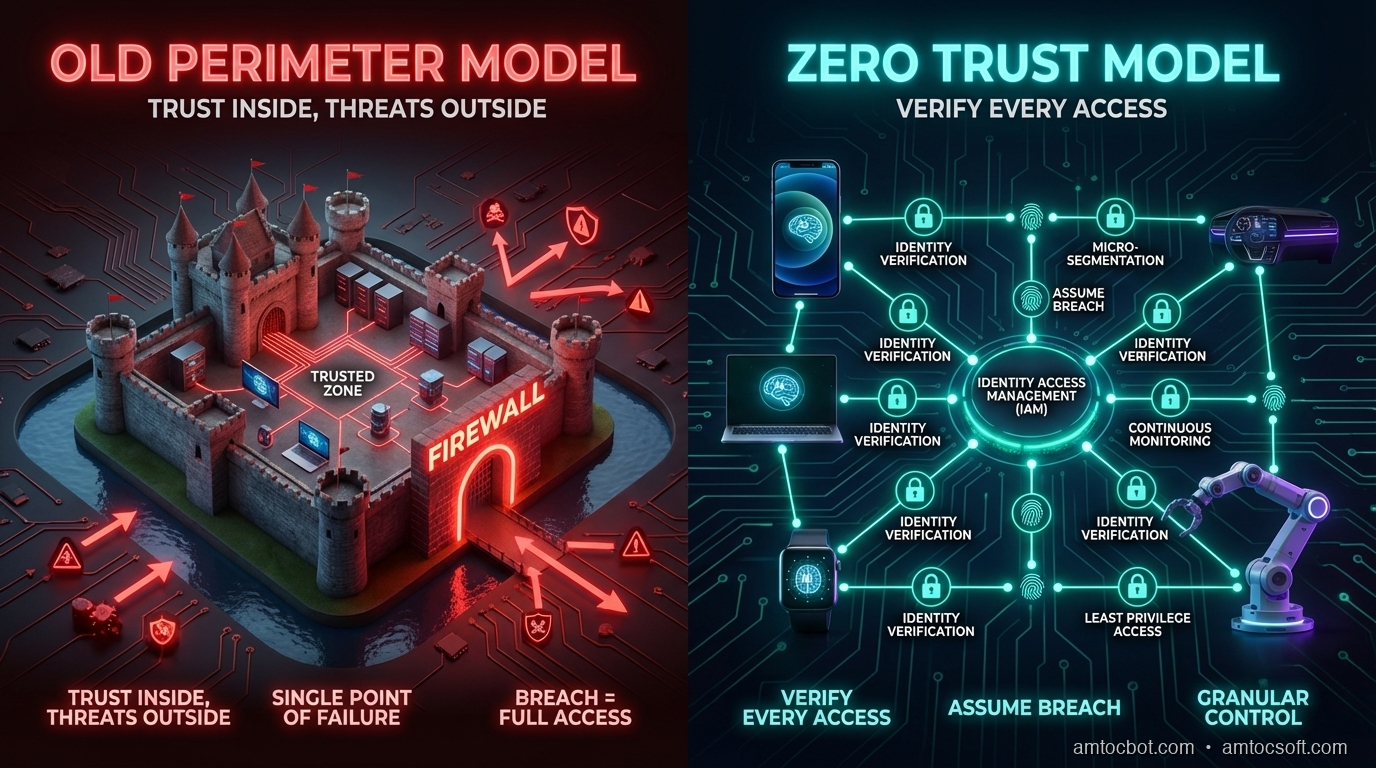
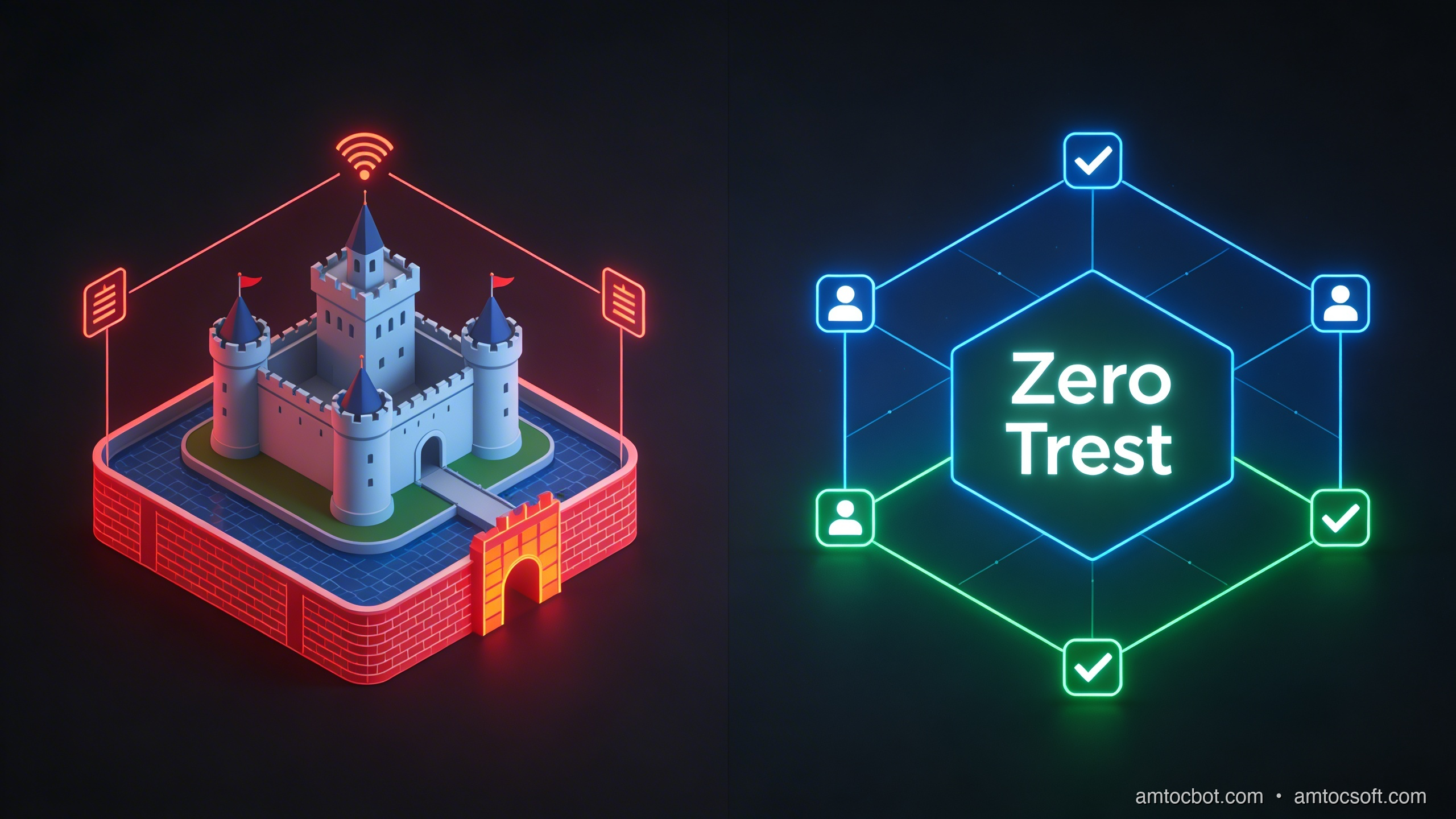
Hero: Zero Trust Architecture — identity verification at every hop

Introduction

There was a time when building secure software meant building a moat. You put your servers inside a corporate network, slapped a firewall on the edge, and assumed that anything already inside the walls was trustworthy. If a request came from the right IP range, it was probably fine. If it was on the VPN, it was almost certainly fine.

That model made sense when applications ran in a single data center, when developers worked from a single office, and when "the cloud" meant someone else's file cabinet. It does not make sense anymore.

Today's applications are distributed across AWS, GCP, Azure, and edge nodes. Developers connect from home, coffee shops, and co-working spaces. Microservices talk to other microservices across container boundaries that do not map to any physical location. A single user request might touch a dozen internal APIs before a response is assembled. The "inside" of the network is everywhere — and that means the perimeter no longer exists in any meaningful sense.

Zero Trust is the architectural response to this reality. The core principle is blunt: never trust, always verify. Every request — whether it comes from a user's browser, a background job, or a peer microservice — must authenticate, must be authorized for the specific action it is requesting, and must be re-verified continuously. Location on the network grants nothing.

For security architects and compliance teams, Zero Trust is often discussed at the policy and framework level. This post is for developers. We will get into the code: how to validate JWT tokens properly in a FastAPI service, how to configure mTLS between services, how to use SPIFFE/SPIRE to give workloads cryptographic identities, and how to write policy-based authorization using OPA. We will look at what these patterns actually cost in terms of latency and operational overhead. And we will be honest about the tradeoffs, because Zero Trust is not free.

By the end, you will have a concrete mental model and working code you can adapt to your own services.


The Problem: Why the Perimeter Broke

The castle-and-moat security model rests on one assumption: that the boundary between "inside" and "outside" is meaningful and enforceable. Every architectural decision since 2010 has systematically destroyed that assumption.

Cloud-native infrastructure erased the inside. When your application runs across multiple cloud providers and regions, there is no single network boundary. A Kubernetes pod in us-east-1 talking to a managed database in eu-west-1 is not "inside" anything. Traffic travels over paths controlled by third parties. The old mental model of "trust internal IPs" becomes actively dangerous because internal IP ranges overlap between VPCs, between cloud providers, and between tenants on shared infrastructure.

Remote work and contractor access expanded the edge to everywhere. Your developers are not in an office behind a managed switch. They are connecting from personal routers with default passwords, from hotel networks, from devices that may or may not have EDR installed. VPNs were designed to extend the perimeter to remote employees, but they do so by essentially putting those employees "inside" the castle — with all the trust that implies. A compromised developer laptop on a VPN has full lateral movement access to anything the VPN permits.

Lateral movement is the real threat. Major breaches are rarely about a single endpoint getting owned. They are about attackers using that initial foothold to move laterally through a network that trusted internal traffic implicitly. The 2020 SolarWinds attack, the 2021 Colonial Pipeline ransomware, and dozens of high-profile cloud breaches all followed the same pattern: initial access, lateral movement, persistence, exfiltration. Perimeter security stops initial access (sometimes). It does almost nothing about lateral movement once an attacker is inside.

Third-party dependencies and SaaS integrations punched holes in the moat. Modern applications integrate with dozens of external services: payment processors, identity providers, analytics platforms, communication tools. Each integration is a potential entry point. Each API key stored in a .env file is a credential that, if leaked, grants access from outside the perimeter entirely.

The implicit trust model creates hidden attack surface. When service A trusts service B simply because B is on the same internal network, an attacker who compromises any internal service can impersonate any other. There is no cryptographic proof of identity — just network topology, which is increasingly meaningless.

Zero Trust addresses all of these by shifting the security model from "where are you" to "who are you, what do you want, and can I verify both cryptographically."

The three core principles:

  1. Never trust, always verify — Every request must present verifiable credentials. Network location is not a credential.
  2. Least privilege — Every identity (user, service, device) gets only the permissions it needs for the specific action, at the specific time, with the specific scope.
  3. Assume breach — Design systems as if an attacker is already inside. Minimize blast radius, segment access, log everything, and detect anomalies.
Architecture diagram: Zero Trust vs perimeter model — identity verification at each service boundary

How It Works: The Technical Building Blocks

Zero Trust is not a product you buy. It is a set of technical patterns you implement across your infrastructure and code. Let us walk through the key mechanisms.

Workload Identity with SPIFFE and SPIRE

The first problem to solve is: how does a service prove who it is? Usernames and passwords are unsuitable for machine-to-machine communication. Static API keys are better but require manual rotation and out-of-band distribution. The modern answer is workload identity — cryptographic attestation of what a piece of software is, based on verifiable properties of its runtime environment.

SPIFFE (Secure Production Identity Framework For Everyone) is the open standard for workload identity. A SPIFFE identity is a URI in the form spiffe://trust-domain/path — for example, spiffe://prod.example.com/payments-service. This URI is embedded in an X.509 certificate called an SVID (SPIFFE Verifiable Identity Document).

SPIRE is the reference implementation of SPIFFE. A SPIRE server manages the trust domain and issues SVIDs. SPIRE agents run on each node, attest workloads using platform-specific mechanisms (Kubernetes service account tokens, AWS instance identity documents, TPM attestation), and deliver short-lived SVIDs to workloads via a Unix domain socket.

The key properties of this model:

  • SVIDs are short-lived (typically 1 hour or less), so a compromised certificate has a small window of validity.
  • Attestation is automatic — a new pod gets an identity without a human issuing a certificate manually.
  • The trust domain is cryptographically rooted, so certificates cannot be forged.

Once your services have SPIFFE identities, you can use those identities in mTLS connections, OIDC token exchange, and policy evaluation.

Mutual TLS (mTLS)

Standard TLS authenticates the server to the client. The client verifies that the server's certificate was issued by a trusted CA and matches the domain it is connecting to. The server knows nothing verifiable about the client.

Mutual TLS adds client authentication. Both sides present certificates. Both sides verify the other's certificate against a trusted CA. The result is a cryptographically authenticated channel where both parties know exactly who they are talking to.

For service-to-service communication in a Zero Trust model, mTLS is the baseline. When the payments service calls the inventory service, the inventory service does not just trust the call because it came from an internal IP. It verifies the caller's SPIFFE SVID, confirms it maps to an identity it is permitted to accept requests from, and only then processes the request.

In a service mesh (Istio, Linkerd, Consul Connect), mTLS happens transparently in the sidecar proxy. Application code does not need to handle certificate management directly. But understanding what is happening underneath is essential for writing correct authorization policies and debugging failures.

JWT Token Validation

For user-facing APIs, the equivalent of mTLS is rigorous JWT validation. A JSON Web Token carries claims about the authenticated user, signed by an identity provider. The API must verify the signature, validate the claims, and enforce authorization before processing any request.

JWT validation sounds simple but has many pitfalls:

  • Algorithm confusion attacks: An attacker manipulates the alg header to none or switches from RS256 to HS256, using the public key as the HMAC secret. Libraries that respect the alg header field from the token rather than requiring a specific algorithm are vulnerable.
  • Audience and issuer validation: A JWT from your staging environment signed by your staging IdP should never be accepted by your production API. Always validate aud and iss claims explicitly.
  • Expiry validation: Always check exp. Do not accept tokens without an expiry claim.
  • Key rotation: Your validation logic must be able to fetch updated JWKS without restarting the service.

OAuth 2.0 and Token Exchange

For service-to-service calls that cross trust boundaries — calling an external API, or calling an internal API on behalf of a user — OAuth 2.0 token exchange (RFC 8693) allows a service to trade one token for a scoped token specific to the downstream call. This maintains the least-privilege principle: the downstream service receives a token scoped only to what it needs, not the original user's full credential.

Policy-Based Authorization

Authentication proves identity. Authorization determines what that identity is permitted to do. In a Zero Trust model, authorization should be explicit, centralized (or consistently distributed), and evaluated per request — not baked into application code as ad-hoc if/else checks.

Open Policy Agent (OPA) is the most widely adopted policy engine for this. You write authorization policy in Rego, a purpose-built policy language. At request time, your service sends a structured input document to OPA (or the embedded library) and receives a decision. OPA decouples policy from application code, allows policy to be versioned and tested independently, and can be audited.

Cedar (from AWS) is a newer alternative with a focus on formal verification and performance. It uses a different policy language with a strong type system and is designed for high-throughput authorization decisions.

flowchart TD A[Incoming Request] --> B{Has valid token?} B -- No --> C[Return 401 Unauthorized] B -- Yes --> D{Token signature valid?} D -- No --> C D -- Yes --> E{Token not expired?} E -- No --> F[Return 401 Token Expired] E -- Yes --> G{Issuer and audience match?} G -- No --> C G -- Yes --> H[Extract identity claims] H --> I{OPA policy check} I -- Deny --> J[Return 403 Forbidden] I -- Allow --> K[Process request] K --> L[Return 200 with response] style C fill:#ff4444,color:#fff style F fill:#ff4444,color:#fff style J fill:#ff8800,color:#fff style L fill:#22aa44,color:#fff

Implementation Guide

Let us write the code. All examples use Python with FastAPI, but the patterns apply to any stack.

1. JWT Validation Middleware

This middleware validates every incoming request, extracts verified claims, and attaches them to the request context. Application route handlers can then access the verified identity without repeating validation logic.

"""
jwt_middleware.py — Zero Trust JWT validation for FastAPI services.

Validates RS256-signed JWTs from an OIDC-compatible identity provider.
Fetches public keys from the JWKS endpoint and caches them with rotation support.
"""

import time
import httpx
import jwt
from jwt import PyJWKClient, InvalidTokenError, ExpiredSignatureError
from fastapi import Request, HTTPException, status
from fastapi.responses import JSONResponse
from starlette.middleware.base import BaseHTTPMiddleware
from functools import lru_cache
from typing import Optional


# Configuration — load from environment in production
JWKS_URI = "https://auth.example.com/.well-known/jwks.json"
EXPECTED_ISSUER = "https://auth.example.com/"
EXPECTED_AUDIENCE = "api://payments-service"

# Paths that bypass JWT validation (health checks, metrics endpoints)
PUBLIC_PATHS = {"/health", "/metrics", "/ready"}


class JWTValidationMiddleware(BaseHTTPMiddleware):
    """
    Middleware that validates JWT Bearer tokens on every protected request.

    Uses PyJWKClient for automatic key rotation: it fetches the JWKS from
    the identity provider and caches signing keys, re-fetching when an
    unknown key ID (kid) is encountered.
    """

    def __init__(self, app, jwks_uri: str = JWKS_URI):
        super().__init__(app)
        # PyJWKClient handles JWKS fetching, caching, and rotation automatically.
        # lifespan_seconds controls how long a cached key is trusted before
        # re-fetching — set to 3600 (1 hour) to handle routine key rotation.
        self.jwks_client = PyJWKClient(
            jwks_uri,
            lifespan_seconds=3600,
            headers={"User-Agent": "payments-service/1.0"},
        )

    async def dispatch(self, request: Request, call_next):
        # Skip validation for public paths
        if request.url.path in PUBLIC_PATHS:
            return await call_next(request)

        # Extract Bearer token from Authorization header
        token = self._extract_bearer_token(request)
        if token is None:
            return JSONResponse(
                status_code=status.HTTP_401_UNAUTHORIZED,
                content={"error": "missing_token", "detail": "Authorization header required"},
                headers={"WWW-Authenticate": "Bearer"},
            )

        # Validate and decode the token
        claims = self._validate_token(token)
        if claims is None:
            return JSONResponse(
                status_code=status.HTTP_401_UNAUTHORIZED,
                content={"error": "invalid_token", "detail": "Token validation failed"},
                headers={"WWW-Authenticate": "Bearer error=\"invalid_token\""},
            )

        # Attach verified claims to request state for use by route handlers
        request.state.identity = claims
        request.state.subject = claims.get("sub")
        request.state.scopes = set(claims.get("scope", "").split())

        return await call_next(request)

    def _extract_bearer_token(self, request: Request) -> Optional[str]:
        """Extract the raw JWT from the Authorization: Bearer <token> header."""
        auth_header = request.headers.get("Authorization", "")
        if not auth_header.startswith("Bearer "):
            return None
        token = auth_header[len("Bearer "):]
        return token if token else None

    def _validate_token(self, token: str) -> Optional[dict]:
        """
        Full JWT validation:
        1. Fetch the correct signing key from JWKS (by kid in token header)
        2. Verify RS256 signature — never accept 'none' or HS256
        3. Validate expiry (exp), issuer (iss), and audience (aud)
        """
        try:
            # Get the signing key matching the token's kid header.
            # This raises PyJWKClientError if the key is not found,
            # which triggers a JWKS re-fetch automatically.
            signing_key = self.jwks_client.get_signing_key_from_jwt(token)

            claims = jwt.decode(
                token,
                signing_key.key,
                algorithms=["RS256"],  # Explicitly whitelist — never accept 'none'
                audience=EXPECTED_AUDIENCE,
                issuer=EXPECTED_ISSUER,
                options={
                    "require": ["exp", "iat", "sub", "iss", "aud"],
                    "verify_exp": True,
                    "verify_iat": True,
                },
            )
            return claims

        except ExpiredSignatureError:
            # Log separately — useful for debugging clock skew issues
            return None
        except InvalidTokenError:
            return None
        except Exception:
            # Catch-all for unexpected errors (network issues fetching JWKS, etc.)
            return None


# Example route handler using verified identity from middleware
from fastapi import FastAPI, Depends

app = FastAPI()
app.add_middleware(JWTValidationMiddleware)


def require_scope(required_scope: str):
    """Dependency that checks for a specific OAuth scope in the verified token."""
    def check_scope(request: Request):
        if required_scope not in request.state.scopes:
            raise HTTPException(
                status_code=status.HTTP_403_FORBIDDEN,
                detail=f"Required scope '{required_scope}' not present",
            )
        return request.state.identity
    return check_scope


@app.get("/payments/{payment_id}")
async def get_payment(
    payment_id: str,
    identity=Depends(require_scope("payments:read")),
):
    """
    This route handler only runs if:
    - A valid, non-expired JWT was presented
    - The token has the 'payments:read' scope
    The identity dict contains verified claims (sub, email, roles, etc.)
    """
    return {
        "payment_id": payment_id,
        "requested_by": identity["sub"],
    }

2. mTLS Client Certificate Verification

When services communicate with each other, mTLS provides cryptographic authentication on both sides. In Python, this is typically handled at the server level by configuring the TLS termination to require and verify client certificates. Here is how to configure it in a FastAPI service running behind uvicorn, and how to add application-level verification of the SPIFFE identity in the certificate.

"""
mtls_server.py — Configure mTLS with SPIFFE identity verification.

This module shows two layers of mTLS enforcement:
1. TLS-level: uvicorn requires a client certificate signed by our CA.
2. Application-level: We extract and verify the SPIFFE URI SAN from the cert.

In a service mesh (Istio/Linkerd), layer 1 is handled by the sidecar proxy.
Layer 2 should still be done in application code for defense in depth.
"""

import ssl
import uvicorn
from fastapi import Request, HTTPException, status
from cryptography import x509
from cryptography.hazmat.backends import default_backend
from cryptography.x509.oid import ExtensionOID
from typing import Optional
import re


# Allowed SPIFFE identities that may call this service.
# In production, load from a policy store or environment config.
ALLOWED_CALLER_IDENTITIES = {
    "spiffe://prod.example.com/orders-service",
    "spiffe://prod.example.com/api-gateway",
}

TRUST_DOMAIN = "prod.example.com"


def extract_spiffe_id_from_cert(cert_der: bytes) -> Optional[str]:
    """
    Parse the DER-encoded client certificate and extract the SPIFFE ID
    from the Subject Alternative Name (SAN) URI extension.

    SPIFFE SVIDs embed the workload identity as a URI SAN in the form:
      spiffe://trust-domain/workload-path

    Returns the SPIFFE URI string, or None if not present.
    """
    try:
        cert = x509.load_der_x509_certificate(cert_der, default_backend())
        san_extension = cert.extensions.get_extension_for_oid(
            ExtensionOID.SUBJECT_ALTERNATIVE_NAME
        )
        san = san_extension.value

        # Extract URI-type SANs and find the SPIFFE one
        for uri in san.get_values_for_type(x509.UniformResourceIdentifier):
            if uri.startswith("spiffe://"):
                return uri

        return None
    except Exception:
        return None


def verify_spiffe_identity(spiffe_id: Optional[str]) -> bool:
    """
    Verify that the presented SPIFFE ID:
    1. Belongs to our trust domain (not a foreign SPIRE instance)
    2. Is in the allowed callers list for this service

    This is the authorization step — even a valid mTLS connection from
    a legitimate service should be rejected if it is not authorized to
    call this specific service.
    """
    if spiffe_id is None:
        return False

    # Validate trust domain to prevent cross-domain identity confusion
    expected_prefix = f"spiffe://{TRUST_DOMAIN}/"
    if not spiffe_id.startswith(expected_prefix):
        return False

    return spiffe_id in ALLOWED_CALLER_IDENTITIES


# FastAPI middleware to enforce SPIFFE identity at the application layer
from starlette.middleware.base import BaseHTTPMiddleware
from starlette.responses import JSONResponse


class SPIFFEIdentityMiddleware(BaseHTTPMiddleware):
    """
    Extracts and verifies the SPIFFE identity from the mTLS client certificate.

    NOTE: This middleware requires that uvicorn/the TLS terminator is configured
    to pass the client certificate to the application. When running behind a
    reverse proxy or service mesh, the proxy typically passes the cert via the
    X-Forwarded-Client-Cert header (XFCC) — adjust extraction accordingly.
    """

    async def dispatch(self, request: Request, call_next):
        # In direct uvicorn mTLS, the client cert is accessible via
        # request.scope["transport"].get_extra_info("peercert").
        # For XFCC header (Envoy/Istio), parse from the header value.

        spiffe_id = self._get_spiffe_id_from_request(request)

        if not verify_spiffe_identity(spiffe_id):
            return JSONResponse(
                status_code=status.HTTP_403_FORBIDDEN,
                content={
                    "error": "unauthorized_caller",
                    "detail": f"SPIFFE identity '{spiffe_id}' is not authorized",
                },
            )

        # Attach verified workload identity to request state
        request.state.caller_spiffe_id = spiffe_id
        return await call_next(request)

    def _get_spiffe_id_from_request(self, request: Request) -> Optional[str]:
        """
        Extract SPIFFE ID from XFCC header (Istio/Envoy format).

        The X-Forwarded-Client-Cert header in Envoy contains the client cert
        fields in a structured format. We extract the URI SAN from it.

        Example XFCC value:
          Hash=abc123;URI=spiffe://prod.example.com/orders-service;...
        """
        xfcc = request.headers.get("X-Forwarded-Client-Cert", "")
        if not xfcc:
            return None

        # Parse URI field from XFCC header
        uri_match = re.search(r'URI=([^;,]+)', xfcc)
        if uri_match:
            return uri_match.group(1)

        return None


def create_mtls_ssl_context(
    cert_path: str,
    key_path: str,
    ca_cert_path: str,
) -> ssl.SSLContext:
    """
    Create an SSL context for uvicorn that:
    - Presents our service certificate to clients
    - Requires clients to present a certificate (CERT_REQUIRED)
    - Verifies client certificates against our CA bundle (SPIRE CA)
    """
    ctx = ssl.SSLContext(ssl.PROTOCOL_TLS_SERVER)
    ctx.load_cert_chain(certfile=cert_path, keyfile=key_path)
    ctx.load_verify_locations(cafile=ca_cert_path)
    ctx.verify_mode = ssl.CERT_REQUIRED  # Reject connections without a client cert
    ctx.minimum_version = ssl.TLSVersion.TLSv1_3  # Enforce TLS 1.3 minimum
    return ctx


# To run with mTLS:
# ssl_ctx = create_mtls_ssl_context(
#     cert_path="/run/spiffe/svid/cert.pem",
#     key_path="/run/spiffe/svid/key.pem",
#     ca_cert_path="/run/spiffe/bundle/bundle.crt",
# )
# uvicorn.run(app, host="0.0.0.0", port=8443, ssl=ssl_ctx)

3. Policy-Based Authorization with OPA

Authentication and identity verification tell you who is making the request. Authorization policy tells you whether they are allowed to do what they are asking. Rather than embedding authorization logic as if/else conditions in route handlers, use a policy engine that can be managed, versioned, and tested independently.

"""
opa_authz.py — Policy-based authorization using Open Policy Agent.

Sends a structured authorization request to OPA and uses the decision
to allow or deny the incoming API request. Policy is defined in Rego
files managed separately from application code.
"""

import httpx
from fastapi import Request, HTTPException, status, Depends
from typing import Any, Optional
import logging

logger = logging.getLogger(__name__)

# OPA server endpoint — in production, OPA runs as a sidecar or local agent
OPA_URL = "http://localhost:8181/v1/data/payments/authz/allow"
OPA_TIMEOUT_SECONDS = 0.1  # Keep authorization decisions fast — 100ms max


class OPAAuthorizationError(Exception):
    pass


async def check_opa_policy(
    input_document: dict,
    opa_url: str = OPA_URL,
) -> bool:
    """
    Send an authorization request to OPA and return the boolean decision.

    OPA evaluates the request against the loaded Rego policy and returns
    a JSON response. We check the 'result' field for the allow decision.

    The input_document should contain everything the policy needs to make
    a decision: identity claims, the action being performed, and the resource.
    """
    try:
        async with httpx.AsyncClient(timeout=OPA_TIMEOUT_SECONDS) as client:
            response = await client.post(
                opa_url,
                json={"input": input_document},
            )
            response.raise_for_status()
            result = response.json()
            # OPA returns {"result": true} or {"result": false}
            return bool(result.get("result", False))

    except httpx.TimeoutException:
        # On OPA timeout, fail closed — deny the request
        logger.error("OPA authorization timeout — denying request for safety")
        return False
    except httpx.HTTPError as e:
        logger.error(f"OPA HTTP error: {e} — denying request")
        return False


def build_authz_input(
    request: Request,
    resource_id: Optional[str] = None,
) -> dict:
    """
    Construct the input document sent to OPA for evaluation.

    The structure of this document must match what the Rego policy expects.
    Include everything the policy might need: identity, action, resource, context.
    """
    identity = getattr(request.state, "identity", {})
    caller_service = getattr(request.state, "caller_spiffe_id", None)

    return {
        "subject": {
            "user_id": identity.get("sub"),
            "roles": identity.get("roles", []),
            "scopes": list(getattr(request.state, "scopes", set())),
            "service": caller_service,
        },
        "action": {
            "method": request.method,
            "path": request.url.path,
        },
        "resource": {
            "type": "payment",
            "id": resource_id,
        },
        "context": {
            "ip": request.client.host if request.client else None,
            "user_agent": request.headers.get("User-Agent"),
        },
    }


def require_policy_allow(resource_id_param: Optional[str] = None):
    """
    FastAPI dependency factory that enforces OPA policy for a route.

    Usage:
        @app.delete("/payments/{payment_id}")
        async def delete_payment(
            payment_id: str,
            _=Depends(require_policy_allow("payment_id")),
        ):
            ...
    """
    async def enforce(request: Request):
        input_doc = build_authz_input(
            request,
            resource_id=request.path_params.get(resource_id_param) if resource_id_param else None,
        )

        allowed = await check_opa_policy(input_doc)

        if not allowed:
            logger.warning(
                f"OPA denied {request.method} {request.url.path} "
                f"for subject {input_doc['subject']}"
            )
            raise HTTPException(
                status_code=status.HTTP_403_FORBIDDEN,
                detail="Policy evaluation denied this request",
            )

    return enforce


# Example Rego policy (payments/authz.rego — managed in a separate policy repo):
#
# package payments.authz
#
# default allow = false
#
# # Admins can do anything
# allow {
#     "admin" in input.subject.roles
# }
#
# # Service-to-service: orders-service can read payments
# allow {
#     input.subject.service == "spiffe://prod.example.com/orders-service"
#     input.action.method == "GET"
# }
#
# # Users can read their own payments if they have the right scope
# allow {
#     input.action.method == "GET"
#     "payments:read" in input.subject.scopes
# }
#
# # Users cannot delete payments — even with admin role, require 2FA context
# allow {
#     input.action.method == "DELETE"
#     "admin" in input.subject.roles
#     input.context.mfa_verified == true
# }


# Route using full Zero Trust stack: JWT validation + mTLS + OPA
from fastapi import FastAPI
app = FastAPI()


@app.delete(
    "/payments/{payment_id}",
    dependencies=[Depends(require_policy_allow("payment_id"))],
)
async def delete_payment(payment_id: str, request: Request):
    """
    This route is protected by three layers:
    1. JWTValidationMiddleware — validates the Bearer token
    2. SPIFFEIdentityMiddleware — verifies caller's mTLS certificate
    3. OPA policy — evaluates fine-grained authorization rules
    """
    return {"deleted": payment_id, "by": request.state.identity.get("sub")}
sequenceDiagram participant C as Client Service participant GW as API Gateway participant SV as Payments Service participant OPA as OPA Sidecar participant DB as Database C->>GW: POST /payments (JWT + mTLS cert) GW->>GW: Verify JWT signature & claims GW->>GW: Validate mTLS client cert (SPIFFE) GW->>SV: Forward request (XFCC header set) SV->>SV: Extract SPIFFE ID from XFCC SV->>SV: Verify SPIFFE ID in allowlist SV->>OPA: POST /v1/data/payments/authz/allow OPA->>OPA: Evaluate Rego policy OPA-->>SV: {"result": true} SV->>DB: Execute query with verified identity DB-->>SV: Result SV-->>GW: 200 OK GW-->>C: 200 OK Note over C,DB: Every hop is authenticated and authorized independently

Comparison and Tradeoffs

Traditional VPN vs Zero Trust

The VPN model was designed to extend a trusted network to remote users. It solves the "employee is not in the office" problem by putting them back on the internal network. Zero Trust solves a fundamentally different problem: it treats the network itself as untrusted, regardless of where you are connecting from.

Dimension Traditional VPN / Perimeter Zero Trust
Trust model Trust by network location Trust by verified identity only
Authentication Single point at VPN gateway Per-request, per-service
Lateral movement Unrestricted inside the perimeter Limited by per-service authorization
Credential scope VPN credential grants broad access Tokens/certs scoped to specific services
Breach blast radius High — attacker has full internal access Low — compromise limited to one workload's permissions
Auditability Coarse-grained (who was on VPN, when) Fine-grained (who called what, with what identity, what was decided)
Developer experience Connect once, access everything Additional headers/tokens per service (mitigated by service mesh)
Operational complexity Simple once set up Higher — SPIRE, OPA, JWKS rotation, mTLS all require ops investment
Performance VPN latency at edge only Latency at every service boundary (typically 1-5ms per hop)

Security Model Comparison

Pattern Threat it addresses Limitation
mTLS Service impersonation, man-in-the-middle Does not control what an authenticated service is allowed to do
JWT validation Forged user identity Does not authenticate the calling service
SPIFFE/SPIRE Workload identity spoofing, static credentials Requires SPIRE infrastructure investment
OPA policy Over-broad authorization, inconsistent access control Policy correctness depends on Rego code quality and test coverage
Service mesh (Istio) mTLS complexity, certificate management Sidecar overhead (CPU and memory per pod)

When to Use a Service Mesh vs Application-Level mTLS

A service mesh (Istio, Linkerd, Consul Connect) implements mTLS and workload identity transparently at the infrastructure layer. Application code does not change. This is ideal for organizations with many services and dedicated platform engineering capacity.

Application-level mTLS and SPIFFE integration is appropriate when:
- You have a small number of services and cannot absorb the operational complexity of a full service mesh.
- You need fine-grained control that goes beyond what mesh-level policy can express.
- You are running on infrastructure where sidecar injection is impractical (e.g., Lambda, managed container services without sidecar support).

A service mesh does not eliminate the need for application-level authorization. Mesh-level policy is coarse-grained (can service A talk to service B at all). OPA or Cedar adds fine-grained authorization (can service A call the DELETE /payments/{id} endpoint on service B for payment ID 12345, given the current user context).

Comparison visual: service mesh mTLS vs application-level mTLS and OPA authorization layers
graph LR subgraph "Traditional Perimeter" FW[Firewall] --> |"Trusted internal traffic"| S1[Service A] FW --> S2[Service B] FW --> S3[Service C] S1 --> |"No auth needed"| S2 S2 --> |"No auth needed"| S3 end subgraph "Zero Trust" GW2[API Gateway] --> |"JWT validated"| SA[Service A
SPIFFE ID] SA --> |"mTLS + OPA check"| SB[Service B
SPIFFE ID] SB --> |"mTLS + OPA check"| SC[Service C
SPIFFE ID] SPIRE[SPIRE Server] -.->|"Issues SVID"| SA SPIRE -.->|"Issues SVID"| SB SPIRE -.->|"Issues SVID"| SC OPA2[OPA Policy] -.->|"Auth decisions"| SA OPA2 -.->|"Auth decisions"| SB OPA2 -.->|"Auth decisions"| SC end style FW fill:#cc3333,color:#fff style GW2 fill:#2266cc,color:#fff style SPIRE fill:#226622,color:#fff style OPA2 fill:#226622,color:#fff

Production Considerations

Certificate Rotation

Short-lived SVIDs are a feature, not a limitation, but they require your services to handle rotation gracefully. SPIRE agents automatically renew SVIDs before expiry and deliver the new credential via the Workload API. Your services need to:

  • Watch the Workload API socket for updates rather than reading the certificate once at startup. The SPIFFE Workload API provides a streaming gRPC interface that pushes updates automatically.
  • Not cache TLS connections indefinitely. Connection pools should respect certificate expiry. A connection established with an old certificate should be torn down and re-established after rotation.
  • Test rotation in staging. Set a very short SVID TTL (5 minutes) in staging and run load tests during rotation events to catch issues before production.

Key Management

SPIRE server is a critical piece of infrastructure. Its signing keys must be protected. In production:

  • Run SPIRE server with an external key manager — AWS KMS or HashiCorp Vault — rather than storing signing keys on disk.
  • Deploy SPIRE server in an HA configuration with an external database backend (PostgreSQL).
  • Treat the SPIRE server's availability as equivalent to your authentication infrastructure — if SPIRE is down and SVIDs expire, services lose the ability to authenticate to each other.

For JWT signing keys managed by your IdP (Auth0, Keycloak, Okta), ensure your JWKS fetching logic handles key rotation without service restarts. The PyJWKClient implementation shown earlier does this automatically by re-fetching when an unknown kid is encountered.

Performance Overhead

Zero Trust adds latency at every service boundary. Understanding the budget:

  • JWKS fetch and JWT validation: Negligible after the first request — signing keys are cached in memory. Budget 0.1-0.5ms per token validation with a warm cache.
  • mTLS handshake: TLS 1.3 with session resumption (tickets or session IDs) reduces handshake overhead to one round trip for resumed sessions. For new connections, budget 1-2ms for the handshake.
  • OPA policy evaluation: 1-5ms for most policies when OPA runs as a sidecar (local network call). With the embedded Go library (github.com/open-policy-agent/opa/rego), evaluation drops to under 1ms. The Python opa-python-client library adds network overhead — prefer the sidecar model.
  • Istio sidecar (Envoy): Adds 1-3ms per hop on average, 5-10ms at P99 under load, with 50-100MB memory overhead per pod.

For most API services, these overheads are negligible compared to database query times and business logic processing. The exception is high-frequency internal service calls (tens of thousands per second per service) where connection pool management and session resumption become critical.

Monitoring and Anomaly Detection

Zero Trust generates rich telemetry. Use it:

  • Log every authorization decision from OPA — allowed and denied. Denied requests are signals of misconfiguration, attempted lateral movement, or bugs.
  • Alert on SPIFFE attestation failures — a workload that cannot get a certificate is likely a deployment issue, but a sustained pattern of failures from unexpected nodes can indicate an attack.
  • Trace request identity across service boundaries with distributed tracing. Include the SPIFFE ID and JWT subject in trace attributes so you can reconstruct the full identity chain for any request.
  • Set SLOs on certificate renewal latency. If SVIDs are not renewed with sufficient buffer before expiry, services will start rejecting each other's connections.

Conclusion

The network perimeter as a security boundary is gone. Distributed systems, remote work, and cloud-native infrastructure have dismantled it, and no amount of VPN tunnel engineering will reassemble it. The question is not whether to move to a Zero Trust model — it is how to get there incrementally without breaking production.

The path is practical and well-defined. Start with JWT validation at your API gateway and standardize on it across all services. Move to SPIFFE/SPIRE for workload identity as you scale your service mesh — or adopt Istio or Linkerd to get mTLS for free at the infrastructure layer. Add OPA for authorization logic that is too complex or too important to live in application if/else blocks. Each step independently improves your security posture.

The code in this post gives you working starting points: a FastAPI middleware that handles JWT validation correctly (including algorithm whitelist enforcement, JWKS rotation, and claim validation), an mTLS setup with SPIFFE identity extraction from both direct TLS and Envoy's XFCC header, and an OPA integration pattern that keeps authorization decisions fast and fails closed on timeout.

Zero Trust is not a product you install on Tuesday and call done. It is an architectural discipline — a continuous process of making every assumption about identity and access explicit, verifiable, and auditable. The developers who understand it will build systems that are resilient to the breach scenarios that are inevitable in any large distributed environment. The ones who do not will continue to rely on a moat that has already been drained.

The perimeter is gone. Identity is what you have left. Build from there.


Next in the API Security series: Rate Limiting AI Agents: Protecting APIs from Intelligent Abuse.

About the Author

Toc Am

Founder of AmtocSoft. Writing practical deep-dives on AI engineering, cloud architecture, and developer tooling. Previously built backend systems at scale. Reviews every post published under this byline.

LinkedIn X / Twitter

Published: 2026-05-07 · Written with AI assistance, reviewed by Toc Am.

Get These In Your Inbox

Weekly deep-dives on AI engineering, no fluff. Join the newsletter →

Subscribe (free)

Or grab the book ($39, ~100 pages) · Buy me a coffee

Buy Me a Coffee · 🔔 YouTube · 💼 LinkedIn · 🐦 X/Twitter
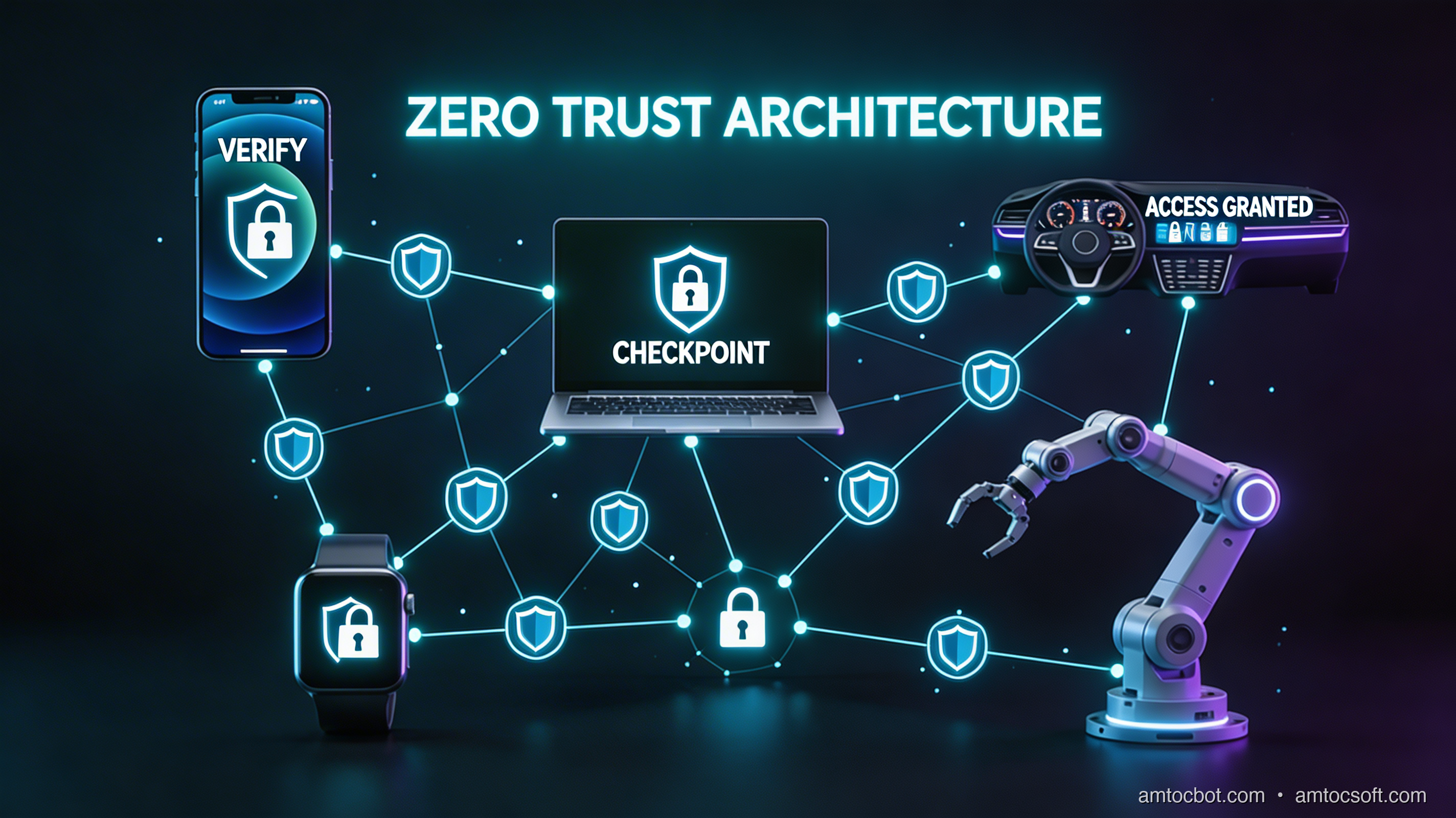
AI as Infrastructure: Value Moves Up-Stack

For a few years the AI conversation was about who had the biggest model. That is the wrong altitude now. Models still matter, the way CPUs s...