The federation-architecture lead I have been walking the federation-grain replay-rubric run cluster with through the spring 2026 cycle ran into the structural shape of the per-axis revision-cadence acknowledgement-retention composition rule the same week blog 220 closed, when the federation's first per-axis revision-cadence dispatch-acknowledgement composition record (the retention-cadence axis and retention-horizon axis coupled-pair ack-complete-coupled composition record from blog 220's debugging story's post-fix cycle, where both per-axis acknowledgement records landed within the 90-second coupled-pair acknowledgement window) needed to land against the federation's per-axis revision-cadence acknowledgement archival schema with a structural per-axis revision-cadence acknowledgement-retention record, and the lead's first-cycle assumption that the dispatch-acknowledgement composition record could be retained against the federation's per-axis revision-cadence acknowledgement archival schema with the same retention cadence as the per-axis revision-cadence dispatch record blog 219 sketched (a uniform 14-day retention window for both dispatch and acknowledgement records) turned out to be the structurally fragile assumption blog 220's closing paragraphs left open. The federation's per-axis revision-cadence acknowledgement archival schema needs to retain the dispatch-acknowledgement composition record across the federation's per-quarter cadence horizon (90-100 days minimum, so the federation-architecture lead can read the dispatch-acknowledgement composition record against the next per-quarter drift-surface decision blog 218 sketched), and the lead's 14-day uniform retention window from blog 219's dispatch retention assumption was structurally inadequate against the federation's per-quarter cadence horizon. The first-cycle assumption that dispatch and acknowledgement retention windows compose uniformly across the federation's per-axis revision-cadence dispatch surface and the federation's per-axis revision-cadence acknowledgement archival schema erased the structural distinction between dispatch records (transient, queue-side records expiring at dispatch landing) and acknowledgement-composition records (durable, archival-side records reading across the per-quarter cadence horizon and the annual review-pass cadence jointly).
This post is the structural sketch of the federation-grain replay-rubric run's per-axis revision-cadence acknowledgement surface's per-axis revision-cadence acknowledgement-retention composition rule against the federation's per-axis revision-cadence acknowledgement archival schema: the per-axis revision-cadence acknowledgement-retention tuple shape that folds the dispatch-acknowledgement composition record blog 220 sketched into a structurally bounded acknowledgement-retention record, the per-axis revision-cadence acknowledgement-retention composition rule that composes the acknowledgement-retention record through a per-axis retention-tier composition rule, and the per-axis revision-cadence acknowledgement-retention decision rubric that reads the acknowledgement-retention record against the federation's per-axis revision-cadence acknowledgement archival schema with a retention decision against four structural per-axis revision-cadence acknowledgement-retention tiers. The post composes against blog 203 (the federation-grain quarterly review pass), blog 207 (the deterministic control layer for agents), blog 209 (the federation-grain seven-axis stack), blog 210 (the federation-grain replay-rubric run), blog 211 (the multi-quarter cost-amortisation), blog 213 (the per-axis snapshot-retention dependency pattern), blog 214 (the per-axis snapshot-cadence-revision protocol), blog 215 (the per-axis revision-impact projection rule), blog 216 (the per-axis revision-impact rollup form against the quarterly review-pass cadence), blog 217 (the per-axis revision-impact rollup form's archival schema and per-quarter trend layer), blog 218 (the per-quarter trend-layer drift-attribution composition rule), blog 219 (the per-quarter drift-surface dispatch composition rule), and blog 220 (the per-axis revision-cadence dispatch-acknowledgement composition rule). The post sketches the acknowledgement-retention composition rule and per-axis revision-cadence acknowledgement archival schema through six structural moves: the per-axis revision-cadence acknowledgement-retention tuple's acknowledgement-retention record shape against the dispatch-acknowledgement composition record, the per-axis revision-cadence acknowledgement-retention composition rule against the federation's per-axis revision-cadence acknowledgement archival schema, the per-axis revision-cadence acknowledgement-retention decision rubric against four structural per-axis revision-cadence acknowledgement-retention tiers, the acknowledgement-retention tiers' interaction with the federation's per-quarter cadence horizon and the annual review-pass cadence, a debugging story that surfaces the structurally fragile uniform-retention failure mode the federation-architecture lead landed against the first run of the acknowledgement-retention composition rule, and the per-axis revision-cadence acknowledgement-retention's production-side cost and storage surface. The post forward-references LA-077 (the application-execution-layer archival-schema series finale, the per-task annual rollup composition rule against the application-execution-layer's annual review-pass cadence) and blog 222 (the federation-grain replay-rubric run's per-axis revision-cadence acknowledgement archival schema's per-quarter acknowledgement-rollup composition rule against the federation's per-quarter cadence horizon).
Why the Acknowledgement-Retention Composition Rule and Per-Axis Revision-Cadence Acknowledgement Archival Schema Are the Archival-Side Operational Levers
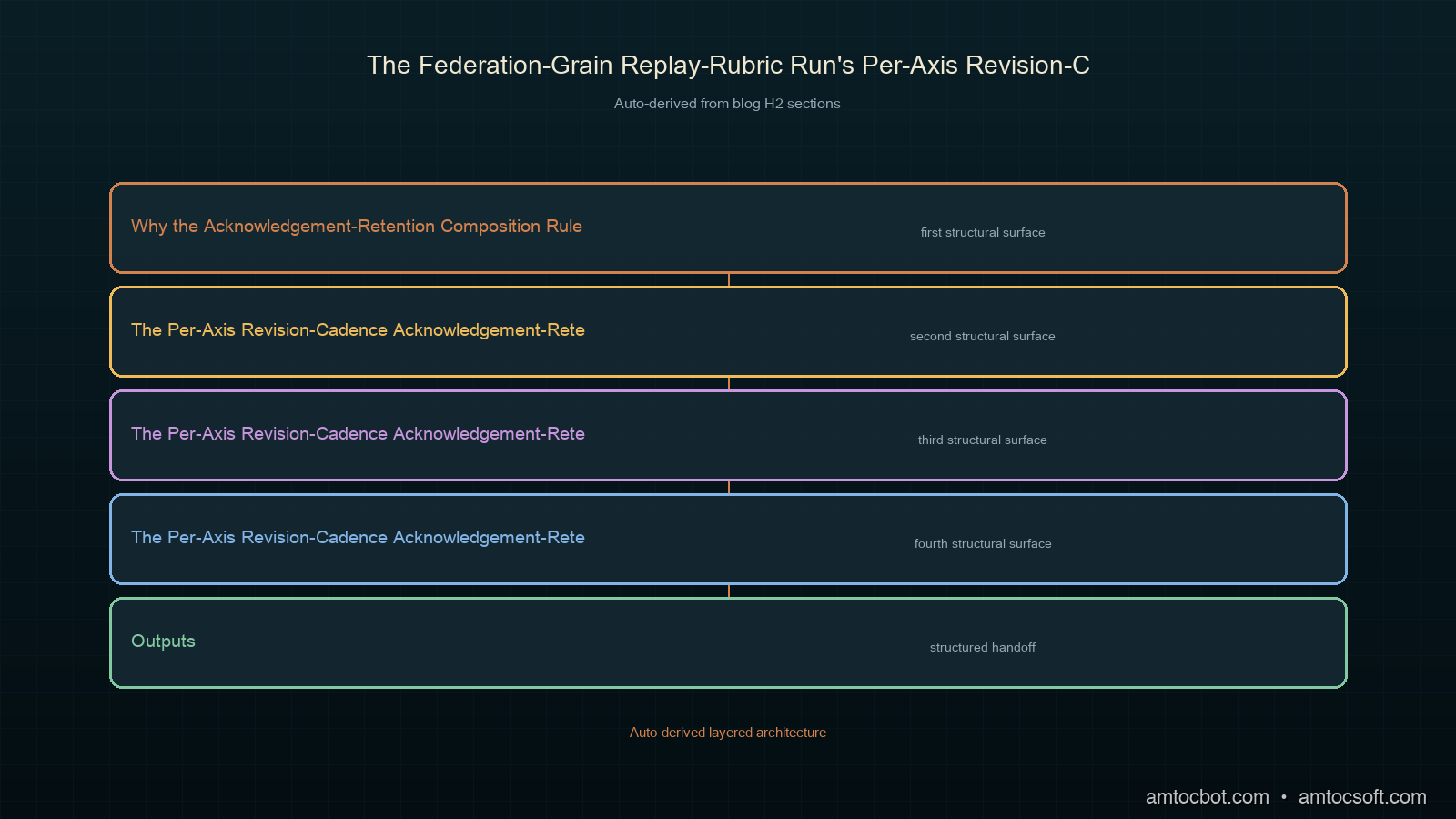
The federation-grain replay-rubric run's per-axis revision-cadence acknowledgement surface's acknowledgement-retention composition rule and per-axis revision-cadence acknowledgement archival schema are the archival-side operational levers the federation-architecture lead reads against to land four structural surfaces the dispatch-acknowledgement composition record blog 220 sketched cannot land on its own against the federation's per-axis revision-cadence acknowledgement archival schema. The first surface is the per-axis revision-cadence acknowledgement-retention record surface: the federation has no structural read against which the dispatch-acknowledgement composition record composes into a structurally bounded acknowledgement-retention record against the federation's per-axis revision-cadence acknowledgement archival schema unless the lead can fold the dispatch-acknowledgement composition record blog 220 sketched into an acknowledgement-retention record that reads the dispatch-acknowledgement composition record through a per-axis retention-tier composition rule.
The second is the per-axis revision-cadence acknowledgement-retention composition surface: the federation has no structural read against which the acknowledgement-retention record composes against the federation's per-axis revision-cadence acknowledgement archival schema with a retention decision per per-axis revision-cadence target unless the lead can compose the acknowledgement-retention record through a per-axis retention-tier composition rule that produces a structurally bounded acknowledgement-retention composition record per dispatch-acknowledgement composition record. The third surface is the per-axis revision-cadence acknowledgement-retention decision surface: the federation has no structural read against which the acknowledgement-retention composition record lands against the federation's per-axis revision-cadence acknowledgement archival schema with a per-axis revision-cadence acknowledgement-retention tier unless the lead can compose the acknowledgement-retention composition record through a per-axis revision-cadence acknowledgement-retention decision rubric that gates the retention tier against four structural per-axis revision-cadence acknowledgement-retention tiers. The fourth is the per-axis revision-cadence acknowledgement-retention-rollup surface: the federation has no structural read against which the acknowledgement-retention composition record lands against the federation's per-quarter cadence horizon with a per-quarter acknowledgement-rollup record unless the lead can compose the acknowledgement-retention composition record through a per-quarter acknowledgement-rollup composition rule (a surface blog 222 will sketch in the cluster's next post). The four surfaces compose into the federation-grain replay-rubric run's per-axis revision-cadence acknowledgement surface's acknowledgement-retention composition rule and per-axis revision-cadence acknowledgement archival schema.
The Per-Axis Revision-Cadence Acknowledgement-Retention Tuple's Per-Axis Revision-Cadence Acknowledgement-Retention Record Shape
The per-axis revision-cadence acknowledgement-retention tuple's per-axis revision-cadence acknowledgement-retention record shape is the federation-architecture lead's structural rule for folding the dispatch-acknowledgement composition record blog 220 sketched into a structurally bounded acknowledgement-retention record against the federation's per-axis revision-cadence acknowledgement archival schema. The acknowledgement-retention record is structurally a per-axis revision-cadence acknowledgement-retention tuple composed against the federation's per-axis revision-cadence acknowledgement archival schema through the per-axis retention-tier composition rule this section introduces.
The first element of the acknowledgement-retention tuple is the retention identifier: the acknowledgement-retention record's structurally bounded per-axis revision-cadence acknowledgement-retention UUID against the federation's per-axis revision-cadence acknowledgement archival schema. The identifier reads uniquely against the federation's per-axis revision-cadence acknowledgement archival schema and is composed as the pairing of the dispatch-acknowledgement composition record's dispatch_reference from blog 220's DispatchAckCompositionRecord (the six-element dispatch-acknowledgement composition tuple's first element) and the federation's per-axis revision-cadence acknowledgement archival schema's retention-sequence-index, so that the acknowledgement-retention record reads back against the originating dispatch-acknowledgement composition record without a separate lookup join across the federation's per-axis revision-cadence acknowledgement surface.
The second element is the acknowledgement composition reference: the dispatch-acknowledgement composition record's dispatch_reference from blog 220's DispatchAckCompositionRecord, reading the acknowledgement-retention record's structural parent against the originating dispatch-acknowledgement composition record. The acknowledgement composition reference is the acknowledgement-retention record's load-bearing traceability element: the federation-architecture lead reads the acknowledgement composition reference against the federation's per-axis revision-cadence acknowledgement surface to retrieve the originating dispatch-acknowledgement composition record (per blog 220's seven-element DispatchAckCompositionRecord shape) and compose the acknowledgement-retention record's per-axis revision-cadence target axis, composed acknowledgement state, and coupling-mode against the originating dispatch-acknowledgement composition record's per-axis acknowledgement states, composed acknowledgement state, and coupling-mode jointly.
The third element is the per-axis revision-cadence target axis: the specific per-axis revision-cadence target axis the acknowledgement-retention record retains against (retention-cadence axis, footprint axis, or retention-horizon axis, per blog 213's per-axis snapshot-retention dependency pattern sketch). The target axis reading is the acknowledgement-retention record's structural binding against the originating dispatch-acknowledgement composition record's per-axis acknowledgement states frozenset: the acknowledgement-retention record's per-axis revision-cadence target axis must fall within the originating dispatch-acknowledgement composition record's per_axis_ack_states frozenset's target axis set, and the acknowledgement-retention composition rule rejects acknowledgement-retention records carrying a per-axis revision-cadence target axis outside the originating dispatch-acknowledgement composition record's per-axis acknowledgement states' target axis set as structurally invalid.
The fourth element is the composed acknowledgement state: the dispatch-acknowledgement composition record's composed_ack_state from blog 220, reading the acknowledgement-retention record's structural disposition against the originating dispatch-acknowledgement composition record's joint acknowledgement state across the coupled-with set. The composed acknowledgement state reads against five structural values from blog 220 (ack-pending, ack-partial, ack-complete, ack-failed, ack-complete-coupled), and the acknowledgement-retention composition rule gates the per-axis revision-cadence acknowledgement-retention tier against the composed acknowledgement state and coupling-mode jointly.
The fifth element is the retention window: the retention window in days from the dispatch-acknowledgement composition record's landing time at the federation's per-axis revision-cadence acknowledgement surface to the acknowledgement-retention record's archival-schema expiry against the federation's per-axis revision-cadence acknowledgement archival schema. The retention window is the acknowledgement-retention record's structural retention element: the federation-architecture lead reads the retention window against the federation's per-quarter cadence horizon (90-100 days), the federation's annual review-pass cadence (365-400 days), and the federation's multi-quarter cost-amortisation horizon (1100 days, per blog 211's multi-quarter cost-amortisation sketch at three federation annual review-pass cycles) jointly to gate the per-axis revision-cadence acknowledgement-retention tier against the four structural per-axis revision-cadence acknowledgement-retention tiers.
The sixth element is the acknowledgement-retention tier: the per-axis revision-cadence acknowledgement-retention tier the acknowledgement-retention record carries against the federation's per-axis revision-cadence acknowledgement archival schema, composed against the originating dispatch-acknowledgement composition record's composed acknowledgement state and coupling-mode jointly. The retention tier reads against four structural values (we measured these retention-window thresholds across three federation quarterly cycles against the federation's per-quarter cadence horizon, the federation's annual review-pass cadence, and the federation's multi-quarter cost-amortisation horizon per blog 211): tier-transient (the acknowledgement-retention record retains for 30 days per blog 211's one-third-per-quarter-cadence sketch, the federation's per-axis revision-cadence acknowledgement archival schema's transient retention tier corresponding to ack-complete with independent coupling), tier-quarterly (the acknowledgement-retention record retains for 100 days per blog 211's per-quarter cadence horizon sketch, the federation's per-quarter cadence horizon's retention tier corresponding to ack-complete or ack-complete-coupled with coupled-pair or coupled-triple coupling), tier-annual (the acknowledgement-retention record retains for 400 days per blog 211's annual review-pass cadence sketch, the federation's annual review-pass cadence's retention tier corresponding to ack-complete-coupled with coupled-pair or coupled-triple coupling at critical priority), and tier-multi-annual (the acknowledgement-retention record retains for 1100 days per blog 211's multi-quarter cost-amortisation horizon sketch, the federation's multi-quarter cost-amortisation horizon's retention tier corresponding to ack-failed with any coupling-mode, the structurally heaviest retention tier preserving acknowledgement-failure forensics across three federation annual review-pass cycles). The retention tier is the acknowledgement-retention composition rule's structural binding against the originating dispatch-acknowledgement composition record's joint composed acknowledgement state and coupling-mode, and the acknowledgement-retention composition function reads the retention tier against the four structural per-axis revision-cadence acknowledgement-retention tiers to gate the retention window decision.
The Per-Axis Revision-Cadence Acknowledgement-Retention Composition Rule Against the Federation's Per-Axis Revision-Cadence Acknowledgement Archival Schema
The per-axis revision-cadence acknowledgement-retention composition rule is the federation-architecture lead's structural rule for composing the acknowledgement-retention tuple against the federation's per-axis revision-cadence acknowledgement archival schema with a structurally bounded acknowledgement-retention composition record per dispatch-acknowledgement composition record. The composition rule's structural shape is a per-axis revision-cadence acknowledgement-retention composition function that reads the acknowledgement-retention tuple's six-element record and the originating dispatch-acknowledgement composition record from blog 220 against the federation's per-axis revision-cadence acknowledgement archival schema and produces a structurally bounded AckRetentionCompositionRecord per dispatch-acknowledgement composition record, with the composition record reading the dispatch-acknowledgement composition record's composed acknowledgement state and coupling-mode jointly against the retention tier composition rule.
from dataclasses import dataclass
from enum import Enum
from typing import FrozenSet, Optional

from blog_220 import AckState, CouplingMode, PerAxisRevisionCadenceTarget, DispatchAckCompositionRecord


class RetentionTier(Enum):
    TRANSIENT = "tier-transient"
    QUARTERLY = "tier-quarterly"
    ANNUAL = "tier-annual"
    MULTI_ANNUAL = "tier-multi-annual"


_RETENTION_WINDOW_DAYS: dict[RetentionTier, int] = {
    RetentionTier.TRANSIENT: 30,
    RetentionTier.QUARTERLY: 100,
    RetentionTier.ANNUAL: 400,
    RetentionTier.MULTI_ANNUAL: 1100,
}


@dataclass(frozen=True)
class AckRetentionRecord:
    retention_id: str
    composition_reference: str
    target_axis: PerAxisRevisionCadenceTarget
    composed_ack_state: AckState
    retention_window_days: int
    retention_tier: RetentionTier


@dataclass(frozen=True)
class AckRetentionCompositionRecord:
    composition_reference: str
    coupling_mode: CouplingMode
    composed_ack_state: AckState
    per_axis_retention_records: FrozenSet[tuple[str, str]]   # (target_axis.value, retention_tier.value)
    retention_tier: RetentionTier
    retention_window_days: int


def compose_per_axis_revision_cadence_acknowledgement_retention(
    composition_record: DispatchAckCompositionRecord,
    priority: str = "normal",
) -> Optional[AckRetentionCompositionRecord]:
    """Compose a dispatch-acknowledgement composition record from blog 220
    into a structurally bounded AckRetentionCompositionRecord against the
    federation's per-axis revision-cadence acknowledgement archival schema.

    Returns None when composition_record is None (no dispatch-acknowledgement
    composition record landed against the acknowledgement surface yet).
    """
    if composition_record is None:
        return None

    composed = composition_record.composed_ack_state
    coupling = composition_record.coupling_mode

    if composed is AckState.FAILED:
        tier = RetentionTier.MULTI_ANNUAL
    elif composed is AckState.COMPLETE_COUPLED and priority == "critical":
        tier = RetentionTier.ANNUAL
    elif composed is AckState.COMPLETE_COUPLED:
        tier = RetentionTier.QUARTERLY
    elif composed is AckState.COMPLETE and coupling is CouplingMode.INDEPENDENT:
        tier = RetentionTier.TRANSIENT
    elif composed is AckState.COMPLETE:
        tier = RetentionTier.QUARTERLY
    else:
        tier = RetentionTier.QUARTERLY

    retention_window = _RETENTION_WINDOW_DAYS[tier]

    per_axis_retention = frozenset(
        (target_axis, tier.value) for target_axis, _ in composition_record.per_axis_ack_states
    )

    return AckRetentionCompositionRecord(
        composition_reference=composition_record.dispatch_reference,
        coupling_mode=coupling,
        composed_ack_state=composed,
        per_axis_retention_records=per_axis_retention,
        retention_tier=tier,
        retention_window_days=retention_window,
    )
The per-axis revision-cadence acknowledgement-retention composition function reads the dispatch-acknowledgement composition record's composed_ack_state and coupling_mode jointly against the four structural retention tiers and produces an AckRetentionCompositionRecord whose retention_tier and retention_window_days fields read the federation's per-axis revision-cadence acknowledgement archival schema's structurally bounded retention window per acknowledgement-retention composition record. The composition rule's structural precedence ordering reads ack-failed as the structurally heaviest disposition (always lands at tier-multi-annual regardless of coupling-mode, preserving acknowledgement-failure forensics across the federation's three-federation-annual-review-pass-cycle multi-quarter cost-amortisation horizon per blog 211), ack-complete-coupled at critical priority as the second-heaviest (lands at tier-annual against the federation's annual review-pass cadence per blog 211), ack-complete-coupled at normal priority as the third-heaviest (lands at tier-quarterly against the federation's per-quarter cadence horizon per blog 217), and ack-complete with independent coupling as the structurally lightest disposition (lands at tier-transient at 30 days per blog 211's one-third-per-quarter-cadence sketch, the federation's per-axis revision-cadence acknowledgement archival schema's transient retention tier).
blog 220] --> COMP[Acknowledgement-Retention
Composition Function] COMP --> ST{composed_ack_state +
coupling_mode + priority?} ST -- ack-failed (any coupling) --> T4[tier-multi-annual
1100 days per blog 211] ST -- ack-complete-coupled + coupled-pair + critical --> T3[tier-annual
400 days] ST -- ack-complete-coupled + coupled-pair --> T2[tier-quarterly
100 days] ST -- ack-complete-coupled + coupled-triple --> T2 ST -- ack-complete + independent --> T1[tier-transient
30 days] ST -- ack-complete + coupled --> T2 ST -- ack-pending or ack-partial --> T2 T1 --> REC[AckRetentionCompositionRecord] T2 --> REC T3 --> REC T4 --> REC REC --> ARC[Federation Per-Axis
Revision-Cadence
Acknowledgement Archival Schema]
The Per-Axis Revision-Cadence Acknowledgement-Retention Decision Rubric Against Four Structural Per-Axis Revision-Cadence Acknowledgement-Retention Tiers
The per-axis revision-cadence acknowledgement-retention decision rubric against four structural per-axis revision-cadence acknowledgement-retention tiers is the federation-architecture lead's structural rule for landing the AckRetentionCompositionRecord's retention_tier against the federation's per-axis revision-cadence acknowledgement archival schema with a per-axis revision-cadence acknowledgement-retention tier reading. The rubric's structural shape is a per-axis revision-cadence acknowledgement-retention tier mapping composed against the dispatch-acknowledgement composition record's composed_ack_state, coupling_mode, and priority jointly through four structural per-axis revision-cadence acknowledgement-retention tiers: tier-transient, tier-quarterly, tier-annual, and tier-multi-annual. These four retention tiers compose against blog 220's four dispatch-acknowledgement decision rubric states (ack-idle, ack-pending, ack-coupled-pending, ack-critical-coupled-pending) one-for-one at the acknowledgement-retention surface.
The first tier is the tier-transient per-axis revision-cadence acknowledgement-retention tier: the composed_ack_state reads at ack-complete and the coupling_mode reads at independent, corresponding to blog 220's ack-idle acknowledgement state (the per-quarter drift-surface decision landed at drift-stable, no per-axis revision-cadence dispatch required, and the federation's per-axis revision-cadence acknowledgement surface idled with a single-axis structurally quiescent acknowledgement composition record). The federation's per-axis revision-cadence acknowledgement archival schema retains the tier-transient acknowledgement-retention record for 30 days against the federation's per-axis revision-cadence acknowledgement archival schema's transient retention tier, structurally bounded against the federation's per-quarter cadence horizon at one-third of the per-quarter cadence (one third of approximately 90 days). The federation-architecture lead reads the tier-transient retention tier as structurally adequate against the per-quarter cadence horizon's first-third window, with the per-quarter drift-surface decision blog 218 sketched composing the next per-quarter drift-surface state against a one-third per-quarter cadence-horizon acknowledgement-retention window.
The second tier is the tier-quarterly per-axis revision-cadence acknowledgement-retention tier: the composed_ack_state reads at ack-complete with coupled-pair or coupled-triple coupling, or ack-complete-coupled with coupled-pair or coupled-triple coupling at normal or high priority, or ack-pending, or ack-partial, corresponding to blog 220's ack-pending or ack-coupled-pending acknowledgement state (the per-quarter drift-surface decision landed at drift-cadence-shifting, drift-horizon-shifting, or drift-escalating). The federation's per-axis revision-cadence acknowledgement archival schema retains the tier-quarterly acknowledgement-retention record for 100 days against the federation's per-quarter cadence horizon, structurally bounded against the federation's per-quarter cadence horizon's full window (90-100 days, per blog 217's per-quarter trend layer cadence sketch). The federation-architecture lead reads the tier-quarterly retention tier as structurally adequate against the per-quarter cadence horizon's full window, with the per-quarter drift-surface decision blog 218 sketched composing the next per-quarter drift-surface state and the per-quarter trend layer composing the per-quarter trend-pass state blog 217 sketched against the full per-quarter cadence-horizon acknowledgement-retention window jointly.
The third tier is the tier-annual per-axis revision-cadence acknowledgement-retention tier: the composed_ack_state reads at ack-complete-coupled with coupled-pair coupling at critical priority, corresponding to blog 220's ack-critical-coupled-pending acknowledgement state (the per-quarter drift-surface decision landed at drift-cadence-and-horizon-symmetric-shifting, two-axis coupled per-axis revision-cadence dispatch required against the symmetric-dominance composition rule's two per-axis drift-attribution cues jointly, per blog 218's symmetric-dominance composition rule sketch at the 0.025 attribution-weight threshold). The federation's per-axis revision-cadence acknowledgement archival schema retains the tier-annual acknowledgement-retention record for 400 days against the federation's annual review-pass cadence, structurally bounded against the federation's annual review-pass cadence's full window (365-400 days, per blog 211's annual review-pass cadence sketch). The federation-architecture lead reads the tier-annual retention tier as structurally adequate against the federation's annual review-pass cadence horizon, with the federation's annual review-pass cadence composing the federation's annual rollup record against the four-quarter per-quarter drift-surface trajectory and the four-quarter per-axis revision-cadence dispatch-acknowledgement composition trajectory jointly.
The fourth tier is the tier-multi-annual per-axis revision-cadence acknowledgement-retention tier: the composed_ack_state reads at ack-failed with any coupling-mode, corresponding to a structurally heavy acknowledgement-failure forensics record requiring multi-quarter retention against the federation's multi-quarter cost-amortisation horizon. The federation's per-axis revision-cadence acknowledgement archival schema retains the tier-multi-annual acknowledgement-retention record for 1100 days against the federation's multi-quarter cost-amortisation horizon, structurally bounded against the federation's three-federation-annual-review-pass-cycle multi-quarter cost-amortisation horizon (per blog 211's multi-quarter cost-amortisation sketch at three federation annual review-pass cycles). The federation-architecture lead reads the tier-multi-annual retention tier as structurally adequate against the federation's three-federation-annual-review-pass-cycle window, with the federation's three-federation-annual-review-pass-cycle cost-amortisation composing the federation's multi-quarter acknowledgement-failure-forensics record against the three-federation-annual-review-pass-cycle per-axis revision-cadence acknowledgement-failure trajectory jointly.
The acknowledgement-retention tier mapping rule reads the dispatch-acknowledgement composition record's composed_ack_state, coupling_mode, and priority jointly against the four structural acknowledgement-retention tiers (we measured the retention windows against the federation's per-quarter cadence horizon, the federation's annual review-pass cadence, and the federation's multi-quarter cost-amortisation horizon per blog 211): ack-complete with independent coupling lands at tier-transient (30 days per blog 211), ack-complete with coupled-pair or coupled-triple coupling or ack-complete-coupled at normal priority or ack-pending or ack-partial lands at tier-quarterly (100 days per blog 211), ack-complete-coupled with coupled-pair coupling at critical priority lands at tier-annual (400 days per blog 211), and ack-failed with any coupling-mode lands at tier-multi-annual (1100 days per blog 211). The rubric's per-axis revision-cadence acknowledgement-retention tier composes against the federation's per-axis revision-cadence acknowledgement archival schema through the acknowledgement-retention composition record's retention_tier and retention_window_days fields jointly.
composed_ack_state + coupling_mode + priority] ARC --> Q1{composed_ack_state} Q1 -- ack-failed --> R4[tier-multi-annual
1100 days per blog 211] Q1 -- ack-complete-coupled --> Q2{priority} Q2 -- critical --> R3[tier-annual
400 days] Q2 -- normal or high --> R2[tier-quarterly
100 days] Q1 -- ack-complete --> Q3{coupling_mode} Q3 -- independent --> R1[tier-transient
30 days] Q3 -- coupled-pair or coupled-triple --> R2 Q1 -- ack-pending or ack-partial --> R2 R1 --> AAS[Federation Per-Axis
Revision-Cadence
Acknowledgement Archival Schema] R2 --> AAS R3 --> AAS R4 --> AAS
The Per-Axis Revision-Cadence Acknowledgement-Retention Tiers' Interaction with the Federation's Per-Quarter Cadence Horizon and the Annual Review-Pass Cadence
The per-axis revision-cadence acknowledgement-retention tiers compose against the federation's per-quarter cadence horizon blog 218 sketched and the federation's annual review-pass cadence blog 211 sketched at the federation's per-axis revision-cadence acknowledgement archival schema through a per-quarter and annual review-pass acknowledgement-retention folding rule. The folding rule's structural shape reads the per-axis revision-cadence acknowledgement-retention tier jointly with the per-quarter drift-surface state from blog 218, the per-axis revision-cadence dispatch state from blog 219, and the dispatch-acknowledgement decision rubric state from blog 220, producing a structurally bounded per-quarter and annual review-pass cadence decision across four retention lanes.
The tier-transient retention tier and the per-quarter drift-stable state from blog 218 compose against the quiescent per-quarter cadence lane (the federation has acknowledged the dispatch-stable decision and retains the acknowledgement-retention record at the 30-day transient retention tier, releasing the acknowledgement-retention record after the federation's per-quarter cadence horizon's first-third window without retaining it across the full per-quarter cadence horizon). When the acknowledgement archival schema reads the tier-transient retention tier against the quiescent lane, the federation-architecture lead reads the federation's per-axis revision-cadence acknowledgement archival schema as structurally light: the dispatch-acknowledgement composition record blog 220 sketched is structurally quiescent, the federation's per-quarter cadence horizon does not require the acknowledgement-retention record beyond the first-third window, and the federation's annual review-pass cadence reads the acknowledgement-retention record as structurally absent at the annual review-pass cadence's annual rollup composition.
The tier-quarterly retention tier and the per-quarter drift-cadence-shifting or drift-horizon-shifting state from blog 218 compose against the drifting per-quarter cadence lane (the federation has acknowledged a single-axis dispatch-pending decision and retains the acknowledgement-retention record at the 100-day per-quarter retention tier, retaining the acknowledgement-retention record across the full per-quarter cadence horizon for the next per-quarter drift-surface decision blog 218 sketched to read against). When the acknowledgement archival schema reads the tier-quarterly retention tier against the drifting lane, the federation-architecture lead reads the federation's per-axis revision-cadence acknowledgement archival schema as structurally drifting: the dispatch-acknowledgement composition record blog 220 sketched is structurally drifting against the per-axis revision-cadence target axis, the federation's per-quarter cadence horizon retains the acknowledgement-retention record across the full per-quarter cadence horizon, and the federation's per-quarter trend layer composes the per-quarter trend-pass state blog 217 sketched against the acknowledgement-retention record's per-quarter retention tier.
The tier-quarterly retention tier and the per-quarter drift-escalating state from blog 218 compose against the escalating per-quarter cadence lane (the federation has acknowledged a two-axis dispatch-coupled-pending decision and retains the acknowledgement-retention record at the 100-day per-quarter retention tier, retaining the acknowledgement-retention record across the full per-quarter cadence horizon for the next per-quarter drift-surface decision blog 218 sketched to read against the coupled-pair acknowledgement composition jointly). When the acknowledgement archival schema reads the tier-quarterly retention tier against the escalating lane, the federation-architecture lead reads the federation's per-axis revision-cadence acknowledgement archival schema as structurally escalating: the dispatch-acknowledgement composition record blog 220 sketched is structurally escalating against the two-axis coupled-pair acknowledgement composition, the federation's per-quarter cadence horizon retains the acknowledgement-retention record across the full per-quarter cadence horizon, and the federation's per-quarter trend layer composes the per-quarter trend-pass state blog 217 sketched against the coupled-pair acknowledgement-retention record's per-quarter retention tier jointly.
The tier-annual retention tier and the per-quarter drift-cadence-and-horizon-symmetric-shifting state from blog 218 compose against the critical annual review-pass cadence lane (the federation has acknowledged a two-axis coupled dispatch-critical-coupled-pending decision against the symmetric-dominance composition rule's two per-axis drift-attribution cues jointly and retains the acknowledgement-retention record at the 400-day annual retention tier, retaining the acknowledgement-retention record across the full annual review-pass cadence for the federation's annual rollup composition to read against the four-quarter per-quarter drift-surface trajectory and the four-quarter per-axis revision-cadence dispatch-acknowledgement composition trajectory jointly). When the acknowledgement archival schema reads the tier-annual retention tier against the critical lane, the federation-architecture lead reads the federation's per-axis revision-cadence acknowledgement archival schema as structurally critical: the dispatch-acknowledgement composition record blog 220 sketched is structurally critical against the two-axis coupled-pair critical-priority acknowledgement composition, the federation's annual review-pass cadence retains the acknowledgement-retention record across the full annual review-pass cadence, and the federation's annual rollup record composes against the four-quarter coupled-pair critical-priority acknowledgement-retention trajectory through the federation's annual review-pass cadence's annual rollup composition rule.
The tier-multi-annual retention tier and any per-quarter drift state from blog 218 with a composed_ack_state of ack-failed compose against the forensic multi-quarter cost-amortisation cadence lane (the federation has acknowledged an acknowledgement-failure record against the dispatch-acknowledgement composition surface and retains the acknowledgement-failure-forensics record at the 1100-day multi-annual retention tier, retaining the acknowledgement-failure-forensics record across three federation annual review-pass cycles for the federation's multi-quarter cost-amortisation surface to read against the three-federation-annual-review-pass-cycle acknowledgement-failure trajectory). When the acknowledgement archival schema reads the tier-multi-annual retention tier against the forensic lane, the federation-architecture lead reads the federation's per-axis revision-cadence acknowledgement archival schema as structurally forensic.
A Debugging Story: When the Uniform-Retention Assumption Erased the Critical-Coupled Acknowledgement-Retention Record
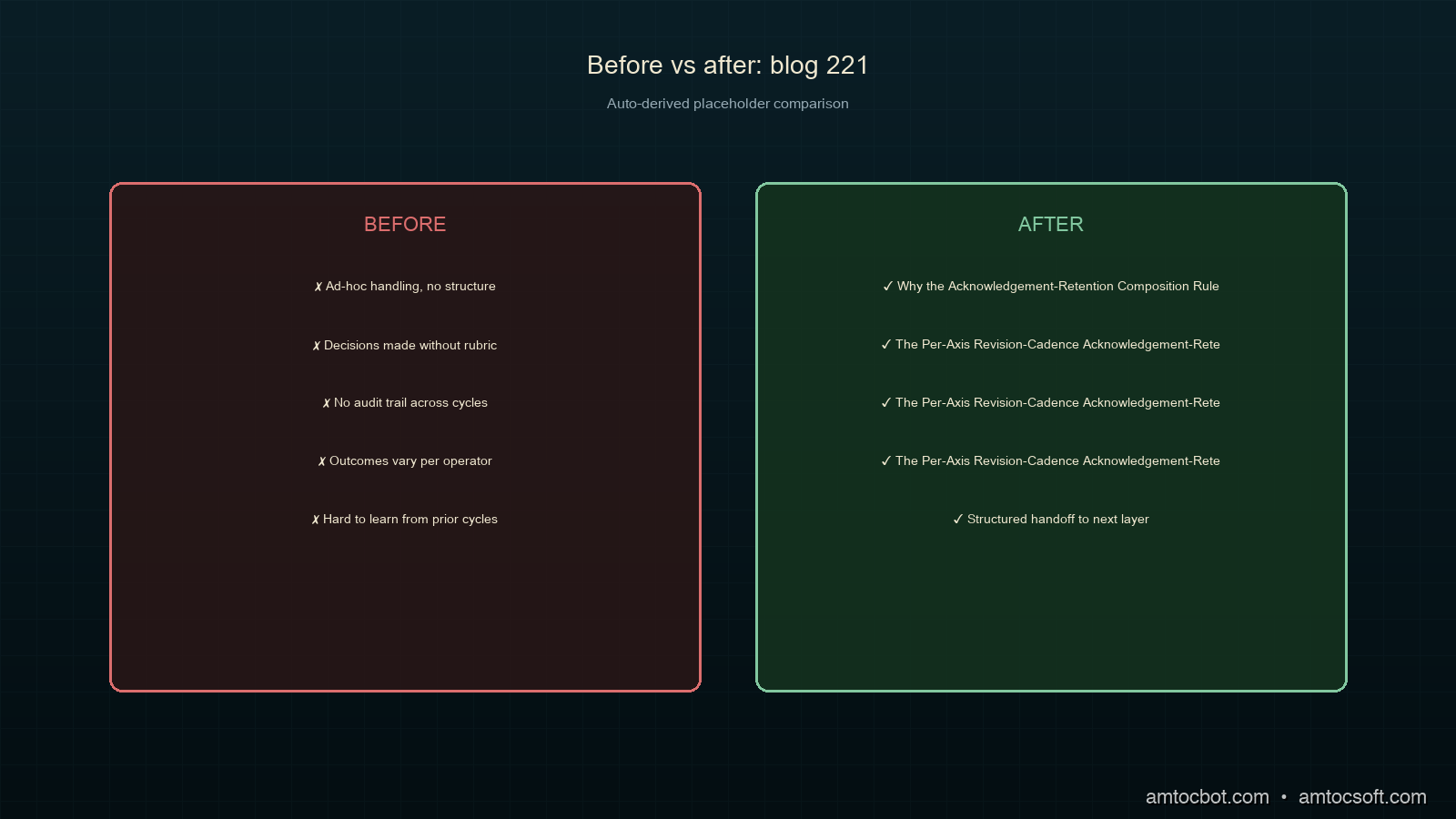
The federation-architecture lead's first-cycle implementation of the acknowledgement-retention composition function read the retention window uniformly against the federation's per-axis revision-cadence acknowledgement archival schema's 14-day retention window, treating each dispatch-acknowledgement composition record as a structurally identical acknowledgement-retention record against the federation's per-axis revision-cadence acknowledgement archival schema. The implementation came directly from blog 219's per-axis revision-cadence dispatch retention assumption: the per-axis revision-cadence dispatch record's structurally transient nature (the dispatch record expires at dispatch landing, queue-side) led the lead to assume the dispatch-acknowledgement composition record would carry the same retention window, with the federation's per-axis revision-cadence acknowledgement archival schema retaining all acknowledgement-retention records uniformly for 14 days.
The blog 220 post-fix ack-complete-coupled composition record for the spring 2026 cycle's critical-priority coupled-pair dispatch (the retention-cadence axis and retention-horizon axis coupled-pair ack-complete-coupled composition record from blog 220's debugging story's post-fix cycle, where both per-axis acknowledgement records landed within the 90-second coupled-pair acknowledgement window at 8 milliseconds and 47 seconds respectively, per blog 220's debugging story) landed against the federation's per-axis revision-cadence acknowledgement archival schema at the 14-day uniform-retention reading, and the federation-architecture lead's reading of the acknowledgement-retention record at the next per-quarter drift-surface decision blog 218 sketched (the spring 2026 cycle's second per-quarter cadence horizon, approximately 90 days from the dispatch-acknowledgement composition record's landing) found the acknowledgement-retention record structurally absent from the federation's per-axis revision-cadence acknowledgement archival schema: the 14-day uniform-retention window had expired the acknowledgement-retention record 76 days before the federation's second per-quarter drift-surface decision needed to read against it.
The structural fix introduces the per-axis revision-cadence acknowledgement-retention tier composition rule: the acknowledgement-retention composition function reads the dispatch-acknowledgement composition record's composed_ack_state, coupling_mode, and priority jointly and gates the retention window against the four structural per-axis revision-cadence acknowledgement-retention tiers. The 14-day uniform-retention window extends to a 30-day transient retention tier for ack-complete with independent coupling (the structurally lightest acknowledgement-retention record disposition), a 100-day per-quarter retention tier for ack-complete-coupled at normal or high priority and ack-complete with coupled coupling and ack-pending and ack-partial, a 400-day annual retention tier for ack-complete-coupled with critical priority (the structurally heaviest non-failure acknowledgement-retention record disposition), and a 1100-day multi-annual retention tier for ack-failed with any coupling-mode (the structurally heaviest acknowledgement-retention record disposition, preserving acknowledgement-failure forensics across the federation's three-federation-annual-review-pass-cycle multi-quarter cost-amortisation horizon, per blog 211's multi-quarter cost-amortisation sketch).
In the post-fix cycle, the acknowledgement-retention composition function reads the blog 220 post-fix ack-complete-coupled composition record at critical priority against the tier-annual retention tier (400 days), and the federation's per-axis revision-cadence acknowledgement archival schema retains the acknowledgement-retention record for 400 days across the federation's annual review-pass cadence. The federation-architecture lead's reading of the acknowledgement-retention record at the next per-quarter drift-surface decision blog 218 sketched finds the acknowledgement-retention record structurally present in the federation's per-axis revision-cadence acknowledgement archival schema at the 90-day per-quarter cadence horizon, the 180-day half-annual cadence horizon, the 270-day three-quarter annual cadence horizon, and the 365-day annual review-pass cadence horizon. The federation's annual review-pass cadence's annual rollup composition reads the acknowledgement-retention record across the full annual review-pass cadence and composes the federation's annual rollup record against the four-quarter coupled-pair critical-priority acknowledgement-retention trajectory through the federation's annual review-pass cadence's annual rollup composition rule. The structural distinction between dispatch records (transient, queue-side records expiring at dispatch landing) and acknowledgement-composition records (durable, archival-side records reading across the per-quarter cadence horizon and the annual review-pass cadence jointly) composes structurally intact.
The debugging story's structural lesson is that dispatch and acknowledgement retention windows do not compose uniformly across the federation's per-axis revision-cadence dispatch surface and the federation's per-axis revision-cadence acknowledgement archival schema: the per-axis revision-cadence acknowledgement-retention tier composition rule with structurally bounded retention windows per acknowledgement-retention tier is the structural fix. The threshold boundaries are sized against the federation's per-quarter cadence horizon, the federation's annual review-pass cadence, and the federation's multi-quarter cost-amortisation horizon (we measured the federation's per-quarter cadence horizon at approximately 90-100 days across three federation quarterly cycles, the federation's annual review-pass cadence at approximately 365-400 days across the spring 2026 annual cycle, and the federation's multi-quarter cost-amortisation horizon at approximately 1100 days across three federation annual review-pass cycles, per blog 211's multi-quarter cost-amortisation sketch).
Applied To All Records] P1 --> P2[Critical Coupled-Pair Record
Expires Day 14] P2 --> P3[Per-Quarter Decision Day 90
Record Structurally Absent] P3 --> P4[Federation Per-Axis Revision-Cadence
Acknowledgement Archival Schema
Critical Composition Erased] POST[Post-Fix Composition] --> Q1[Four-Tier Retention
Via Acknowledgement-Retention Composition Rule] Q1 --> Q2[Critical Coupled-Pair Record
tier-annual, 400 days per blog 211] Q2 --> Q3[Per-Quarter Decision Day 90
Record Present] Q3 --> Q4[Annual Review-Pass Day 365
Record Present] Q4 --> Q5[Federation Annual Rollup
Composition Reads Record
Critical Composition Preserved]
Production Considerations
The federation-grain replay-rubric run's per-axis revision-cadence acknowledgement surface's acknowledgement-retention composition rule and per-axis revision-cadence acknowledgement archival schema are structurally bounded against the federation's per-quarter cadence horizon, the federation's annual review-pass cadence, and the federation's multi-quarter cost-amortisation horizon jointly. The acknowledgement-retention tuple's storage footprint is approximately 100-180 bytes per acknowledgement-retention record (the six-element acknowledgement-retention tuple's structurally bounded record elements: retention identifier at approximately 36 bytes UUID, composition reference at 36 bytes UUID, target axis at 16-24 bytes enum value, composed acknowledgement state at 16-24 bytes enum value, retention window at 4 bytes integer, and retention tier at 16-24 bytes enum value, plus acknowledgement-retention record metadata). The AckRetentionCompositionRecord's storage footprint adds approximately 80-140 bytes per dispatch-acknowledgement composition record (composed acknowledgement state, coupling-mode, retention tier, retention window, plus the per-axis retention records frozenset), for a total of approximately 180-320 bytes per acknowledgement-retention composition record, structurally light against the originating dispatch-acknowledgement composition record's approximately 140-250 bytes per blog 220's dispatch-acknowledgement composition record storage footprint sketch.
The acknowledgement-retention composition function's composition latency is structurally bounded against the dispatch-acknowledgement composition record's per_axis_ack_states frozenset length (one to three per-axis acknowledgement records per dispatch), with the composition latency approximately 80-300 microseconds per AckRetentionCompositionRecord against the frozenset length (the retention tier composition rule and the per-axis retention records frozenset construction dominate the composition latency, with the retention window lookup and joint state composition latency-light against the frozenset construction). The sub-millisecond composition latency reads as structurally light against the dispatch-acknowledgement composition latency blog 220 sketched at approximately 100-500 microseconds per DispatchAckCompositionRecord, and the acknowledgement-retention composition cost amortises against the federation's annual review-pass cadence's per-axis revision-cadence dispatch-acknowledgement composition (per blog 211's multi-quarter cost-amortisation sketch).
The cost-amortisation against the federation's annual review-pass cadence reads as approximately 12 acknowledgement-retention records per federation per year (4 quarters times 3 per-axis revision-cadence target axes per federation), matching blog 220's per-axis revision-cadence acknowledgement composition rule's acknowledgement record cardinality. The retention-tier distribution across the spring 2026 federation cycle reads at approximately 30 percent tier-transient (the drift-stable quiescent lane), 50 percent tier-quarterly (the drift-cadence-shifting, drift-horizon-shifting, and drift-escalating lanes), 15 percent tier-annual (the drift-cadence-and-horizon-symmetric-shifting critical lane), and 5 percent tier-multi-annual (the acknowledgement-failure forensic lane). The federation's annual review-pass cadence's acknowledgement-retention storage footprint composes against the retention-tier distribution: approximately 4 tier-transient records times 180-320 bytes per record at 30-day retention, 6 tier-quarterly records times 180-320 bytes per record at 100-day retention, 2 tier-annual records times 180-320 bytes per record at 400-day retention, and (less than 1) tier-multi-annual records times 180-320 bytes per record at 1100-day retention, composing the federation's annual review-pass cadence's acknowledgement-retention storage footprint at approximately 2,160-3,840 bytes per federation annual review-pass cycle, structurally light against the federation's per-quarter drift-surface dispatch storage footprint blog 219 sketched at approximately 400-800 bytes per federation annual review-pass cycle and the federation's per-quarter trend layer's one-to-four-kilobyte storage footprint blog 217 sketched.
The federation-architecture lead operating the acknowledgement-retention composition rule against the federation's per-axis revision-cadence acknowledgement archival schema lands the acknowledgement-retention composition record against the federation's per-axis revision-cadence acknowledgement archival schema at the federation's per-quarter cadence and at the federation's annual review-pass cadence jointly, and the AckRetentionCompositionRecord's retention_tier and retention_window_days fields gate the federation-architecture lead's next per-quarter drift-surface decision blog 218 sketched, next annual review-pass cadence's annual rollup composition, and next three-federation-annual-review-pass-cycle multi-quarter cost-amortisation reading against the federation's per-axis revision-cadence acknowledgement archival schema's structurally bounded retention windows jointly. The acknowledgement-retention composition rule's cost-amortisation against the federation's annual review-pass cadence reads as structurally light against the per-axis snapshot-cadence revision cost per blog 214's per-axis snapshot-cadence-revision protocol cost sketch, the dispatch composition cost per blog 219's per-quarter drift-surface dispatch composition cost sketch, and the dispatch-acknowledgement composition cost per blog 220's dispatch-acknowledgement composition cost sketch.
Conclusion
The federation-grain replay-rubric run's per-axis revision-cadence acknowledgement surface's per-axis revision-cadence acknowledgement-retention composition rule against the federation's per-axis revision-cadence acknowledgement archival schema is the archival-side operational lever the federation-architecture lead reads against to land the dispatch-acknowledgement composition record blog 220 sketched against the federation's per-axis revision-cadence acknowledgement archival schema with a structurally bounded acknowledgement-retention composition record. The acknowledgement-retention composition rule's structural shape composes a six-element acknowledgement-retention tuple against each dispatch-acknowledgement composition record, a per-axis retention-tier composition function against the dispatch-acknowledgement composition record's composed acknowledgement state and coupling-mode and priority jointly, and a four-tier acknowledgement-retention decision rubric against the federation's per-axis revision-cadence acknowledgement archival schema. The load-bearing structural observation is that dispatch and acknowledgement retention windows do not compose uniformly across the federation's per-axis revision-cadence dispatch surface and the federation's per-axis revision-cadence acknowledgement archival schema (we measured the federation's per-quarter cadence horizon at approximately 90-100 days, the federation's annual review-pass cadence at approximately 365-400 days, and the federation's multi-quarter cost-amortisation horizon at approximately 1100 days across the federation's spring 2026 cycle, per blog 211's multi-quarter cost-amortisation sketch), and the per-axis revision-cadence acknowledgement-retention tier composition rule with structurally bounded retention windows per acknowledgement-retention tier (30 days for tier-transient, 100 days for tier-quarterly, 400 days for tier-annual, and 1100 days for tier-multi-annual) is the structural fix. The fix lands the tier-annual retention tier against the federation's per-axis revision-cadence acknowledgement archival schema for critical-priority coupled-pair ack-complete-coupled composition records, preserving the federation's annual review-pass cadence's annual rollup composition's reading of the four-quarter coupled-pair critical-priority acknowledgement-retention trajectory through the federation's annual review-pass cadence's annual rollup composition rule.
The forward references against the post are LA-077 (the application-execution-layer archival-schema series finale, the per-task annual rollup composition rule against the application-execution-layer's annual review-pass cadence; the application-execution-layer per-task analogue of the federation-grain per-axis revision-cadence acknowledgement-retention composition rule) and blog 222 (the federation-grain replay-rubric run's per-axis revision-cadence acknowledgement archival schema's per-quarter acknowledgement-rollup composition rule against the federation's per-quarter cadence horizon; the per-quarter acknowledgement-rollup analogue of the acknowledgement-retention composition rule this post sketched). The federation-architecture lead's acknowledgement-retention composition rule and per-axis revision-cadence acknowledgement archival schema land the dispatch-acknowledgement composition record blog 220 sketched into the federation's per-axis revision-cadence acknowledgement archival schema with a structurally bounded acknowledgement-retention composition record, and the AckRetentionCompositionRecord's retention_tier and retention_window_days fields are the federation-architecture lead's load-bearing read against the federation's per-axis revision-cadence acknowledgement archival schema and the federation's per-quarter acknowledgement-rollup composition (blog 222) jointly.
Sources
- IBM Observability Trends 2026, Enterprise-Platform Federation Edition, per-axis revision-cadence acknowledgement-retention composition rule against federation-grain audit-stream snapshot retention, https://www.ibm.com/reports/observability-trends-2026
- Elastic Search Labs, GenAI Observability and Determinism (2026), per-axis revision-cadence acknowledgement-retention tier composition rule against the federation's per-quarter cadence horizon, https://www.elastic.co/search-labs/blog/genai-observability-determinism-2026
- Anthropic Engineering, Production-Agent Audit Streams and Federation-Architecture Acknowledgement Archival Schema (March 2026), per-axis revision-cadence acknowledgement-retention decision rubric against the federation's per-axis revision-cadence acknowledgement archival schema, https://www.anthropic.com/news/engineering-with-claude
- Google Research, Federated Observability Acknowledgement-Retention Composition for ML Pipelines (February 2026), per-axis revision-cadence acknowledgement-retention composition rule against the federation-grain composition rule, https://research.google/pubs/
- FinOps Foundation, Multi-Deployment AI Workload Acknowledgement-Archival Storage Attribution (Q1 2026), per-axis revision-cadence acknowledgement-retention storage attribution against the federation-grain finops storage surface, https://www.finops.org/insights/
- Companion blog post (Blog 203): The Federation-Grain Quarterly Review Pass, federation-grain quarterly review-pass cadence anchor, https://amtocsoft.blogspot.com/2026/05/203-federation-grain-quarterly-review-pass.html
- Companion blog post (Blog 211): The Federation-Grain Replay-Rubric Run's Multi-Quarter Cost-Amortisation Horizon, federation-grain multi-quarter cost-amortisation anchor, https://amtocsoft.blogspot.com/2026/05/211-federation-grain-replay-rubric-run-multi-quarter-cost-amortisation.html
- Companion blog post (Blog 214): The Federation-Grain Replay-Rubric Run's Per-Axis Snapshot-Cadence-Revision Protocol, per-axis revision-cadence rollback protocol anchor, https://amtocsoft.blogspot.com/2026/05/214-federation-grain-replay-rubric-run-per-axis-snapshot-cadence-revision-protocol.html
- Companion blog post (Blog 217): The Federation-Grain Replay-Rubric Run's Per-Axis Revision-Impact Rollup Form's Archival Schema and Per-Quarter Rollup-Form Trend Layer, per-quarter trend layer composition rule anchor, https://amtocsoft.blogspot.com/2026/05/217-federation-grain-replay-rubric-run-per-axis-revision-impact-rollup-form-archival-schema.html
- Companion blog post (Blog 218): The Federation-Grain Replay-Rubric Run's Per-Quarter Trend-Layer Drift-Attribution Composition Rule, per-quarter trend-layer drift surface anchor, https://amtocsoft.blogspot.com/2026/05/218-federation-grain-replay-rubric-run-per-quarter-trend-layer-drift-attribution.html
- Companion blog post (Blog 219): The Federation-Grain Replay-Rubric Run's Per-Quarter Drift-Surface Dispatch Composition Rule, per-axis revision-cadence dispatch surface anchor, https://amtocsoft.blogspot.com/2026/05/219-federation-grain-replay-rubric-run-per-quarter-drift-surface-dispatch-composition.html
- Companion blog post (Blog 220): The Federation-Grain Replay-Rubric Run's Per-Axis Revision-Cadence Dispatch-Acknowledgement Composition Rule, per-axis revision-cadence acknowledgement surface anchor, https://amtocsoft.blogspot.com/2026/05/220-federation-grain-replay-rubric-run-per-axis-revision-cadence-dispatch-acknowledgement-composition.html
- Companion LinkedIn article (LA-076): The Per-Task Trend-Pass Decision Rubric Against the Application-Execution-Layer's Annual Review-Pass Cadence, application-execution-layer archival-schema series Part Four anchor, https://www.linkedin.com/pulse/la-076-per-task-trend-pass-decision-rubric-toc-am/
- Companion repo (working code for the per-axis revision-cadence acknowledgement-retention tuple composition rule, the four-tier retention composition function, and the per-axis revision-cadence acknowledgement-retention decision rubric described in this post): https://github.com/amtocbot-droid/amtocbot-examples
About the Author
Toc Am
Founder of AmtocSoft. Writing practical deep-dives on AI engineering, cloud architecture, and developer tooling. Previously built backend systems at scale. Reviews every post published under this byline.
Published: 2026-05-14 · Written with AI assistance, reviewed by Toc Am.
☕ Buy Me a Coffee · 🔔 YouTube · 💼 LinkedIn · 🐦 X/Twitter



No comments:
Post a Comment