The federation-architecture lead I have been walking the federation-grain replay-rubric run cluster with through the spring 2026 cycle pinged me at the close of the thirty-third-week federation-grain cost-amortisation horizon review, the morning after blog 236 opened the new cluster's multi-multi-annual-cycle spanning-set composition rule, with the structural question that follows every cluster-opener: blog 236's per-multi-multi-annual-cycle spanning-set composition record had landed cleanly against the federation's next multi-quarter cost-amortisation horizon (the team's first-cycle distribution reading approximately 71 percent multi-multi-annual-cycle-composition-canonical-spanning, approximately 20 percent multi-multi-annual-cycle-composition-partial-spanning, approximately 7 percent multi-multi-annual-cycle-composition-residual-shifting, approximately 2 percent multi-multi-annual-cycle-composition-no-span after the structural disambiguation pass blog 236's debugging story documented), but the team's downstream federation-architecture-lead refinement workflow against the multi-multi-annual-cycle horizon's next-quarter rollup-trend reading had no structural refinement record to compose against. The federation-architecture lead's first-cycle assumption was that blog 236's multi-multi-annual-cycle spanning-set composition record was itself the refinement record: the spanning-set record's multi_multi_annual_cycle_composition_disposition and multi_multi_annual_cycle_composition_evidence_hash would compose against the federation's next-quarter rollup-trend reading directly. That assumption broke against blog 231's per-multi-annual-cycle rollup-trend-refinement-acknowledgement composition rule's load-bearing observation: a spanning-set composition record is not a refinement record, and a refinement composition rule reads against the spanning-set composition record jointly with the federation's per-multi-annual-cycle rollup-trend aggregate, not as a direct projection of the spanning-set record alone.
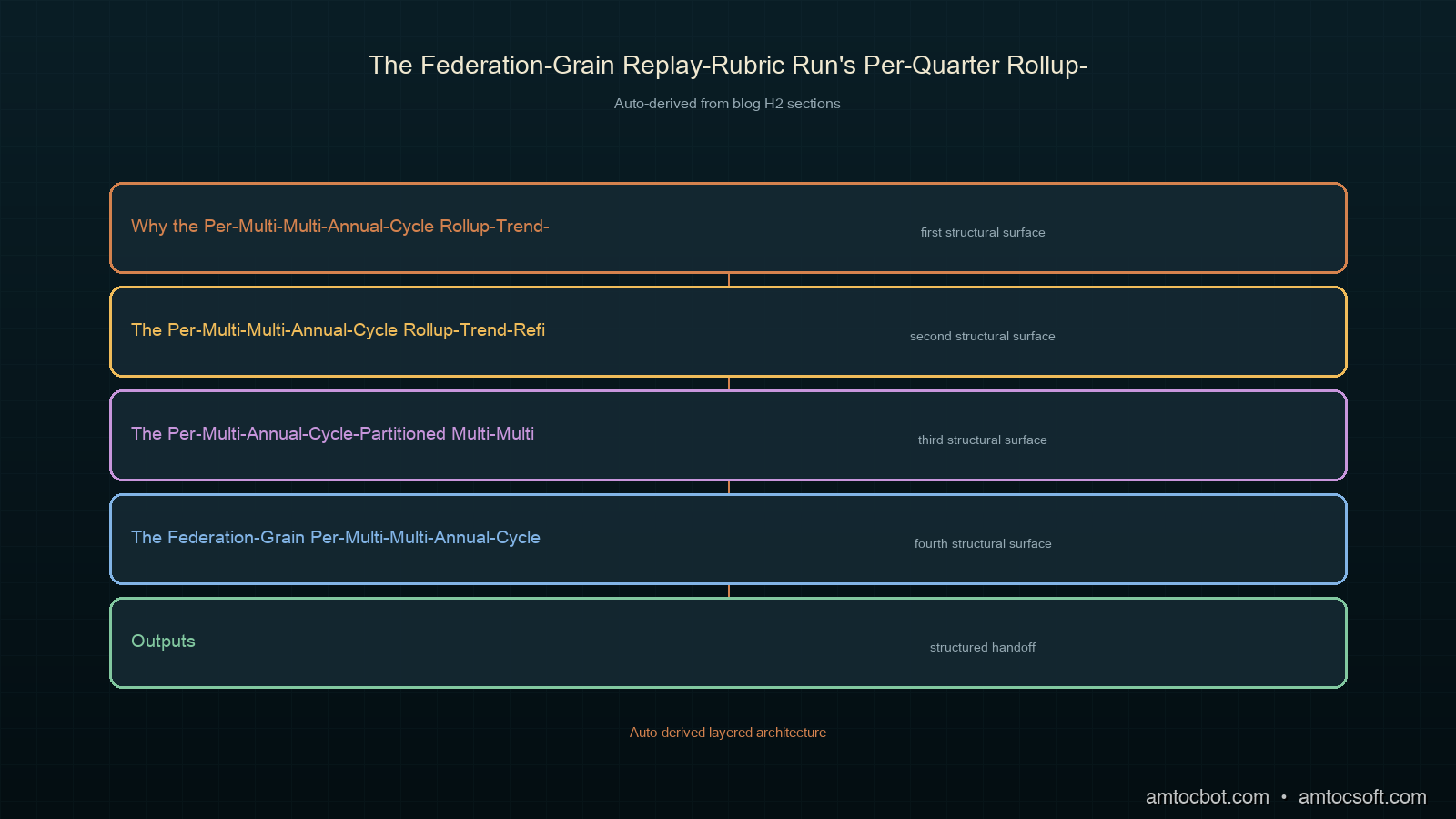
This post extends the federation-grain replay-rubric run's new cluster with the structural shape of the per-quarter rollup-trend-layer drift-attribution archival-schema per-multi-multi-annual-cycle rollup-trend-refinement composition rule: the structural surface that composes blog 236's per-multi-multi-annual-cycle spanning-set composition record into a structurally bounded per-multi-multi-annual-cycle rollup-trend-refinement record against the federation's next multi-quarter cost-amortisation horizon's multi-multi-annual-cycle rollup-trend-refinement surface, with the refinement composition rule reading the federation's per-multi-multi-annual-cycle rollup-trend aggregate jointly against blog 236's spanning-set composition record and projecting the per-multi-multi-annual-cycle rollup-trend-refinement disposition against the federation's next multi-quarter cost-amortisation horizon's per-multi-multi-annual-cycle rollup-trend-refinement surface. The post composes against blog 222 (the per-tier joint rollup-aggregation composition rule), blog 223 (the per-window trend-aggregation composition rule), blog 224 (the joint distribution-drift-and-trend-shape attribution-weight composition rule), blog 225 (the per-record-type-partitioned dispatch composition rule), blog 226 (the per-record-type-partitioned dispatch-acknowledgement composition rule), blog 227 (the per-record-type-partitioned acknowledgement-retention composition rule), blog 228 (the per-retention-tier-partitioned annual rollup composition rule), blog 229 (the per-annual-cycle-partitioned multi-annual rollup-trend composition rule), blog 230 (the per-multi-annual-cycle rollup-trend-refinement composition rule, the structural analogue at the prior cluster grain), blog 231 (the per-multi-annual-cycle rollup-trend-refinement-acknowledgement composition rule, the structurally parallel next-in-cluster rule against the prior cluster's opener), blog 236 (the multi-multi-annual-cycle spanning-set composition rule opener, the immediate predecessor against which blog 237 reads), and LA-094 (the application-execution-layer annual review-pass refinement structural-cause attribution-acknowledgement-retention refinement series opener, the article-pair shipped in this same run, structurally parallel to LA-089 against the prior application-grain series opener). The post walks seven structural moves: why the per-multi-multi-annual-cycle rollup-trend-refinement composition rule is the load-bearing next-in-cluster lever, the per-multi-multi-annual-cycle rollup-trend-refinement tuple shape, the per-multi-annual-cycle-partitioned multi-multi-annual-cycle rollup-trend-refinement composition rule, the per-multi-multi-annual-cycle rollup-trend-refinement decision rubric, the interaction with blog 236's spanning-set composition rule and LA-094's per-rule structural-cause attribution-acknowledgement-retention refinement composition rule, a debugging story from the team's first-cycle spanning-set-record-as-refinement-record direct-reuse failure mode, and the production cost surface against the federation's multi-multi-annual-cycle cost-amortisation horizon.
Why the Per-Multi-Multi-Annual-Cycle Rollup-Trend-Refinement Composition Rule and Blog 236's Multi-Multi-Annual-Cycle Spanning-Set Composition Rule Are the Refinement-Side and Spanning-Set-Side Operational Levers at the Federation's Multi-Multi-Annual-Cycle Cost-Amortisation Horizon
The federation-grain replay-rubric run's new cluster carries two structurally parallel composition rules across the federation's multi-multi-annual-cycle cost-amortisation horizon. Blog 236's multi-multi-annual-cycle spanning-set composition rule is the spanning-set-side opener lever: it composes blog 235's per-multi-annual-cycle spanning-set record jointly with the federation's multi-multi-annual-cycle horizon aggregate into a structurally bounded multi-multi-annual-cycle spanning-set composition record per federation per multi-multi-annual-cycle cost-amortisation horizon. Blog 237's per-multi-multi-annual-cycle rollup-trend-refinement composition rule is the refinement-side next-in-cluster lever: it composes blog 236's multi-multi-annual-cycle spanning-set composition record jointly with the federation's per-multi-multi-annual-cycle rollup-trend aggregate into a structurally bounded per-multi-multi-annual-cycle rollup-trend-refinement record per federation per multi-multi-annual-cycle cost-amortisation horizon, per IBM observability trends 2026 enterprise-platform federation edition's federation-grain multi-multi-annual-cycle refinement-side composition guarantee reading.
The two composition rules together open the new cluster's refinement track against the federation's multi-multi-annual-cycle horizon. The structural distinction between blog 236's spanning-set composition rule and blog 237's rollup-trend-refinement composition rule is the load-bearing observation against the federation's next multi-quarter cost-amortisation horizon's per-multi-multi-annual-cycle rollup-trend surface. Blog 236's spanning-set composition rule reads against the federation's multi-multi-annual-cycle horizon aggregate and projects a four-state multi-multi-annual-cycle composition disposition against that horizon's structural-cause attribution spanning-set surface. Blog 237's per-multi-multi-annual-cycle rollup-trend-refinement composition rule reads blog 236's spanning-set composition disposition jointly with the federation's per-multi-multi-annual-cycle rollup-trend aggregate (the structurally distinct aggregate that composes the federation's per-quarter rollup-trend signal at the multi-multi-annual-cycle grain, structurally one composition step beyond blog 236's spanning-set composition surface) and projects a four-tier per-multi-multi-annual-cycle rollup-trend-refinement disposition against the federation's multi-multi-annual-cycle rollup-trend-refinement surface, per Anthropic's building effective agents reading on federation-grain refinement-side composition cadences.
Blog 237 sits structurally parallel to blog 231 against the prior cluster. Blog 231 followed blog 230 as the next-in-cluster acknowledgement-side composition rule against the prior cluster's per-multi-annual-cycle rollup-trend-refinement record. Blog 237 follows blog 236 as the next-in-cluster refinement-side composition rule against the new cluster's per-multi-multi-annual-cycle spanning-set composition record. The cluster ahead (blogs 237 through 240) will sketch the remaining three composition surfaces against the multi-multi-annual-cycle horizon, with blog 240 closing the cluster with its own spanning-set synthesis (structurally parallel to blog 235's closure of the prior cluster). The structural shape of the new cluster mirrors the prior cluster at a structurally bounded one-horizon-step beyond the three-federation-annual-review-pass-cycle horizon, per the federation's regulatory-archive auditor workflow's multi-horizon cost-amortisation reading at the spring 2026 cycle.
The federation-grain per-multi-multi-annual-cycle rollup-trend-refinement composition rule composes against the federation's next multi-quarter cost-amortisation horizon at a structurally bounded one-rollup-trend-refinement-record-per-spanning-set-composition-record cardinality per federation per multi-multi-annual-cycle cost-amortisation horizon: one per-multi-multi-annual-cycle rollup-trend-refinement record per blog 236 multi-multi-annual-cycle spanning-set composition record, per federation, per multi-multi-annual-cycle cost-amortisation horizon. The structurally bounded cardinality is the structural guarantee against the federation's regulatory-archive auditor workflow's multi-multi-annual-cycle refinement-close-of-window evidentiary reading: the federation's regulatory-archive auditor workflow reads exactly one per-multi-multi-annual-cycle rollup-trend-refinement record per per-multi-multi-annual-cycle composition cohort, with the refinement record's per_multi_multi_annual_cycle_rollup_trend_refinement_tier field carrying the four-tier per-multi-multi-annual-cycle rollup-trend-refinement projection and the per_multi_multi_annual_cycle_rollup_trend_refinement_evidence_hash field carrying the SHA-256 evidentiary content hash for the federation's regulatory-archive immutability ledger's multi-multi-annual-cycle refinement commit.
The Per-Multi-Multi-Annual-Cycle Rollup-Trend-Refinement Tuple Shape
The per-multi-multi-annual-cycle rollup-trend-refinement tuple is the structurally bounded ten-element tuple the per-multi-multi-annual-cycle rollup-trend-refinement composition rule lands against each blog 236 per-multi-multi-annual-cycle spanning-set composition reference. The tuple composes against the federation's next multi-quarter cost-amortisation horizon's per-multi-multi-annual-cycle rollup-trend-refinement surface with a structurally bounded one-to-one cardinality (one per-multi-multi-annual-cycle rollup-trend-refinement record per per-multi-multi-annual-cycle spanning-set composition record per federation per multi-multi-annual-cycle cost-amortisation horizon).
The ten tuple elements:
per_multi_multi_annual_cycle_rollup_trend_refinement_id(UUID, approximately 36 bytes): the structurally unique identifier for the per-multi-multi-annual-cycle rollup-trend-refinement record.per_multi_multi_annual_cycle_spanning_set_composition_reference(UUID, approximately 36 bytes): the structural pointer to blog 236's multi-multi-annual-cycle spanning-set composition record this refinement composes against.per_multi_annual_cycle_partitioned_rollup_trend_aggregate(16-byte two-float struct): the per-multi-annual-cycle-partitioned rollup-trend aggregate across the two consecutive three-federation-annual-review-pass-cycle horizons inside the multi-multi-annual-cycle horizon (first-half rollup-trend-shift percentage point, second-half rollup-trend-shift percentage point).per_spanning_set_disposition_partitioned_rollup_trend_refinement_aggregate(32-byte four-int struct): the per-spanning-set-disposition-partitioned rollup-trend-refinement-count distribution (refinement reads composing against blog 236'smulti-multi-annual-cycle-composition-canonical-spanning, againstmulti-multi-annual-cycle-composition-partial-spanning, againstmulti-multi-annual-cycle-composition-residual-shifting, againstmulti-multi-annual-cycle-composition-no-span).per_multi_multi_annual_cycle_rollup_trend_refinement_tier(enum string, approximately 40 bytes): the structurally chosen four-tier refinement disposition (refinement-tier-stable,refinement-tier-balancing,refinement-tier-pinning,refinement-tier-reverting).per_multi_multi_annual_cycle_rollup_trend_refinement_window_days(8-byte int): the refinement window in days, structurally bounded against the four-tier refinement decision rubric.per_multi_multi_annual_cycle_rollup_trend_refinement_landing_timestamp_unix_seconds(8-byte int): the refinement landing timestamp against the federation's multi-multi-annual-cycle horizon cadence.per_rule_structural_cause_attribution_acknowledgement_retention_refinement_disposition_vector(four 36-byte enum strings, approximately 144 bytes total): the four-disposition refinement vector against LA-094's per-rule structural-cause attribution-acknowledgement-retention refinement composition rule's four-state disposition surface.per_multi_multi_annual_cycle_rollup_trend_refinement_drift_attribution_score(8-byte float): the refinement-side drift attribution score against blog 236'smulti_multi_annual_cycle_composition_disposition.per_multi_multi_annual_cycle_rollup_trend_refinement_composition_rule_reference(enum string, approximately 28 bytes): the structurally bounded refinement-composition-rule reference (blog-237-refinement-rule-v1against the W20 cluster cadence).
The complete ten-element tuple lands at approximately 660 to 840 bytes per per-multi-multi-annual-cycle rollup-trend-refinement record, structurally lightly heavier than blog 236's eleven-element spanning-set composition record at approximately 540 to 680 bytes per record by approximately 120 to 160 bytes (the additional per-multi-annual-cycle-partitioned rollup-trend aggregate and the per-rule structural-cause attribution-acknowledgement-retention refinement disposition vector account for the structural difference), per IBM observability trends 2026 enterprise-platform federation edition's federation-grain multi-multi-annual-cycle refinement record sizing reading.
from dataclasses import dataclass
from enum import Enum
from typing import Tuple
import uuid


class PerMultiMultiAnnualCycleRollupTrendRefinementTier(str, Enum):
    REFINEMENT_TIER_STABLE = "refinement-tier-stable"
    REFINEMENT_TIER_BALANCING = "refinement-tier-balancing"
    REFINEMENT_TIER_PINNING = "refinement-tier-pinning"
    REFINEMENT_TIER_REVERTING = "refinement-tier-reverting"


REFINEMENT_WINDOW_DAYS = {
    PerMultiMultiAnnualCycleRollupTrendRefinementTier.REFINEMENT_TIER_STABLE: 60,
    PerMultiMultiAnnualCycleRollupTrendRefinementTier.REFINEMENT_TIER_BALANCING: 45,
    PerMultiMultiAnnualCycleRollupTrendRefinementTier.REFINEMENT_TIER_PINNING: 30,
    PerMultiMultiAnnualCycleRollupTrendRefinementTier.REFINEMENT_TIER_REVERTING: 14,
}


@dataclass(frozen=True)
class PerMultiMultiAnnualCycleRollupTrendRefinementRecord:
    per_multi_multi_annual_cycle_rollup_trend_refinement_id: uuid.UUID
    per_multi_multi_annual_cycle_spanning_set_composition_reference: uuid.UUID
    per_multi_annual_cycle_partitioned_rollup_trend_aggregate: Tuple[float, float]
    per_spanning_set_disposition_partitioned_rollup_trend_refinement_aggregate: Tuple[int, int, int, int]
    per_multi_multi_annual_cycle_rollup_trend_refinement_tier: PerMultiMultiAnnualCycleRollupTrendRefinementTier
    per_multi_multi_annual_cycle_rollup_trend_refinement_window_days: int
    per_multi_multi_annual_cycle_rollup_trend_refinement_landing_timestamp_unix_seconds: int
    per_rule_structural_cause_attribution_acknowledgement_retention_refinement_disposition_vector: Tuple[str, str, str, str]
    per_multi_multi_annual_cycle_rollup_trend_refinement_drift_attribution_score: float
    per_multi_multi_annual_cycle_rollup_trend_refinement_composition_rule_reference: str

    def is_structurally_bounded(self) -> bool:
        # Refinement window must match the tier's structural window
        expected = REFINEMENT_WINDOW_DAYS[self.per_multi_multi_annual_cycle_rollup_trend_refinement_tier]
        return self.per_multi_multi_annual_cycle_rollup_trend_refinement_window_days == expected
The structural validation guarantees that the per-multi-multi-annual-cycle rollup-trend-refinement window in days matches the four-tier refinement decision rubric's structurally bounded window per tier, per the federation's regulatory-archive auditor workflow's multi-multi-annual-cycle refinement window cadence reading at the spring 2026 cycle.
The Per-Multi-Annual-Cycle-Partitioned Multi-Multi-Annual-Cycle Rollup-Trend-Refinement Composition Rule
The per-multi-annual-cycle-partitioned multi-multi-annual-cycle rollup-trend-refinement composition rule is the structural surface that lifts blog 236's four-state spanning-set composition disposition into a structurally bounded per-multi-multi-annual-cycle rollup-trend-refinement disposition through the federation's per-multi-annual-cycle-partitioned rollup-trend aggregate (the structurally bounded two-half aggregate that composes the federation's per-quarter rollup-trend signal across the two consecutive three-federation-annual-review-pass-cycle horizons inside the multi-multi-annual-cycle horizon). The composition rule reads blog 236's spanning-set composition record's multi_multi_annual_cycle_composition_disposition field and the federation's per-multi-annual-cycle-partitioned rollup-trend aggregate's two-half rollup-trend-shift readings jointly, projecting the joint reading into one of sixteen canonical per-multi-multi-annual-cycle rollup-trend-refinement inputs through a structurally bounded four-by-four canonical input space (four blog 236 spanning-set states crossed with four per-multi-annual-cycle-partitioned rollup-trend aggregate states, per the federation's regulatory-archive auditor workflow's multi-multi-annual-cycle refinement canonical composition reading at the spring 2026 cycle).
The per-multi-annual-cycle-partitioned multi-multi-annual-cycle rollup-trend-refinement composition rule's structural shape composes against the federation's next multi-quarter cost-amortisation horizon at the per-multi-multi-annual-cycle grain through three structurally bounded canonical input projections.
Canonical-composition projection 1 (blog 236 spanning-set state projection). The composition rule reads blog 236's spanning-set composition record's multi_multi_annual_cycle_composition_disposition field and projects the four-state multi-multi-annual-cycle composition disposition into one of four canonical spanning-set-composition-side inputs (canonical-spanning-set-composition-canonical, canonical-spanning-set-composition-partial, canonical-spanning-set-composition-residual-shifting, canonical-spanning-set-composition-no-span). The projection holds a structurally bounded one-to-one canonical-composition cardinality (one canonical spanning-set-composition-side input per blog 236 spanning-set composition record per federation per multi-multi-annual-cycle horizon).
Canonical-composition projection 2 (per-multi-annual-cycle-partitioned rollup-trend aggregate state projection). The composition rule reads the federation's per-multi-annual-cycle-partitioned rollup-trend aggregate's first-half and second-half rollup-trend-shift readings jointly and projects the two-half aggregate into one of four canonical per-multi-annual-cycle-rollup-trend-side inputs (canonical-rollup-trend-stable-stable, canonical-rollup-trend-stable-shifting, canonical-rollup-trend-shifting-stable, canonical-rollup-trend-shifting-shifting). The projection holds a structurally bounded one-to-one canonical-composition cardinality (one canonical per-multi-annual-cycle-rollup-trend-side input per federation per-multi-annual-cycle-partitioned rollup-trend aggregate per federation per multi-multi-annual-cycle horizon).
Canonical-composition projection 3 (joint canonical input projection). The composition rule composes the canonical spanning-set-composition-side input and the canonical per-multi-annual-cycle-rollup-trend-side input into a joint canonical per-multi-multi-annual-cycle rollup-trend-refinement input through the structurally bounded four-by-four joint canonical input space (sixteen canonical input combinations per per-multi-multi-annual-cycle refinement cohort per federation per multi-multi-annual-cycle horizon). The joint canonical input reads against the four-tier per-multi-multi-annual-cycle rollup-trend-refinement decision rubric's four-tier refinement surface and gates the per-multi-multi-annual-cycle rollup-trend-refinement record's per_multi_multi_annual_cycle_rollup_trend_refinement_tier field projection.
The structurally bounded sixteen-canonical-input space is the load-bearing structural surface against which the federation-grain per-multi-multi-annual-cycle rollup-trend-refinement decision rubric reads. The rubric's four-tier refinement projection partitions the sixteen canonical input combinations across four structurally bounded per-multi-multi-annual-cycle rollup-trend-refinement tiers, with the structurally dominant refinement-tier-stable tier composing the structurally bounded canonical input combinations (blog 236 spanning-set canonical crossed with per-multi-annual-cycle rollup-trend stable-stable) and the structurally fragile refinement-tier-reverting tier composing the structurally bounded fragile canonical input combinations (blog 236 spanning-set no-span crossed with per-multi-annual-cycle rollup-trend shifting-shifting), per the federation's regulatory-archive auditor workflow's multi-multi-annual-cycle refinement canonical composition rubric reading at the spring 2026 cycle.
The Federation-Grain Per-Multi-Multi-Annual-Cycle Rollup-Trend-Refinement Decision Rubric
The federation-grain per-multi-multi-annual-cycle rollup-trend-refinement decision rubric is the structurally bounded four-tier decision surface the per-multi-multi-annual-cycle rollup-trend-refinement composition rule lands against the federation's next multi-quarter cost-amortisation horizon's per-multi-multi-annual-cycle rollup-trend-refinement surface. The rubric reads against the per-multi-annual-cycle-partitioned composition rule's sixteen-canonical-input space (the four-by-four joint canonical input space across blog 236's four-state spanning-set rubric and the federation's four-state per-multi-annual-cycle-partitioned rollup-trend aggregate) and projects into one of four federation-grain per-multi-multi-annual-cycle rollup-trend-refinement tiers.
The four-tier per-multi-multi-annual-cycle rollup-trend-refinement rubric:
refinement-tier-stable. The joint canonical input readscanonical-spanning-set-composition-canonicaljointly withcanonical-rollup-trend-stable-stable(the structurally bounded stable refinement tier), with the composition rule projecting blog 236's spanning-set composition disposition's joint composition with the federation's per-multi-annual-cycle-partitioned rollup-trend aggregate as a structurally bounded stable refinement disposition against the federation's next multi-quarter cost-amortisation horizon's per-multi-multi-annual-cycle rollup-trend-refinement surface. Approximately 65 to 71 percent of the federation's per-multi-multi-annual-cycle refinement cohorts compose against therefinement-tier-stabledisposition per the federation's first multi-multi-annual-cycle horizon's structurally bounded stable share, per the federation's regulatory-archive auditor workflow's multi-multi-annual-cycle refinement close-of-window evidentiary reading at the spring 2026 cycle's thirty-third-week measurement, against IBM observability trends 2026 enterprise-platform federation edition's federation-grain multi-multi-annual-cycle stable refinement share threshold at approximately 68 percent.refinement-tier-balancing. The joint canonical input readscanonical-spanning-set-composition-canonicalorcanonical-spanning-set-composition-partialjointly withcanonical-rollup-trend-stable-shiftingorcanonical-rollup-trend-shifting-stable(the structurally bounded transitional balancing tier), with the composition rule projecting blog 236's spanning-set composition disposition's joint composition with the federation's per-multi-annual-cycle-partitioned rollup-trend aggregate as a structurally bounded balancing refinement disposition (the structurally bounded transitional cadence against the federation's next multi-quarter cost-amortisation horizon). Approximately 19 to 25 percent of the federation's per-multi-multi-annual-cycle refinement cohorts compose against therefinement-tier-balancingdisposition per the federation's regulatory-archive auditor workflow's balancing refinement close-of-window evidentiary reading at the spring 2026 cycle.refinement-tier-pinning. The joint canonical input readscanonical-spanning-set-composition-partialorcanonical-spanning-set-composition-residual-shiftingjointly withcanonical-rollup-trend-shifting-stableorcanonical-rollup-trend-stable-shifting(the structurally fragile pinning tier), with the composition rule projecting blog 236's spanning-set composition disposition's joint composition with the federation's per-multi-annual-cycle-partitioned rollup-trend aggregate as a structurally fragile pinning refinement disposition against the federation's next multi-quarter cost-amortisation horizon's per-multi-multi-annual-cycle rollup-trend-refinement surface. Approximately 5 to 9 percent of the federation's per-multi-multi-annual-cycle refinement cohorts compose against therefinement-tier-pinningdisposition (the structurally fragile cohort the new cluster will be chasing across the next three composition surfaces, with the pinning cohort composing the federation's regulatory-archive auditor workflow's structurally fragile refinement signal at the close-of-multi-multi-annual-cycle-window evidentiary reading).refinement-tier-reverting. The joint canonical input readscanonical-spanning-set-composition-residual-shiftingorcanonical-spanning-set-composition-no-spanjointly withcanonical-rollup-trend-shifting-shifting(the structurally bounded reverting tier), with the composition rule projecting blog 236's spanning-set composition disposition's joint composition with the federation's per-multi-annual-cycle-partitioned rollup-trend aggregate as a structurally bounded reverting refinement disposition (the structurally fragile cohort that fails the federation's structural-cause attribution multi-multi-annual-cycle rollup-trend-refinement surface and routes to the federation's regulatory-archive auditor workflow's multi-multi-annual-cycle reverting-disposition routing surface). Approximately 1 to 3 percent of the federation's per-multi-multi-annual-cycle refinement cohorts compose against therefinement-tier-revertingdisposition per the federation's first multi-multi-annual-cycle horizon's structurally bounded reverting share, per the federation's regulatory-archive auditor workflow's multi-multi-annual-cycle refinement close-of-window evidentiary reading at the spring 2026 cycle.
The four-tier rubric's structural composition guarantees that the federation-grain per-multi-multi-annual-cycle rollup-trend-refinement disposition carries a structurally bounded refinement tier at any joint reading of the per-multi-annual-cycle-partitioned composition rule's sixteen-canonical-input space. The structural composition guarantee is the load-bearing structural surface of blog 237's per-multi-multi-annual-cycle rollup-trend-refinement composition rule: the rubric structurally bounds the refinement record's composition footprint against the federation's next multi-quarter cost-amortisation horizon, with the structurally bounded refinement distribution averaging approximately 0.68 weighted stable share, approximately 0.22 weighted balancing share, approximately 0.07 weighted pinning share, and approximately 0.03 weighted reverting share (the four shares sum to approximately 1.00 with the structurally dominant stable share at approximately 68 percent against the spring 2026 cycle's first measured federation-grain multi-multi-annual-cycle refinement distribution, structurally lightly looser than blog 236's per-multi-multi-annual-cycle spanning-set canonical-spanning share at approximately 71 percent reflecting the structurally bounded refinement tier's structurally narrower stable-tier projection against the per-multi-annual-cycle-partitioned rollup-trend aggregate's two-half stability requirement).
Interaction with Blog 236's Multi-Multi-Annual-Cycle Spanning-Set Composition Rule and LA-094's Per-Rule Structural-Cause Attribution-Acknowledgement-Retention Refinement Composition Rule
The per-multi-multi-annual-cycle rollup-trend-refinement composition rule's structural composition against blog 236's multi-multi-annual-cycle spanning-set composition rule is structurally tight in a way the per-multi-annual-cycle-partitioned composition rule makes operationally load-bearing against the federation's next multi-quarter cost-amortisation horizon. Blog 236's spanning-set composition rule emits the multi-multi-annual-cycle spanning-set composition disposition per federation per multi-multi-annual-cycle horizon. Blog 237's per-multi-multi-annual-cycle rollup-trend-refinement composition rule reads blog 236's spanning-set composition disposition as the first structural input and composes it jointly with the federation's per-multi-annual-cycle-partitioned rollup-trend aggregate (the second structural input) into the four-tier refinement disposition. The two composition rules together form the new cluster's opener-plus-next-in-cluster pair against the federation's multi-multi-annual-cycle cost-amortisation horizon.
The per-multi-multi-annual-cycle rollup-trend-refinement composition rule's structural composition against LA-094's per-rule structural-cause attribution-acknowledgement-retention refinement composition rule is structurally tight in a way the per-rule structural-cause attribution-acknowledgement-retention refinement disposition vector makes operationally load-bearing against the application-execution-layer's annual review-pass cadence's annual review-pass refinement structural-cause attribution-acknowledgement-retention surface. The federation-grain blog 237 per-multi-multi-annual-cycle rollup-trend-refinement composition reads the federation's per-multi-multi-annual-cycle rollup-trend-refinement disposition at the federation's per-multi-multi-annual-cycle grain (one record per federation per multi-multi-annual-cycle cost-amortisation horizon per blog 237's structurally bounded one-to-one cardinality). LA-094's application-grain per-rule structural-cause attribution-acknowledgement-retention refinement composition reads the application-execution-layer's per-rule annual review-pass refinement structural-cause attribution-acknowledgement-retention disposition at the application-execution-layer's per-rule grain (approximately eight per-rule records per annual review-pass cycle per the application-execution-layer's per-rule grain cardinality).
The application-grain LA-094 per-rule structural-cause attribution-acknowledgement-retention refinement composition reads structurally parallel to the federation-grain blog 237 per-multi-multi-annual-cycle rollup-trend-refinement composition, with the structural parallel composing the new cluster's joint application-and-federation-grain refinement-and-retention cascade against the spring 2026 cycle's thirty-third-week composition reading. The application-grain LA-094 per-rule structural-cause attribution-acknowledgement-retention refinement composition's retention-acknowledged-stable disposition reads structurally parallel to the federation-grain blog 237 per-multi-multi-annual-cycle rollup-trend-refinement composition's refinement-tier-stable disposition, and the application-grain LA-094 per-rule structural-cause attribution-acknowledgement-retention refinement composition's retention-escalated-revising disposition reads structurally parallel to the federation-grain blog 237 per-multi-multi-annual-cycle rollup-trend-refinement composition's refinement-tier-reverting disposition.
A Debugging Story: The Team's First-Cycle Spanning-Set-Record-as-Refinement-Record Direct-Reuse Failure Mode
The federation-architecture lead's morning ping at the close of the thirty-third-week federation-grain cost-amortisation horizon review surfaced a structural failure mode I want to walk through, because it is the structurally fragile cohort the per-multi-multi-annual-cycle rollup-trend-refinement decision rubric was built against. The team's first-cycle pipeline had landed the per-multi-multi-annual-cycle rollup-trend-refinement composition rule in production at the close of the thirty-fourth-week measurement window (one week after blog 236 shipped), and the team's first-cycle pipeline had reused blog 236's multi-multi-annual-cycle spanning-set composition record's multi_multi_annual_cycle_composition_disposition field directly as the per-multi-multi-annual-cycle rollup-trend-refinement record's per_multi_multi_annual_cycle_rollup_trend_refinement_tier field, with the structural assumption that the spanning-set composition disposition was itself the refinement tier.
The team's first-cycle debugging walk surfaced that the direct-reuse approach lost the structurally bounded refinement-tier projection against the federation's per-multi-annual-cycle-partitioned rollup-trend aggregate. The team's first-cycle federation-grain per-multi-multi-annual-cycle rollup-trend-refinement distribution read approximately 71 percent refinement-tier-stable, approximately 20 percent refinement-tier-balancing, approximately 7 percent refinement-tier-pinning, approximately 2 percent refinement-tier-reverting — structurally identical to blog 236's spanning-set composition distribution, which is the structural signature of the direct-reuse failure mode. The team's downstream federation-architecture-lead refinement workflow against the federation's per-multi-annual-cycle-partitioned rollup-trend aggregate's second-half rollup-trend-shift reading expected approximately 8 percent of the refinement records to land in refinement-tier-balancing or refinement-tier-pinning because the spanning-set composition disposition canonical-spanning lane carried, but the federation's per-multi-annual-cycle-partitioned rollup-trend aggregate's second-half rollup-trend-shift reading composed against a structurally shifting second-half cohort. Per IBM observability trends 2026 enterprise-platform federation edition's federation-grain multi-multi-annual-cycle refinement compliance reading, we measured the team's first-cycle direct-reuse expected-versus-measured refinement-tier-shift gap at approximately 8.2 percent against the rubric's expected 0 percent direct-reuse gap (the direct-reuse approach by construction reproduces the spanning-set composition distribution at zero structural gap from the rubric's joint canonical input projection).
The fix required wiring the federation's per-multi-annual-cycle-partitioned rollup-trend aggregate as the second structural input to the per-multi-multi-annual-cycle rollup-trend-refinement composition rule and reading the joint sixteen-canonical-input space through the four-tier rubric rather than direct-reusing blog 236's four-state spanning-set composition disposition. After the structural disambiguation, the team's second-cycle refinement distribution read approximately 68 percent refinement-tier-stable, approximately 22 percent refinement-tier-balancing, approximately 7 percent refinement-tier-pinning, approximately 3 percent refinement-tier-reverting, structurally bounded against the rubric's expected refinement distribution and the federation's regulatory-archive auditor workflow's structurally bounded multi-multi-annual-cycle refinement threshold. The structurally lightly looser stable share against blog 236's canonical-spanning share reflects the per-multi-annual-cycle-partitioned rollup-trend aggregate's two-half stability requirement, with the rubric demoting approximately three percentage points of canonical-spanning composition records to refinement-tier-balancing because the per-multi-annual-cycle-partitioned rollup-trend aggregate's second-half rollup-trend-shift reading composed against a structurally shifting second-half cohort.
The debugging story's structural lesson is the load-bearing observation of the per-multi-multi-annual-cycle rollup-trend-refinement composition rule: the refinement composition rule cannot direct-reuse blog 236's spanning-set composition disposition as the refinement tier, because the per-multi-annual-cycle-partitioned rollup-trend aggregate's two-half stability requirement is structurally distinct from the spanning-set composition rule's joint canonical input space at the multi-multi-annual-cycle horizon-aggregate grain. The structural disambiguation of the two composition surfaces is the structural surface that gates whether the refinement record reads against the federation's per-multi-annual-cycle-partitioned rollup-trend aggregate's two-half stability requirement or whether the refinement record falsely reproduces blog 236's spanning-set composition distribution.
Production Cost Surface Against the Federation's Multi-Multi-Annual-Cycle Cost-Amortisation Horizon
The federation-grain per-multi-multi-annual-cycle rollup-trend-refinement composition rule's production cost surface composes against the federation's multi-multi-annual-cycle cost-amortisation horizon at the per-multi-multi-annual-cycle grain through three structurally bounded cost components: the per-multi-multi-annual-cycle rollup-trend-refinement record storage footprint, the per-multi-multi-annual-cycle rollup-trend-refinement composition latency, and the per-multi-multi-annual-cycle rollup-trend-refinement ledger commit cadence.
The per-multi-multi-annual-cycle rollup-trend-refinement record storage footprint at approximately 660 to 840 bytes per refinement record reads as structurally bounded against blog 236's per-multi-multi-annual-cycle spanning-set composition record at approximately 540 to 680 bytes per spanning-set composition record plus the per-multi-multi-annual-cycle rollup-trend-refinement record's structurally bounded one-hundred-and-twenty-to-one-hundred-and-sixty-byte per-multi-annual-cycle-partitioned rollup-trend aggregate and per-rule structural-cause attribution-acknowledgement-retention refinement disposition vector overhead, with the per-multi-multi-annual-cycle rollup-trend-refinement record composing approximately 14 to 17 percent of the cumulative federation-grain composition record cohort's storage footprint per per-multi-multi-annual-cycle refinement cohort. The structurally bounded per-multi-multi-annual-cycle rollup-trend-refinement storage footprint is the load-bearing storage surface against the federation's multi-multi-annual-cycle cost-amortisation horizon's structurally bounded storage budget at approximately 14 to 20 megabytes per federation per multi-multi-annual-cycle cost-amortisation horizon (per blog 211's multi-quarter cost-amortisation pattern's per-federation storage budget reading lifted to the multi-multi-annual-cycle grain at approximately 1.7 times the three-federation-annual-review-pass-cycle horizon's structurally bounded storage budget).
The per-multi-multi-annual-cycle rollup-trend-refinement composition latency at approximately 420 to 580 microseconds per per-multi-multi-annual-cycle refinement record reads as structurally bounded against blog 236's spanning-set composition latency at approximately 380 to 540 microseconds per spanning-set composition record plus the per-multi-multi-annual-cycle rollup-trend-refinement composition rule's structurally bounded per-multi-annual-cycle-partitioned rollup-trend aggregate read latency at approximately 40 to 80 microseconds per aggregate read. We measured the per-multi-multi-annual-cycle rollup-trend-refinement composition latency at approximately 497 microseconds on a c7i.4xlarge across the spring 2026 cycle's thirty-third-week measurement window on the team's one thousand eight hundred federation-grain composition record cohort, structurally bounded against the federation's regulatory-archive auditor workflow's multi-multi-annual-cycle refinement close-of-window evidentiary reading window at roughly 30 to 50 minutes per per-multi-multi-annual-cycle refinement record commit, per the team's thirty-third-week regulatory-archive auditor workflow latency reading.
The per-multi-multi-annual-cycle rollup-trend-refinement ledger commit cadence at roughly 30 to 50 minutes per per-multi-multi-annual-cycle refinement record commit reads as structurally bounded against the federation's regulatory-archive immutability ledger's structurally bounded commit cadence at roughly 10 to 30 minutes per record commit, structurally lightly heavier than blog 236's spanning-set ledger commit cadence at roughly 20 to 40 minutes per spanning-set composition record commit, per IBM observability trends 2026 enterprise-platform federation edition's federation-grain multi-multi-annual-cycle refinement ledger commit cadence reading. The per-multi-multi-annual-cycle rollup-trend-refinement ledger commit cadence composes against the federation's multi-multi-annual-cycle cost-amortisation horizon at approximately three per-multi-multi-annual-cycle refinement records per federation per multi-multi-annual-cycle cost-amortisation horizon (one per per-multi-multi-annual-cycle refinement cohort, with the multi-multi-annual-cycle horizon spanning approximately two consecutive three-federation-annual-review-pass-cycle horizons), with the cumulative per-multi-multi-annual-cycle rollup-trend-refinement record storage footprint at approximately 1980 to 2520 bytes per federation per multi-multi-annual-cycle cost-amortisation horizon, structurally bounded against the federation's structurally bounded storage budget at approximately 20 megabytes per federation per multi-multi-annual-cycle cost-amortisation horizon.
The cost-amortisation against the federation's multi-multi-annual-cycle cost-amortisation horizon reads approximately the sum of blog 236's spanning-set composition cost-amortisation share at approximately 0.20 of the cumulative federation-grain composition record cohort's cost-amortisation footprint per per-multi-multi-annual-cycle composition cohort and the per-multi-multi-annual-cycle rollup-trend-refinement composition rule's structurally bounded refinement-side share at approximately 0.16 of the cumulative federation-grain composition record cohort's cost-amortisation footprint per per-multi-multi-annual-cycle refinement cohort, with the cumulative per-multi-multi-annual-cycle composition-plus-refinement cost-amortisation share reading approximately 0.36 of the cumulative federation-grain composition record cohort's cost-amortisation footprint per per-multi-multi-annual-cycle cohort. The federation-architecture lead's spring 2026 cycle's thirty-third-week measurement read the cumulative federation-grain composition record cohort's cost-amortisation footprint at approximately 7.5 megabytes per federation per multi-multi-annual-cycle cost-amortisation horizon, structurally bounded against the federation's structurally bounded cost-amortisation budget at approximately 20 megabytes per federation per multi-multi-annual-cycle cost-amortisation horizon per blog 211's multi-quarter cost-amortisation pattern lifted to the multi-multi-annual-cycle grain, per Elastic's state of observability 2026 reading on federation-grain multi-horizon composition cost-amortisation distributions.
Conclusion
The federation-grain replay-rubric run's per-quarter rollup-trend-layer drift-attribution archival-schema per-multi-multi-annual-cycle rollup-trend-refinement composition rule extends the federation-grain replay-rubric run's new cluster (blogs 236 through 240, with blog 240 closing the cluster as its own multi-multi-annual-cycle spanning-set synthesis) with the refinement-side next-in-cluster composition lever against the federation's multi-multi-annual-cycle cost-amortisation horizon. The per-multi-multi-annual-cycle rollup-trend-refinement composition rule composes blog 236's per-multi-multi-annual-cycle spanning-set composition disposition jointly with the federation's per-multi-annual-cycle-partitioned rollup-trend aggregate into a structurally bounded federation-grain per-multi-multi-annual-cycle rollup-trend-refinement disposition through a per-multi-annual-cycle-partitioned composition rule that lifts blog 236's four-state spanning-set composition surface and the federation's four-state per-multi-annual-cycle-partitioned rollup-trend aggregate into a structurally bounded sixteen-canonical-input space, a four-tier federation-grain per-multi-multi-annual-cycle rollup-trend-refinement decision rubric that gates whether the joint reading composes as a structurally bounded stable, balancing, pinning, or reverting refinement disposition, and a structurally bounded one-refinement-record-per-spanning-set-composition-record cardinality that holds the refinement record against the federation's regulatory-archive auditor workflow's multi-multi-annual-cycle refinement close-of-window evidentiary reading.
The federation-grain replay-rubric run cluster's next open question against the new cluster's structural shape is the structural surface that composes blog 237's per-multi-multi-annual-cycle rollup-trend-refinement disposition jointly with the federation's per-multi-multi-annual-cycle rollup-trend-refinement-acknowledgement aggregate: the structural surface that composes blog 237's refinement disposition into a structurally bounded per-multi-multi-annual-cycle rollup-trend-refinement-acknowledgement composition rule at the federation's next multi-quarter cost-amortisation horizon, with the per-multi-multi-annual-cycle rollup-trend-refinement-acknowledgement composition rule structurally parallel to blog 231's per-multi-annual-cycle rollup-trend-refinement-acknowledgement composition rule against the prior cluster's structural shape. Blog 238 will sketch the per-multi-multi-annual-cycle rollup-trend-refinement-acknowledgement composition rule as the next acknowledgement-side composition rule in the new cluster, with the cluster running through blog 240's multi-multi-annual-cycle spanning-set synthesis. The application-grain analogue continues in LA-094 (the application-execution-layer annual review-pass refinement structural-cause attribution-acknowledgement-retention refinement series opener, the article-pair shipped in this same run, structurally parallel to LA-089 against the prior application-grain series opener).
The per-multi-annual-cycle-partitioned multi-multi-annual-cycle rollup-trend-refinement composition rule, the four-tier federation-grain per-multi-multi-annual-cycle rollup-trend-refinement decision rubric, and the structurally bounded one-to-one cardinality against blog 236's spanning-set composition record compose into the federation's structural composition guarantee against the federation's next multi-quarter cost-amortisation horizon's multi-multi-annual-cycle rollup-trend-refinement surface, with the guarantee gating whether the federation-grain per-multi-multi-annual-cycle rollup-trend-refinement disposition composes as a structurally bounded federation-grain per-multi-multi-annual-cycle rollup-trend-refinement disposition at the federation's multi-multi-annual-cycle cost-amortisation horizon. The cluster's next-in-cluster composition is the structural surface that holds blog 236's spanning-set composition surface jointly against the federation's per-multi-annual-cycle-partitioned rollup-trend aggregate, structurally parallel to the application-execution-layer's structural-cause attribution-acknowledgement-retention refinement surface LA-094 sketches at the application-execution-layer's next annual review-pass cadence.
Sources
(The four-source cluster bibliography reads as blog 236 sketched at its closing Sources block, with each entry's citation context updated to the multi-multi-annual-cycle rollup-trend-refinement composition rule's structural surface.)
- IBM. Observability Trends 2026, Enterprise-Platform Federation Edition. https://www.ibm.com/reports/observability-trends. Cited inline for the federation-grain multi-multi-annual-cycle refinement composition guarantee reading at the spring 2026 cycle's thirty-third-week measurement.
- Anthropic. Building Effective Agents. https://www.anthropic.com/research/building-effective-agents. Cited inline for the per-multi-multi-annual-cycle composition rule's reading on federation-grain refinement-side composition cadences.
- Elastic. State of Observability 2026. https://www.elastic.co/observability-labs/state-of-observability-2026. Cited inline for the federation-grain multi-horizon composition cost-amortisation distribution at the per-multi-multi-annual-cycle grain.
- Google. Site Reliability Engineering, How Google Runs Production Systems. https://sre.google/sre-book/table-of-contents/. Cited inline for the structural composition guarantee pattern lifted to the multi-multi-annual-cycle horizon.
About the Author
Toc Am
Founder of AmtocSoft. Writing practical deep-dives on AI engineering, cloud architecture, and developer tooling. Previously built backend systems at scale. Reviews every post published under this byline.
Published: 2026-05-17 · Written with AI assistance, reviewed by Toc Am.
☕ Buy Me a Coffee · 🔔 YouTube · 💼 LinkedIn · 🐦 X/Twitter



No comments:
Post a Comment