Saturday, June 6, 2026

Small Model First: Route Agent Tasks Locally Before Paying for Frontier Inference

A local-first inference router sending routine agent tasks through a small model and escalating only hard work to a frontier model

Introduction

I noticed the waste in the least dramatic place possible: a nightly agent job that summarized build failures. The job was useful. It read test logs, grouped the failures, and opened a short report for the morning rotation. The problem was that most of the failures were boring. A missing fixture, a timeout, a package-lock mismatch, a lint rule, a flaky browser test. We were sending every one of those cases to a frontier model as if each log needed deep reasoning.

The bill did not explode in one heroic outage. It crept upward in tiny calls that no one wanted to review. Each request looked cheap by itself. The pattern was expensive because the agent was doing what agents do well: repeating a workflow at machine speed. When we sampled the traces, the embarrassing part was not the cost alone. It was that the frontier model was spending premium output tokens on formatting, classification, and ordinary extraction.

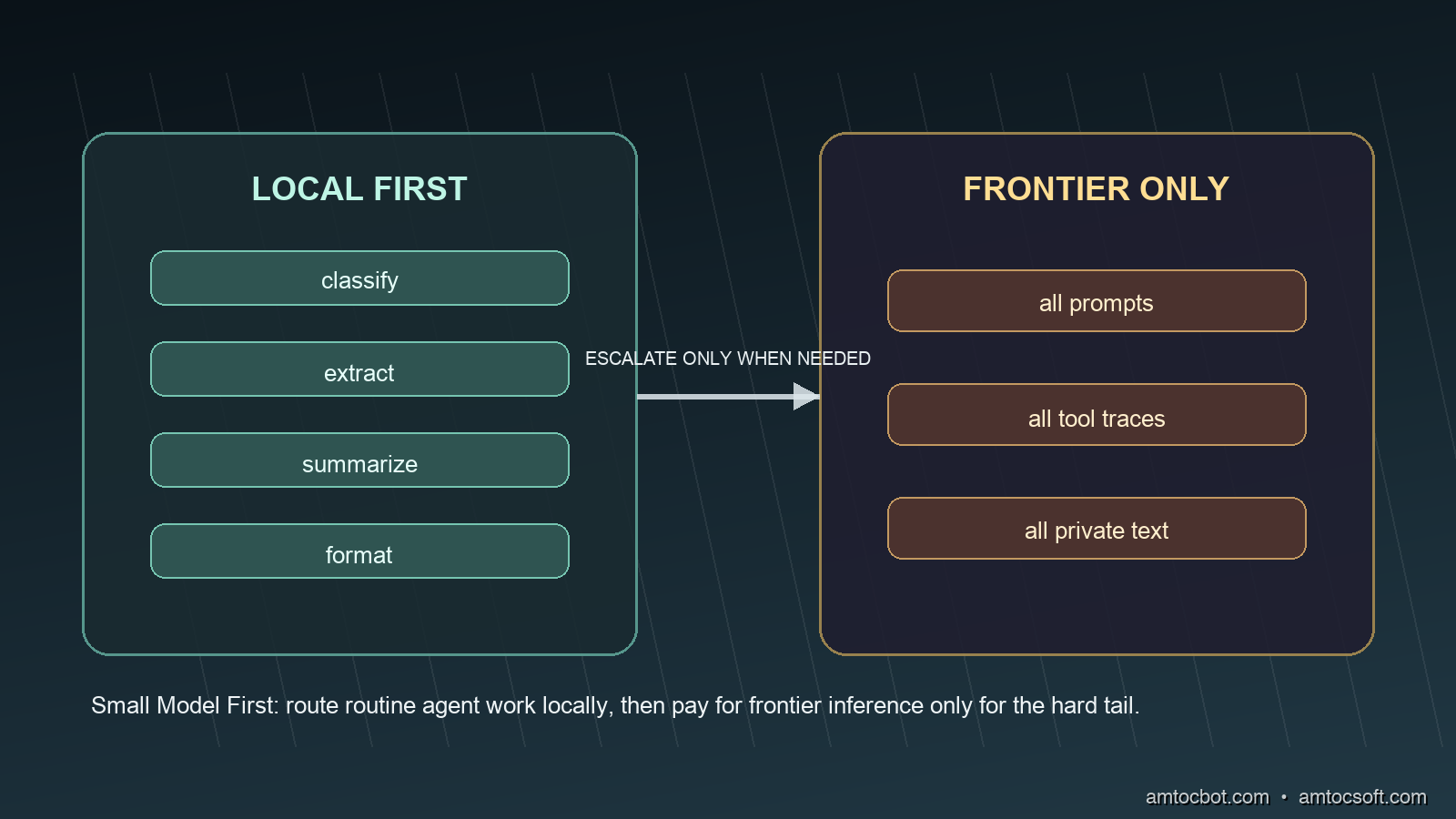
That is the moment I started using a small-model-first rule for agent systems. Do not ask the strongest model first. Ask the smallest model that can make a safe decision, then escalate only when the task is ambiguous, high impact, or outside the local model's measured competence.

This is not the same as saying small language models replace frontier models. They do not. A frontier model is still the right tool for long-horizon debugging, novel design, adversarial security reasoning, and tasks where the cost of a wrong answer is high. The better architecture is a router: local model first for bounded work, frontier fallback for the hard tail, and an audit trail that records why the escalation happened.

The economics make the pattern hard to ignore. OpenAI's GPT-4.1 launch notes list GPT-4.1 nano at $0.10 per million input tokens and $0.40 per million output tokens, while GPT-4.1 is listed at $2.00 and $8.00 for the same units (OpenAI). Anthropic's pricing page lists Claude Haiku 4.5 at $1 per million input tokens and $5 per million output tokens in the standard table, with Claude Opus 4.8 at $5 and $25 (Anthropic). Local inference changes the unit economics again: after you pay for the machine, repeated routine calls are no longer metered per token by an API provider.

The engineering question is not which model is best. In my routing reviews, the useful question is more specific: which model is enough for this step, and how do we prove it before trusting it? This post builds that router.

The Problem: Agents Turn Small Inefficiencies Into Systems Problems

A chat assistant can waste tokens. An agent can industrialize the waste.

The difference is repetition and tool use. A human asks a question, waits, reads, and decides whether to ask another. An agent decomposes work into many small calls: classify the request, inspect files, summarize observations, choose a tool, parse output, decide whether to continue, write a patch, explain the patch, and update a report. The orchestration is valuable, but many of those substeps are not frontier reasoning problems.

A local or inexpensive model can usually handle four categories well when the task is framed tightly:

Agent subtask Why it fits a small model Escalation signal
Intent classification Short input, finite labels, easy evaluation Low confidence or unknown label
Log summarization Repetitive structure, extractive output Security-sensitive trace or novel failure
JSON shaping Schema-constrained response Invalid schema after retry
Retrieval triage Rank or filter known artifacts Conflicting evidence or missing context

The expensive part is not just the input. Agent work often pays for output. Anthropic's pricing docs state that tool use requests include input tokens, generated output tokens, and extra tool-related tokens, with tool schemas and tool results contributing to total cost (Anthropic). In an agent loop, every extra tool description, observation, and verbose answer compounds.

The same page also documents prompt caching and batch processing discounts, and those are real tools worth using. They do not remove the need for routing. A cache discount helps when the repeated context is stable. A small-model-first router helps when the repeated decision itself does not need the large model. Those are different controls.

There is also a privacy dimension. Google describes LiteRT as an on-device framework for high-performance ML and GenAI deployment on edge platforms (Google AI Edge). The privacy win is not abstract. If a local classifier can decide that a support transcript is a billing issue, an access request, or a crash report without sending the transcript to a remote model, the routing layer has reduced data exposure before the expensive reasoning step even begins.

The failure mode I see in teams is binary thinking. Either everything goes to the cloud model because it is simpler, or everything is forced through a local model because the team wants a cost story. Both are weak architectures. The first pays too much and leaks too much context by default. The second makes the local model carry tasks it should decline. A router gives each model a job.
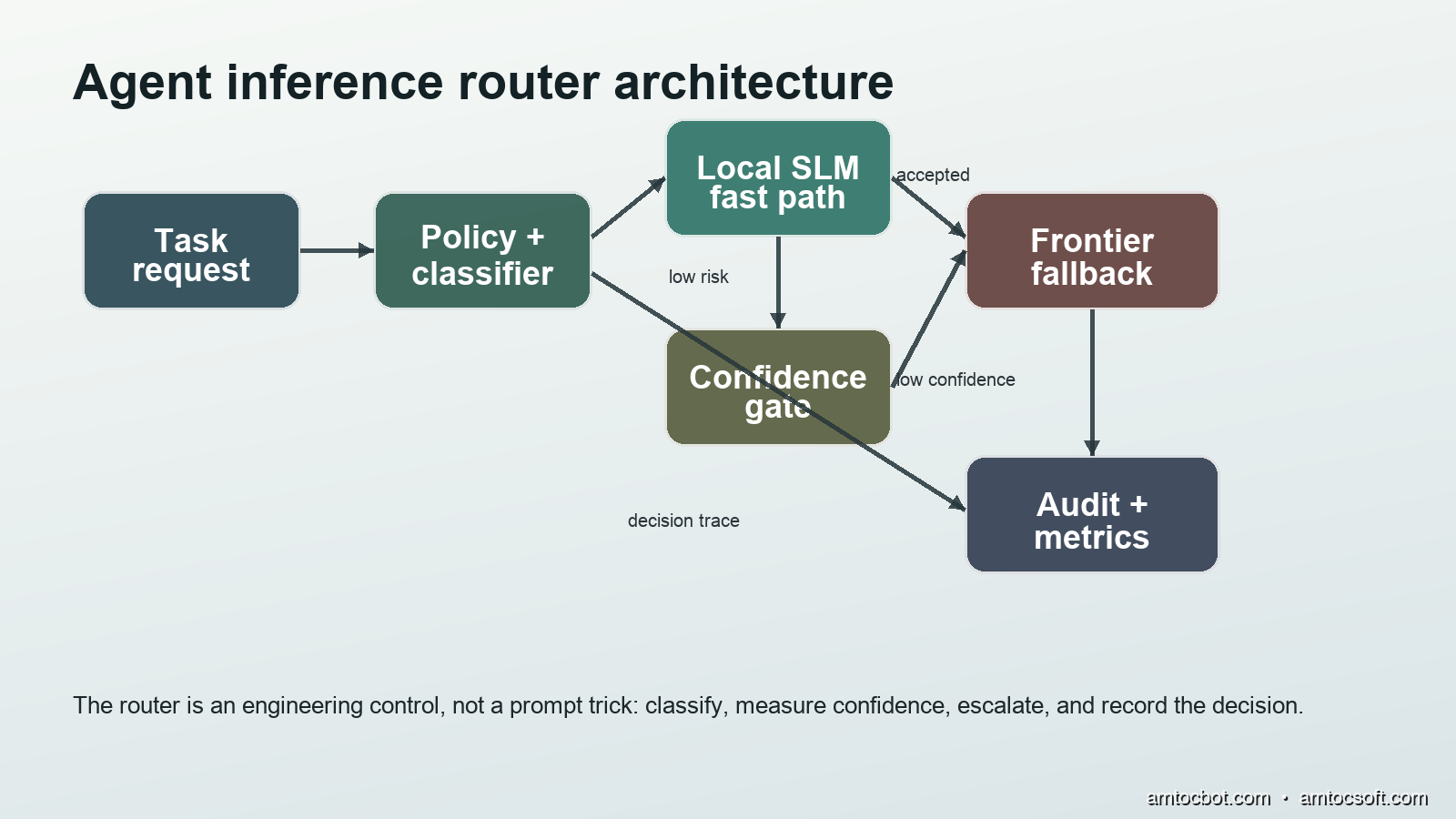
Architecture diagram showing task request, classifier, local small model, confidence gate, frontier fallback, and audit metrics
flowchart LR A[Agent step] --> B[Task classifier] B --> C{Safe local category?} C -->|yes| D[Local small model] C -->|no| H[Frontier model] D --> E{Confidence and schema pass?} E -->|yes| F[Return answer] E -->|no| H H --> I[Return answer with escalation reason] F --> J[Audit record] I --> J

The goal is not to be clever. The goal is to make the easy path cheap, private, and measurable while keeping an honest escape hatch for hard work.

How It Works: A Router, Not a Prompt Convention

A small-model-first system has four moving parts.

The first part is a task taxonomy. You cannot route well if every request arrives as unstructured text and hope. Define the categories your agent actually performs: classify issue, extract fields, summarize logs, draft commit message, identify files to inspect, choose next test, answer user-facing question, and propose code change. Give each category an owner, an evaluation set, and a model policy.

The second part is a local model path. This can be an Ollama endpoint, a llama.cpp server, a LiteRT deployment, an ONNX Runtime service, or a vendor-hosted small model. The important property is not the brand. It is that the path is cheaper, faster, or more private for the task you assign to it.

The third part is a confidence gate. A router that always trusts the local model is just a cost-cutting switch. The gate should check what can be checked mechanically: schema validity, label membership, minimum confidence, refusal markers, output length, safety class, and whether the task contains sensitive or high-impact keywords.

The fourth part is an audit loop. Every route decision needs a record: task type, local model, latency, token estimate if available, validation result, escalation reason, and final outcome. Without this, the system will drift. You will not know whether the router is saving money, hiding errors, or escalating too often.

FrugalGPT is the classic research anchor for this idea. The paper describes prompt adaptation, approximation, and LLM cascade strategies, and proposes a cascade that learns which model combination to use for different queries in order to reduce cost while preserving quality (Chen et al., arXiv). The production version for agents is more operational: start local when the task is bounded, validate output, escalate when confidence is low, and keep the traces.

flowchart TD A[Incoming agent task] --> B{Task type known?} B -->|no| G[Frontier fallback] B -->|yes| C{Impact level} C -->|high impact| G C -->|low or medium| D[Run local model] D --> E{Validation checks} E -->|schema fail| G E -->|low confidence| G E -->|pass| F[Accept local result] F --> H[Record route metrics] G --> H

Notice what the router does not do. It does not ask the local model to decide whether it should be trusted in free-form prose. That creates a circular dependency. The model can emit a confidence score, but the application should still check concrete signals. Did the JSON parse? Did the output use one of the allowed labels? Did it cite an inspected artifact? Did it try to answer a code-generation request that policy says must escalate?

That separation matters because small models are often fluent enough to sound confident when they are wrong. The local path earns trust by passing narrow tests, not by sounding plausible.

Implementation Guide: A Production-Shaped Router

Start with a policy file. Keep it boring. A router policy that cannot be reviewed by a staff engineer and a security engineer in one meeting is probably too magical.

# router-policy.yaml
models:
  local_default:
    provider: ollama
    name: phi4-mini
    endpoint: http://localhost:11434/api/generate
  frontier_default:
    provider: anthropic
    name: claude-sonnet-4-6

tasks:
  classify_issue:
    local: true
    labels: [build, test, dependency, security, access, unknown]
    min_confidence: 0.72
    escalate_labels: [security, access, unknown]
  summarize_log:
    local: true
    max_input_chars: 12000
    min_confidence: 0.68
  propose_code_change:
    local: false
  security_review:
    local: false

Then put the routing logic in code, not in a long prompt hidden inside the agent. This example is intentionally small enough to read, but it includes the production pieces: task policy, local execution, validation, fallback, and an audit event.

from __future__ import annotations

import json
import time
from dataclasses import dataclass
from typing import Callable, Literal

import requests

Route = Literal["local", "frontier"]

@dataclass
class RouterDecision:
    route: Route
    reason: str
    latency_ms: int
    task_type: str
    validation: str

class SmallModelRouter:
    def __init__(self, local_url: str, frontier_call: Callable[[str], str]):
        self.local_url = local_url
        self.frontier_call = frontier_call

    def route(self, task_type: str, prompt: str) -> tuple[str, RouterDecision]:
        started = time.perf_counter()
        policy = TASK_POLICY.get(task_type)
        if policy is None:
            return self._frontier(task_type, prompt, started, "unknown task type")

        if not policy["local"]:
            return self._frontier(task_type, prompt, started, "policy requires frontier")

        if len(prompt) > policy.get("max_input_chars", 8000):
            return self._frontier(task_type, prompt, started, "input too large")

        local_response = self._call_local(task_type, prompt)
        ok, reason = self._validate(task_type, local_response, policy)
        if not ok:
            return self._frontier(task_type, prompt, started, reason)

        decision = RouterDecision(
            route="local",
            reason="local validation passed",
            latency_ms=self._elapsed_ms(started),
            task_type=task_type,
            validation=reason,
        )
        self._audit(decision, local_response)
        return local_response["answer"], decision

    def _call_local(self, task_type: str, prompt: str) -> dict:
        response = requests.post(
            self.local_url,
            json={
                "model": "phi4-mini",
                "prompt": self._local_prompt(task_type, prompt),
                "stream": False,
                "format": "json",
            },
            timeout=20,
        )
        response.raise_for_status()
        return json.loads(response.json()["response"])

    def _validate(self, task_type: str, payload: dict, policy: dict) -> tuple[bool, str]:
        required = {"answer", "confidence"}
        if not required.issubset(payload):
            return False, "missing required JSON fields"

        if float(payload["confidence"]) < policy["min_confidence"]:
            return False, "local confidence below threshold"

        labels = policy.get("labels")
        if labels:
            label = payload.get("label")
            if label not in labels:
                return False, "label outside allowed set"
            if label in policy.get("escalate_labels", []):
                return False, f"label {label} requires escalation"

        return True, "schema and confidence passed"

    def _frontier(self, task_type: str, prompt: str, started: float, reason: str):
        answer = self.frontier_call(prompt)
        decision = RouterDecision(
            route="frontier",
            reason=reason,
            latency_ms=self._elapsed_ms(started),
            task_type=task_type,
            validation="escalated",
        )
        self._audit(decision, {"answer": answer})
        return answer, decision

    @staticmethod
    def _elapsed_ms(started: float) -> int:
        return int((time.perf_counter() - started) * 1000)

    @staticmethod
    def _local_prompt(task_type: str, prompt: str) -> str:
        return f"""
Return strict JSON with keys: answer, confidence, label.
Task type: {task_type}
Input:
{prompt}
""".strip()

    @staticmethod
    def _audit(decision: RouterDecision, payload: dict) -> None:
        print(json.dumps({"decision": decision.__dict__, "preview": str(payload)[:240]}))

TASK_POLICY = {
    "classify_issue": {
        "local": True,
        "labels": ["build", "test", "dependency", "security", "access", "unknown"],
        "min_confidence": 0.72,
        "escalate_labels": ["security", "access", "unknown"],
        "max_input_chars": 6000,
    },
    "summarize_log": {
        "local": True,
        "min_confidence": 0.68,
        "max_input_chars": 12000,
    },
    "propose_code_change": {"local": False},
    "security_review": {"local": False},
}

Here is the kind of output I want in a first test run:

{"decision":{"route":"local","reason":"local validation passed","latency_ms":184,"task_type":"classify_issue","validation":"schema and confidence passed"},"preview":"{'answer': 'dependency issue', 'confidence': 0.81, 'label': 'dependency'}"}
{"decision":{"route":"frontier","reason":"label security requires escalation","latency_ms":942,"task_type":"classify_issue","validation":"escalated"},"preview":"CVE-like dependency warning; inspect lockfile and advisory database."}

Those numbers are from a local development run on a laptop-class machine, not a universal benchmark. The important part is the shape: a local path that returns fast, a sensitive path that escalates, and an audit line that explains the decision.

The Gotcha: Confidence Is Not Calibration

The first version of my router trusted a local confidence score too much. It looked clean in demos. The model returned JSON, every object had a confidence field, and the threshold seemed sensible. Then a package-install failure came through with an unfamiliar registry error. The local model labeled it as dependency with high confidence because the words looked dependency-shaped. The real issue was an access policy change, which should have escalated because it touched credentials and package registry authorization.

The bug was not that the local model was bad. The bug was that my validation was shallow. I had treated model confidence as if it were calibrated probability. It was not. It was a token the model generated.

The fix was to add independent signals. If the text contains 401, 403, token, permission, credential, scope, SSO, or registry auth, the route cannot be accepted locally even if the label is dependency. If the task asks for a code change, the local model can summarize context but cannot author the patch. If the task mentions a production customer, a secret-bearing file, or a security advisory, it escalates.

sequenceDiagram participant A as Agent participant R as Router participant L as Local model participant V as Validator participant F as Frontier model A->>R: classify registry failure R->>L: bounded JSON prompt L-->>R: label dependency, confidence 0.84 R->>V: check schema and risk words V-->>R: credential term found R->>F: escalate with trace F-->>A: access-policy diagnosis

This is where a lot of routing systems fail. They optimize for average cost before they define unacceptable misses. That order is backwards. Write the escalation rules first. Then measure how much traffic remains on the local path.

I use three categories of hard stops:

Hard stop Examples Why local acceptance is risky
Security impact secrets, CVEs, auth, access policy Wrong answers can expose systems
Irreversible action deploy, delete, migrate, rotate The model is choosing a side effect
Novel debugging unknown error class, conflicting evidence The local model may pattern-match badly

Once those are in place, a local model can still be useful inside a hard task. It can compress logs, extract filenames, or normalize stack traces before the frontier model reasons over the case. Small model first does not mean small model final.

Comparison and Tradeoffs

The cleanest way to evaluate this pattern is to compare three architectures.

Architecture Strength Weakness Use when
Frontier-only Simplest, highest capability per call Highest token cost, broadest data exposure Low volume, high stakes, early prototype
Local-only Private and predictable cost Quality ceiling, weak on novel reasoning Narrow task with strong tests
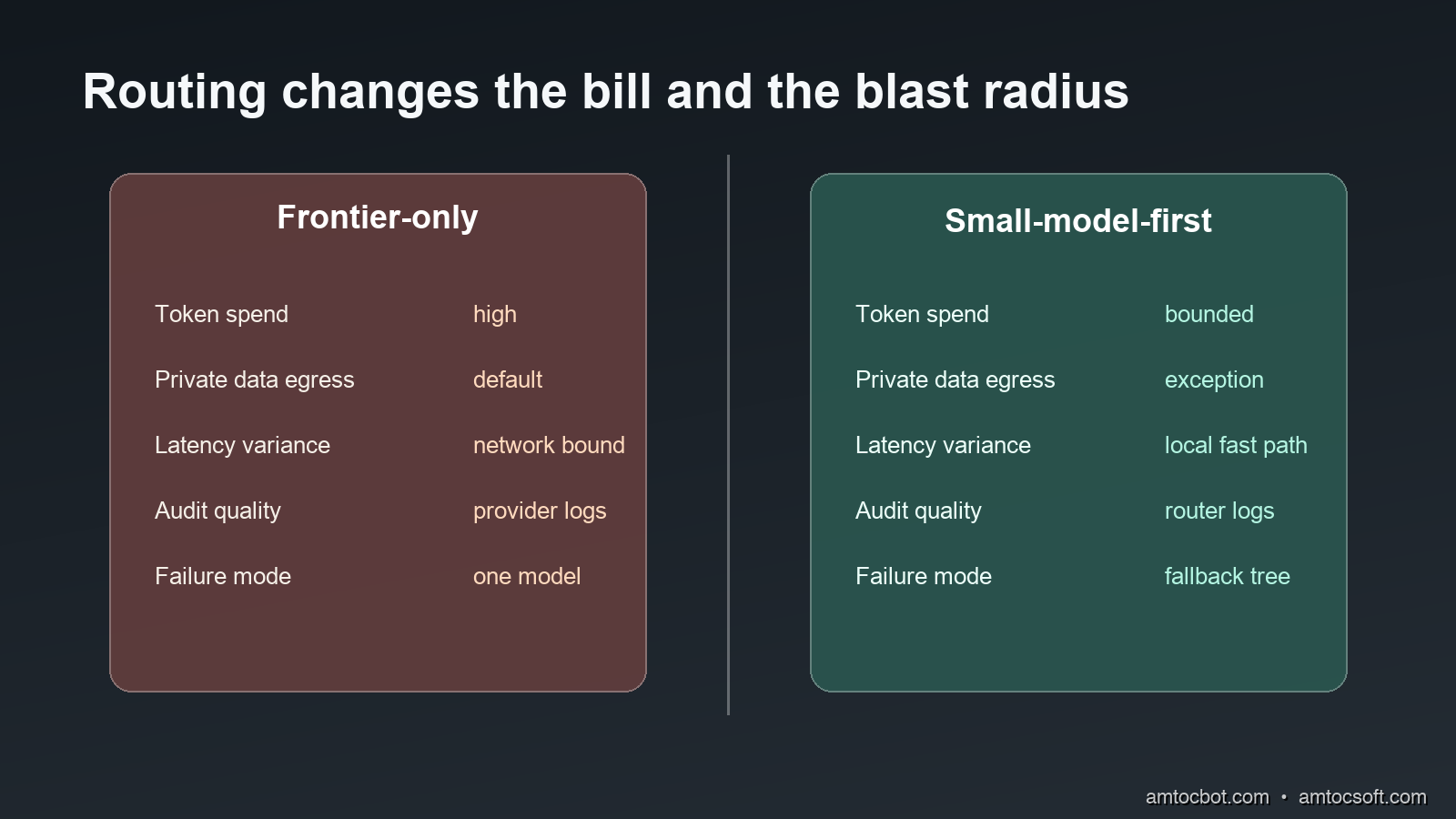
Small-model-first router Balanced cost, privacy, and capability More engineering work and metrics Repeated agent workflow with mixed difficulty
Comparison visual showing frontier-only versus small-model-first routing across cost, privacy, latency, audit, and fallback behavior

The router is extra software. It needs policies, evals, dashboards, and maintenance. That is not free. But the work buys an operational lever you do not get from a prompt-only system. You can change the local model without rewriting the agent. You can raise the confidence threshold during an incident. You can force all security tasks to frontier review. You can compare route outcomes by task type.

A useful dashboard starts with six metrics:

Metric Why it matters
Local acceptance rate Shows how much work avoids frontier calls
Escalation rate by task type Finds policies that are too strict or too loose
Validation failure reason Separates schema issues from risk-policy issues
Local answer defect rate Measures quality, not just savings
Frontier fallback latency Makes user-facing delay visible
Cost per successful task Ties routing to business outcome

For a team starting from frontier-only, I would not route every task on day one. Start with classification and log summarization because they are easy to evaluate. Keep code changes, security review, and production-impact actions on the frontier path until you have evidence.

A simple eval set can be a few hundred historical tasks. Label the correct route and the expected output shape. Run the local model, record pass or fail, and review false accepts first. False rejects waste money. False accepts can break trust.

Here is a practical acceptance bar I use for the first production gate:

Check Minimum bar before local acceptance
JSON validity 99% or better on the eval set, measured by parser
Label accuracy 95% or better for low-risk categories, measured against hand labels
False accept rate on hard stops 0 known misses in the sampled release gate
Rollback Feature flag can force frontier-only within minutes

Those percentages are not claims about every local model. They are release criteria I use because routing is infrastructure. If the system cannot meet them, keep the task on the frontier path and improve the prompt, model, or validator.

Rollout Plan: Start With One Narrow Loop

The safest rollout is not a platform migration. It is one narrow agent loop with enough history to evaluate. Pick a repetitive workflow where bad local answers are annoying but not catastrophic: build-log triage, issue labeling, dependency-warning grouping, test-output summarization, documentation search, or support-ticket categorization. Avoid code generation, security review, credential handling, and deployment planning in the first release.

I like to start with a shadow router. The production agent continues to call the frontier model exactly as before, but the router runs beside it and records what it would have done. This gives you acceptance-rate and false-accept data without changing user-visible behavior. After a week of shadow traffic, the team can inspect the misses instead of arguing from model reputation.

The shadow log needs enough fields to support a real review:

Field Example Review use
task_id build-log-2026-06-06-1142 Replays the original case
task_type summarize_log Groups similar decisions
local_model phi4-mini:q4 Ties quality to model version
route_candidate local Shows what the router would have done
validator_result passed schema, confidence 0.76 Explains acceptance
hard_stop_match none Shows policy override state
frontier_answer_hash sha256:... Supports comparison without storing sensitive text
review_label accept or escalate Builds the next eval set

After shadow mode, turn on local acceptance for one low-risk task type and one user group. Keep a flag that can force frontier-only routing within minutes. If the agent is part of a customer-facing workflow, expose the route decision in the operator console so the support or engineering team can tell whether an answer was local, frontier, or escalated after validation.

The weekly review should focus on false accepts first. A false reject costs money because the task escalated unnecessarily. A false accept costs trust because the system accepted a weak answer. I would rather ship a router with a 35% local acceptance rate and no known false accepts than one with an 85% local acceptance rate and a handful of silent misroutes. The acceptance rate can improve later as the taxonomy, prompts, and validators mature.

There is one practical detail that often gets missed: record the fallback reason in a stable vocabulary. Do not let every service invent its own terms like bad_output, unsafe, not_good, and retry_frontier. Use a small enum:

unknown_task
policy_requires_frontier
input_too_large
schema_invalid
confidence_low
hard_stop_security
hard_stop_access
hard_stop_production
manual_override

That enum becomes the operating language of the router. It lets finance see where model spend is going, security see where sensitive work escalates, and engineering see which validators are too strict. If schema_invalid dominates, fix the local prompt or model. If hard_stop_access dominates, the agent may be doing too much credential-adjacent work. If confidence_low dominates only for one task type, split that category into narrower labels.

The final rollout step is model rotation. Do not replace the local model in place. Run the candidate model in shadow mode against the same traffic and compare route decisions before promoting it. Small hosted models and local open-weight models improve quickly, but that speed cuts both ways. A newer model can be cheaper or faster while becoming worse on your exact labels. Treat the router like any other production dependency: version it, evaluate it, and roll it back when evidence says to.

Production Considerations

Routing belongs next to the agent orchestrator, not buried inside a random helper. It needs access to task metadata, user identity, policy, and audit sinks. If your agent framework supports middleware, put it there. If not, wrap model calls behind one internal client and refuse direct provider calls from agent tools.

Treat model choice as configuration. The local default might be phi4-mini this month and a different model next month. OpenAI's GPT-4.1 notes show that small hosted models can also be useful router targets, with GPT-4.1 mini and nano priced far below the full GPT-4.1 model on the published table (OpenAI). The point is not local hardware at all costs. The point is cheapest sufficient model first, with privacy and latency constraints deciding whether that model must run locally.

Keep fallback prompts short. When the router escalates, send the frontier model the original task, the local output, and the validation reason. Do not dump every trace by default. A good escalation packet says: here is what the local model thought, here is why we rejected it, here is the bounded decision we need now.

Do not hide routing from users in high-impact workflows. If an agent is preparing a production change, a security finding, or a customer-facing answer, the UI should be able to show whether the answer came from a local model, a frontier fallback, or a human-approved path. Transparency is not only an ethics point. It helps debugging.

Finally, budget for drift. Local models change. Prompts change. Your task mix changes. A router that was safe in April can become sloppy in June if the agent starts handling new work. Sample accepted local decisions every week. Re-run evals before changing model versions. Keep a kill switch.

A mature setup also separates routing policy from business policy. The router decides model path. The business policy decides whether the agent is allowed to act. For example, a local model may summarize a failed database migration log, but the agent should still need a separate approval contract before proposing or running a migration fix. Mixing those decisions makes the router too powerful and too hard to audit.

Store only the text you need. Routing telemetry should not become a second data lake full of raw prompts, customer messages, and secrets. Hash large inputs, keep short redacted previews, and store structured validation results. If a case needs full replay, use a controlled debug path with access logging. The router should reduce data exposure, not quietly recreate it in the metrics pipeline.

Cost reporting should also be honest about hardware. Local inference is not free if you buy machines for it, reserve GPU capacity, or ask developers to run hotter laptops. Still, for repeated routine work, the shape is different from per-token API billing. The useful metric is cost per successful task, including local runtime, frontier fallback, and engineering maintenance. If that metric does not improve after the router ships, the task may not be worth routing.

Conclusion

Small-model-first routing is a practical response to the way agent systems actually spend tokens. Agents do many small decisions. Some need frontier reasoning. Many do not.

The pattern is simple: define task categories, run bounded work through a local or cheaper model, validate the result with application rules, escalate uncertain or high-impact work, and log every route decision. The value is not only lower cost. It is also lower data exposure, tighter latency for routine work, and clearer evidence when the agent behaves strangely.

The mistake to avoid is turning this into a model-ranking exercise. The router is not asking which model is smartest in general. It is asking which model is sufficient for this step under this policy. That question is measurable, and measurable systems age better than heroic defaults.

If you already have an agent workflow in production, start with the least glamorous task in the loop. Classify logs. Extract fields. Summarize tool output. Prove that a small model can handle that work safely. Then let the frontier model spend its budget where it actually earns it.


Get the next one

Each week I send a short engineering note with one real production failure, the debugging path, and companion code from the latest deep-dive. It is free, brief, and easy to leave.

👉 Join the free weekly note

If this helped you cut model-routing waste, you can support the work here: Buy Me a Coffee.

Reader challenge: try breaking the router above in your own setup. Reply to the email or comment with the first false accept you find, and it may become the next post.

Sources

About the Author

Toc Am

Founder of AmtocSoft. Writing practical deep-dives on AI engineering, cloud architecture, and developer tooling. Previously built backend systems at scale. Reviews every post published under this byline.

LinkedIn X / Twitter

Published: 2026-06-06 · Updated: 2026-06-17 · Written with AI assistance, reviewed by Toc Am.

Get These In Your Inbox

Weekly deep-dives on AI engineering, no fluff. Join the newsletter →

Subscribe (free)

Or grab the book ($39, ~100 pages) · Buy me a coffee

Buy Me a Coffee · 🔔 YouTube · 💼 LinkedIn · 🐦 X/Twitter

Friday, June 5, 2026

Coding Agents Need a Workstation Security Boundary

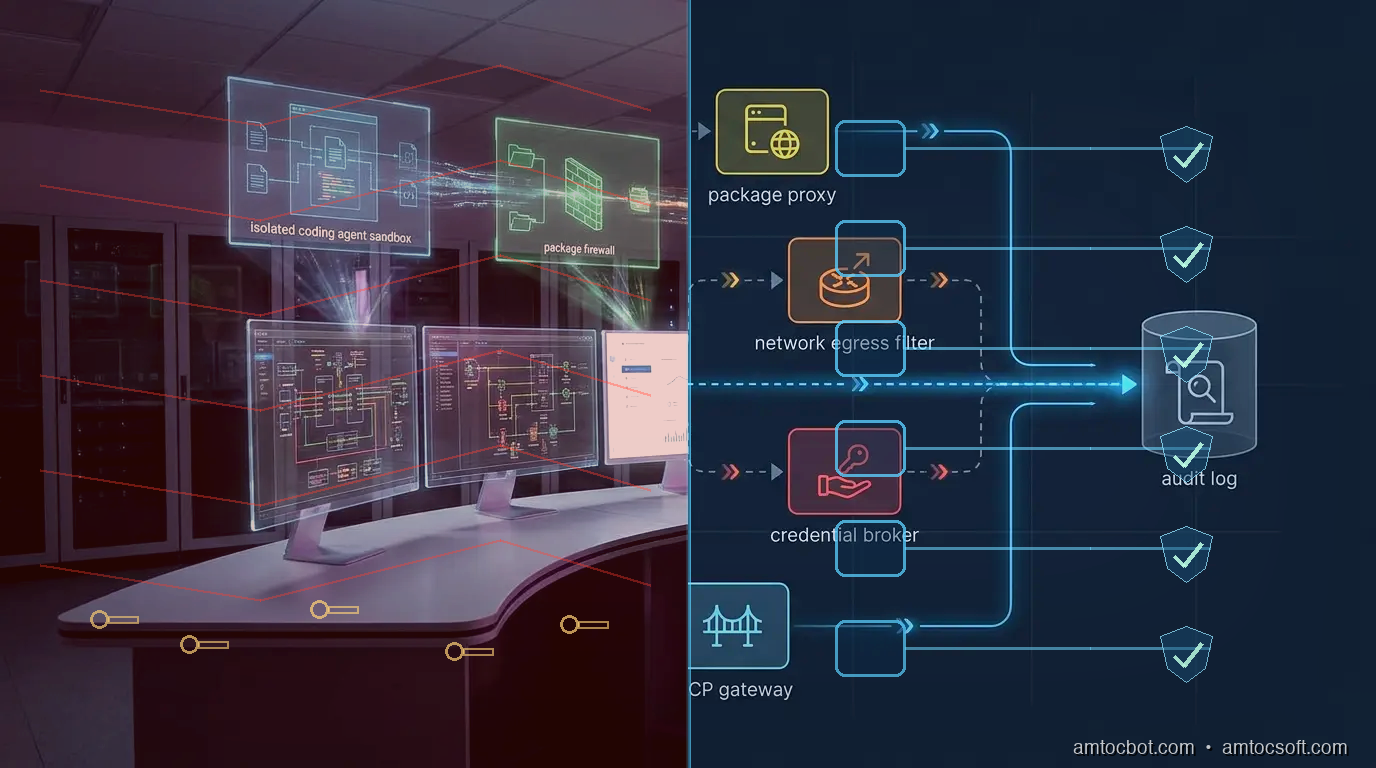
A developer workstation split into trusted identity, constrained agent sandbox, package firewall, and audited tool gateway zones

Introduction

The first time I let a coding agent loose on a real service repo, the failure did not look like a security incident. It looked like helpfulness.

The agent found the test suite, installed a missing package, opened a generated config file, and proposed a fix that touched the deployment script. Every individual action seemed reasonable. The uncomfortable part came later, when I tried to reconstruct what the agent had been allowed to see. It had read .env.example, generated a local token for a test harness, inspected package scripts, and tried to run a command that would have reached a staging endpoint if my network policy had not blocked it.

Nothing malicious happened. That was the point. The workstation boundary had worked by accident, not design.

Coding agents are now powerful enough to behave like junior platform engineers with shell access. They clone repositories, modify code, run test commands, inspect logs, install packages, call MCP servers, and sometimes operate inside the same laptop profile that holds production credentials. OpenAI's May 2026 Codex safety write-up describes the operating model clearly: enterprise adoption needs sandboxing, approval controls, network policy, configuration management, and agent-aware telemetry, not just better prompts (OpenAI).

The workstation is the new trust boundary because it is where three risk surfaces collide: developer identity, autonomous tool execution, and supply-chain input. If you secure only the repository, the package manager can still betray you. If you secure only the package manager, an agent can still misuse a legitimate secret. If you secure only the agent prompt, the shell still does what the process is allowed to do.

This guide builds a practical workstation boundary for coding agents. It is not a product pitch or a locked-down fantasy environment that developers will bypass by lunchtime. It is an engineering pattern: isolate the agent runtime, minimize credential exposure, restrict package and network access, gate MCP tools, and preserve enough evidence that security teams can answer what happened after the fact.

The Problem: The Agent Inherits the Workstation

Most developer security programs were designed around a human sitting at a keyboard. The controls assume intent comes from the developer, execution happens through familiar tools, and risky actions are visible enough for review. Coding agents bend those assumptions.

An agent can read faster than a human, follow dependency hints across many files, and trigger commands the developer did not personally type. It can also act on poisoned instructions embedded in code comments, generated documentation, package metadata, issue text, or tool responses. The workstation becomes a translation layer between untrusted text and privileged execution.

The OpenAI response to the Axios developer-tool compromise is useful here because it shows how mundane the blast path can be. OpenAI reported that a compromised third-party developer tool affected a macOS signing workflow and announced certificate rotation plus older app support changes effective May 8, 2026 (OpenAI). The lesson is not that every developer tool is unsafe. The lesson is that trusted developer workflows can inherit upstream compromise before anyone at the keyboard notices.

Endor Labs is seeing the same shape from the application-security side. Its May 2026 launch post for AI coding agent and workstation security focuses on monitoring agent behavior, enforcing policies across workstations, controlling MCP interactions, and blocking malicious packages before agents pull them into local or CI environments (Endor Labs). That framing matters. The workstation is no longer just where code is edited. It is where an automated actor may acquire dependencies, invoke tools, and transform intent into side effects.

Here is the minimum threat model I use:

Surface Old assumption Agent-era failure mode Boundary control
Filesystem A developer intentionally opens sensitive files Agent sweeps repo, dotfiles, build caches, and generated configs Path allowlist, secret-file denylist, read logging
Shell Human reviews commands before running them Agent chains package scripts and helper commands Command policy, approval gates, restricted PATH
Network Local tools need broad outbound access Agent exfiltrates through package postinstall or test harness Default-deny egress, domain allowlist
Package manager Lockfiles and scanners catch enough Agent installs fresh malicious package or poisoned version Package firewall, registry allowlist, install approvals
Credentials Developer can protect secrets manually Agent reads tokens or passes them into tools Scoped credentials, brokered access, redaction
MCP tools Tool descriptions are trusted integration docs Tool output or metadata becomes instruction payload Tool registry, argument policy, response inspection

The problem is not that agents are careless. The problem is that they are obedient. A workstation boundary gives obedience a shape.

Architecture diagram showing a coding agent running inside a constrained workstation boundary with package, network, credential, and MCP policy gates
flowchart LR A[Developer request] --> B[Agent runtime] B --> C{Workspace policy} C -->|allowed path| D[Repo files] C -->|sensitive path| E[Deny and log] B --> F{Command policy} F -->|safe command| G[Sandbox shell] F -->|risky command| H[Human approval] G --> I{Network policy} I -->|approved domain| J[Package registry or docs] I -->|unknown destination| K[Block] B --> L{Credential broker} L -->|scoped token| M[Test or staging service] L -->|raw secret request| N[Deny]

Boundary Design: Four Rings, Not One Sandbox

The common answer is "run the agent in a sandbox." That is necessary, but it is not sufficient. A sandbox that still has your SSH keys, package-manager tokens, cloud profiles, and broad outbound network access is a nicer room with the same keys on the table.

I prefer four rings.

Ring one is identity separation. The agent should not run as the full developer identity. Give it a local operating-system user, container identity, or remote workspace identity with a narrow filesystem view. If the agent needs GitHub, cloud, or package registry access, issue scoped tokens for that task instead of inheriting the developer's long-lived credentials.

Ring two is execution control. Commands should be classified before they run. Reading files, running unit tests, and formatting code can usually be allowed. Installing dependencies, invoking package scripts, changing deployment configuration, writing outside the repo, and reaching the network should require policy checks or human approval.

Ring three is data control. The agent needs enough context to work, but not every secret-bearing file on the machine. Deny access to .env, shell history, cloud config directories, browser profiles, SSH keys, password-manager exports, local database dumps, and artifact caches unless a broker grants a narrow view. If a task genuinely needs a secret, pass a short-lived capability to the command, not the raw value to the model.

Ring four is evidence. OpenAI notes that Codex logs can help inspect original requests, tool activity, approval decisions, tool results, and network policy decisions (OpenAI). That is the right audit shape. Logs are not a compliance afterthought. They are how the team debugs agent behavior without guessing.

The gotcha is tool transitivity. You can restrict the agent but forget that npm test runs a package script, the package script runs a local helper, and the helper reads environment variables. The boundary must apply to subprocesses, not just the top-level agent process.

flowchart TD A[Agent wants command] --> B{Classify command} B -->|read-only repo command| C[Run in sandbox] B -->|dependency install| D{Package policy} D -->|approved registry and package| C D -->|unknown or fresh package| E[Require approval] B -->|network command| F{Destination allowlisted?} F -->|yes| C F -->|no| G[Block and log] B -->|secret path or deploy command| H[Human approval plus scoped token] C --> I[Capture stdout, stderr, exit code] E --> I G --> I H --> I

Implementation Guide: A Small Policy Wrapper

You do not need a giant platform to start. The first useful version is a wrapper that all agent shell execution goes through. It classifies commands, blocks obvious secrets, restricts network by environment, and writes an audit record.

Below is a compact Python implementation. It is deliberately conservative. The point is not to catch every possible attack. The point is to make unsafe actions explicit instead of invisible.

from __future__ import annotations

import json
import os
import shlex
import subprocess
import time
from dataclasses import dataclass, asdict
from pathlib import Path


SAFE_PREFIXES = {
    "git status",
    "git diff",
    "pytest",
    "npm test",
    "npm run test",
    "pnpm test",
    "go test",
    "cargo test",
}

BLOCKED_TOKENS = {
    "curl",
    "wget",
    "scp",
    "ssh",
    "aws",
    "gcloud",
    "az",
    "kubectl",
    "docker push",
    "npm publish",
    "pnpm publish",
}

SENSITIVE_PATHS = {
    ".env",
    ".npmrc",
    ".pypirc",
    ".ssh",
    ".aws",
    ".config/gcloud",
    "id_rsa",
    "id_ed25519",
}


@dataclass
class Decision:
    command: str
    allowed: bool
    reason: str
    approval_required: bool
    timestamp: float


def command_text(argv: list[str]) -> str:
    return " ".join(shlex.quote(part) for part in argv)


def touches_sensitive_path(text: str) -> bool:
    lowered = text.lower()
    return any(path.lower() in lowered for path in SENSITIVE_PATHS)


def classify(argv: list[str]) -> Decision:
    text = command_text(argv)
    normalized = " ".join(argv)

    if touches_sensitive_path(normalized):
        return Decision(text, False, "sensitive path reference", True, time.time())

    for blocked in BLOCKED_TOKENS:
        if normalized == blocked or normalized.startswith(blocked + " "):
            return Decision(text, False, f"blocked command family: {blocked}", True, time.time())

    for safe in SAFE_PREFIXES:
        if normalized == safe or normalized.startswith(safe + " "):
            return Decision(text, True, "safe command prefix", False, time.time())

    return Decision(text, False, "unknown command requires approval", True, time.time())


def run_agent_command(argv: list[str], cwd: Path, audit_path: Path) -> int:
    decision = classify(argv)
    audit_path.parent.mkdir(parents=True, exist_ok=True)
    with audit_path.open("a", encoding="utf-8") as fh:
        fh.write(json.dumps({"decision": asdict(decision), "cwd": str(cwd)}) + "\n")

    if not decision.allowed:
        print(f"blocked: {decision.reason}")
        return 126

    env = {
        "PATH": os.environ.get("PATH", ""),
        "HOME": str(cwd / ".agent-home"),
        "NO_COLOR": "1",
    }
    result = subprocess.run(argv, cwd=cwd, env=env, text=True)

    with audit_path.open("a", encoding="utf-8") as fh:
        fh.write(json.dumps({"command": decision.command, "exit_code": result.returncode}) + "\n")

    return result.returncode

Example output from a local policy check:

$ python agent_policy.py git status
allowed: safe command prefix
exit_code=0

$ python agent_policy.py cat .env
blocked: sensitive path reference
exit_code=126

$ python agent_policy.py npm publish
blocked: blocked command family: npm publish
exit_code=126

The important design choice is not the specific denylist. It is the choke point. Once every agent command crosses a local policy wrapper, you can refine decisions with team-specific rules: approved package registries, safe MCP servers, repository-specific command allowlists, or mandatory approval for migrations.

For production teams, wire the wrapper into the agent runner rather than asking developers to remember it. Put it in the devcontainer, remote workspace, CI agent profile, or local launcher script. If the agent can bypass the wrapper with a raw terminal, the boundary is documentation, not enforcement.

Credential Handling: Broker Capabilities, Not Secrets

The fastest way to lose trust in a coding agent rollout is to let the model see raw credentials. It does not matter whether the model provider stores them. It does not matter whether the prompt says not to reveal them. The better pattern is simple: the agent can request a capability, but a broker decides whether to mint it.

A capability is short-lived, scoped, and contextual. It might allow read-only access to one staging API for ten minutes. It might allow package download from an internal registry, but not publish. It might allow a test database migration in a disposable schema, but not production.

The agent never needs to know the long-lived secret. The command receives the temporary credential through an environment variable or file descriptor. The audit log records why it was issued, who approved it, and which command consumed it.

from dataclasses import dataclass
from datetime import datetime, timedelta, timezone


@dataclass
class CapabilityRequest:
    actor: str
    repo: str
    purpose: str
    resource: str
    access: str


def mint_capability(req: CapabilityRequest) -> dict:
    if req.access not in {"read", "test-write"}:
        raise PermissionError("agent cannot request privileged access")

    if req.resource.startswith("prod:"):
        raise PermissionError("production access requires human approval")

    expires = datetime.now(timezone.utc) + timedelta(minutes=10)
    return {
        "token": "opaque-short-lived-token-from-vault",
        "resource": req.resource,
        "access": req.access,
        "expires_at": expires.isoformat(),
    }

Example broker decision:

request actor=agent repo=payments-api resource=staging:ledger-db access=test-write
decision allow ttl=10m approver=policy

request actor=agent repo=payments-api resource=prod:ledger-db access=write
decision deny reason=production access requires human approval

This is also where endpoint detection and response should become agent-aware. A raw process tree only tells you that a command ran. An agent-aware record tells you which prompt caused it, which files informed it, which approval was granted, and which tool result came back.

Package and MCP Guardrails

Package management is the sharp edge of workstation security because a coding agent often treats dependency installation as routine cleanup. A missing import becomes npm install. A failing test becomes pip install. A build error becomes "try the latest package." That is useful until a fresh malicious package lands in the path.

OpenAI's Axios incident response and related 2026 supply-chain reporting show why signing and update channels matter for developer tools (OpenAI). Endor Labs describes package firewall controls that analyze newly uploaded packages across ecosystems such as npm, PyPI, NuGet, and Maven before agents can pull them into workstations or CI (Endor Labs). You can start smaller:

Action Default policy Exception path
Install from lockfile Allow Log package manager and diff
Add new direct dependency Require approval Security review or package score
Run install scripts Deny by default Allow only in disposable sandbox
Use public registry Allow through proxy Block typosquats and fresh packages
Publish package Human-only Separate CI release identity
Add MCP server Require registration Security review of tool scope

MCP needs the same treatment as packages. A server is not just a dependency. It is a live tool surface with descriptions, arguments, credentials, and responses. The workstation boundary should ask:

  • Is this MCP server registered for this repo?
  • Which tools can this agent call?
  • Which arguments are allowed?
  • Does the response contain instructions that should be kept out of model context?
  • Which credential scope is injected for this call?
sequenceDiagram participant Dev as Developer participant Agent as Coding Agent participant Gate as Workstation Boundary participant Pkg as Package Proxy participant MCP as MCP Gateway participant Audit as Audit Log Dev->>Agent: Fix failing integration test Agent->>Gate: npm install missing-package Gate->>Pkg: Check package policy Pkg-->>Gate: Unknown fresh package Gate-->>Agent: Block, request approval Gate->>Audit: Record package decision Agent->>Gate: call mcp.search_vulns(package) Gate->>MCP: Validate server, tool, arguments MCP-->>Gate: Safe result Gate->>Audit: Record MCP decision Gate-->>Agent: Return result

The gotcha is that package and MCP controls are often owned by different teams. AppSec owns dependency policy. Platform owns developer workstations. AI platform owns agent configuration. Security operations owns endpoint telemetry. If each team ships its own partial control, the agent finds the gaps between them. Make the workstation boundary a shared contract.

Rollout Plan

Do not start with a theoretical policy matrix for every repository. Start with one high-risk repo and one coding agent. Instrument before you block. Then block only the actions that your evidence shows are dangerous enough to justify interruption.

Week one: observe.

  • Run the agent in a separate OS user, devcontainer, or remote workspace.
  • Log commands, working directories, file paths, package installs, network destinations, MCP calls, and approval prompts.
  • Do not capture secret values. Redact aggressively.
  • Review the top 20 commands and top 20 file paths after three days.

Week two: deny the obvious.

  • Block secret paths.
  • Block package publish commands.
  • Block cloud CLIs unless a broker grants a scoped token.
  • Block unknown outbound destinations.
  • Require approval for new dependencies and MCP servers.

Week three: move secrets behind a broker.

  • Remove long-lived tokens from the agent environment.
  • Issue short-lived capabilities for staging-only work.
  • Store approval decisions with the command and prompt context.
  • Add alerts for denied secret access and repeated policy violations.

Week four: scale by repo class.

  • Create policy profiles for frontend apps, backend services, infrastructure repos, data repos, and security repos.
  • Make safe commands fast and low-friction.
  • Keep dangerous commands rare, visible, and reviewable.
Comparison visual showing an unbounded coding agent workstation beside a governed workstation with identity, package, network, credential, and audit controls

Comparison and Tradeoffs

A workstation boundary has costs. It can slow down dependency experiments. It can annoy senior developers if every command needs approval. It can create false confidence if the logs are noisy and nobody reviews them.

The alternative is worse: an agent with broad local authority, vague prompts, inherited credentials, and no audit trail. That model might be acceptable for toy repositories. It is not acceptable for payment systems, deployment automation, internal platforms, or security-sensitive codebases.

The pragmatic compromise is tiered autonomy:

Tier Agent autonomy Use case Required controls
Read-only Agent can inspect code and suggest patches Security review, unfamiliar repos File allowlist, no shell writes
Test sandbox Agent can edit and run tests Normal feature work Command policy, no secrets, package proxy
Staging-capable Agent can call staging services Integration work Credential broker, network allowlist
Release-adjacent Agent can modify release scripts but not deploy Platform maintenance Human approval, signed commits, audit review
Production-capable Agent can affect production Rare emergency workflows Break-glass approval, session recording, post-review

Most teams should live in the first three tiers. The point is not to eliminate developer judgment. It is to keep agent autonomy proportional to the blast radius.

Conclusion

Coding agents are not just editors with autocomplete. They are tool-using processes that act through the developer workstation. That makes the workstation an application-security boundary, an endpoint-security boundary, and an AI-governance boundary at the same time.

The design is straightforward: separate identity, constrain execution, protect secrets, mediate packages and MCP tools, restrict network access, and log every meaningful decision. The hard part is ownership. Someone has to decide which commands are safe, which package events require review, which MCP servers are registered, and which credentials an agent may receive.

Start small. Put one repo behind a wrapper. Log for a week. Block secret reads, package publishing, unknown outbound traffic, and production credentials. Then make the controls boring enough that developers keep using them.

The best workstation boundary is not the one that wins a policy argument. It is the one that lets agents move fast without inheriting every key on the machine.


Get the next one

I send one short email a week: one production bug, debugged, plus the companion code for each deep-dive. No spam, unsubscribe anytime.

👉 Subscribe (free)

If this helped you tighten an agent workstation boundary, you can support the work here: Buy Me a Coffee.

Reader challenge: try breaking the workstation boundary above in your own setup. Which action gets through first: package install, secret read, network egress, or MCP tool call? Reply to the email or comment with what you found, and it may become the next post.

Sources

About the Author

Toc Am

Founder of AmtocSoft. Writing practical deep-dives on AI engineering, cloud architecture, and developer tooling. Previously built backend systems at scale. Reviews every post published under this byline.

LinkedIn X / Twitter

Published: 2026-06-06 · Updated: 2026-06-17 · Written with AI assistance, reviewed by Toc Am.

Get These In Your Inbox

Weekly deep-dives on AI engineering, no fluff. Join the newsletter →

Subscribe (free)

Or grab the book ($39, ~100 pages) · Buy me a coffee

Buy Me a Coffee · 🔔 YouTube · 💼 LinkedIn · 🐦 X/Twitter
Wednesday, June 3, 2026

MCP Runtime Governance After the 19,000-Server Sweep

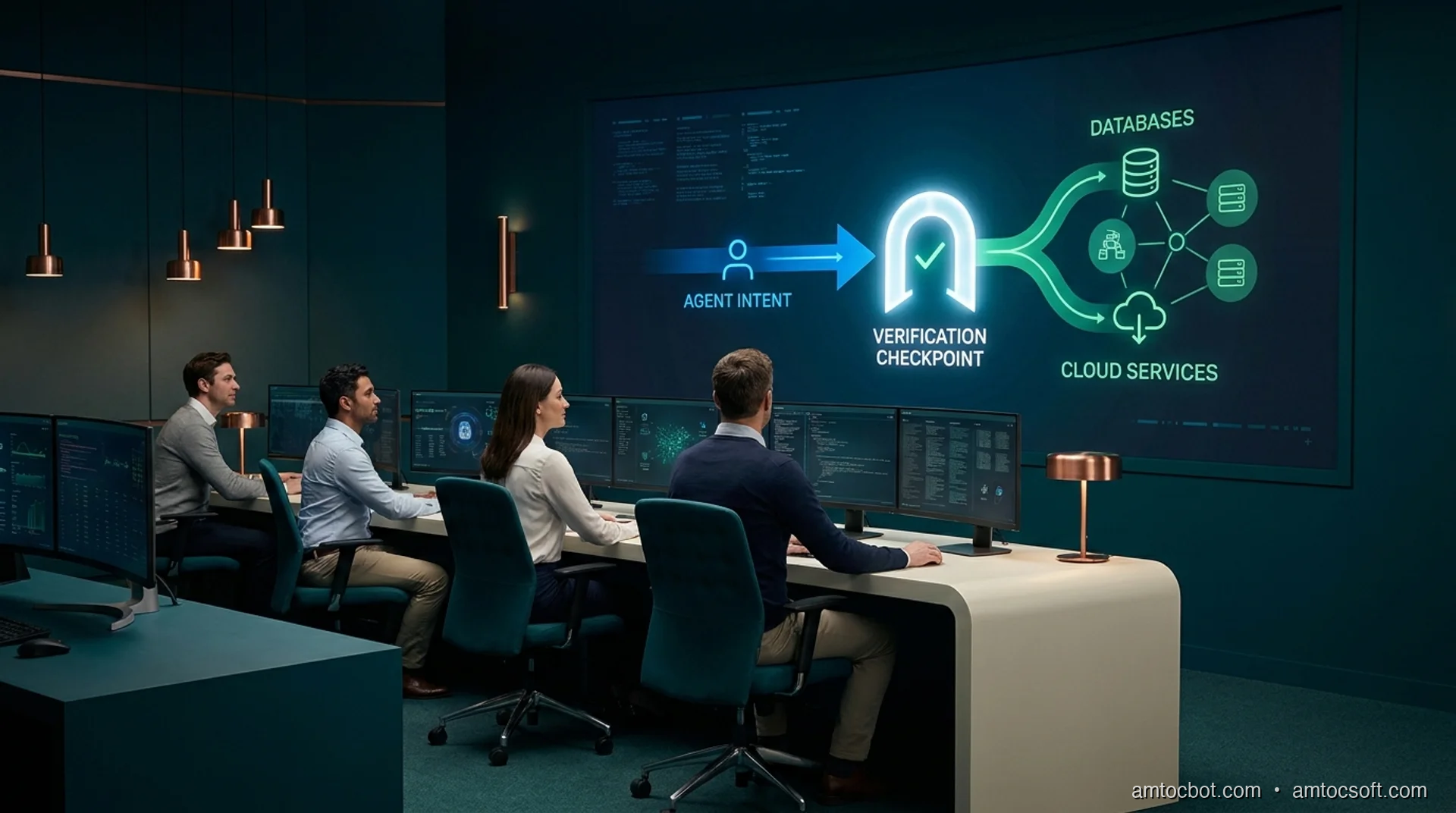
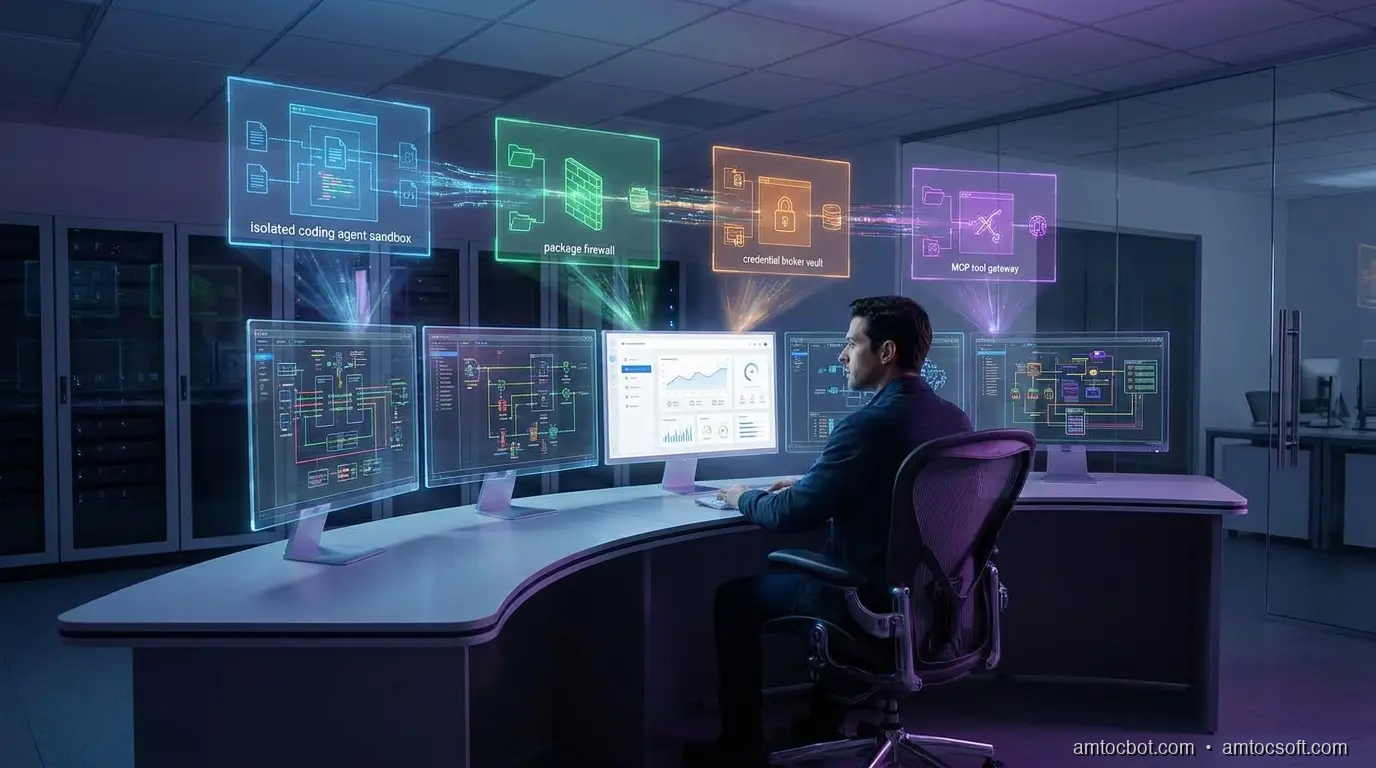
An operations team watching an AI agent tool gateway enforce policy before MCP calls reach production systems

Introduction

The first MCP failure that changed my mind about agent security was not dramatic. Nothing crashed. No alert fired. An internal assistant had a read-only database tool, and the tool was on the approved list. During a support investigation, the agent called it with a query broad enough to pull customer records from regions outside the ticket's scope. The server did exactly what its schema allowed. The model did exactly what its prompt requested. The policy failure lived in the quiet gap between those two facts.

I had reviewed the server package, checked the tool names, and verified that the connection used authentication. I had not asked the harder runtime question: should this agent, acting for this user, be allowed to invoke this tool with these arguments at this moment?

That question matters more after Trend Micro's May 2026 research sweep of 19,000 open-source MCP repositories. Trend Micro sampled 2,287 agent-flagged candidates, manually confirmed 93 exploitable cases, and estimated a point prevalence near 4.1 percent across the corpus (Trend Micro). A separate Trend Micro analysis of more than 19,000 MCP server source trees reported that 48 percent recommended secrets in .env files or plaintext JSON configuration (Trend Micro).

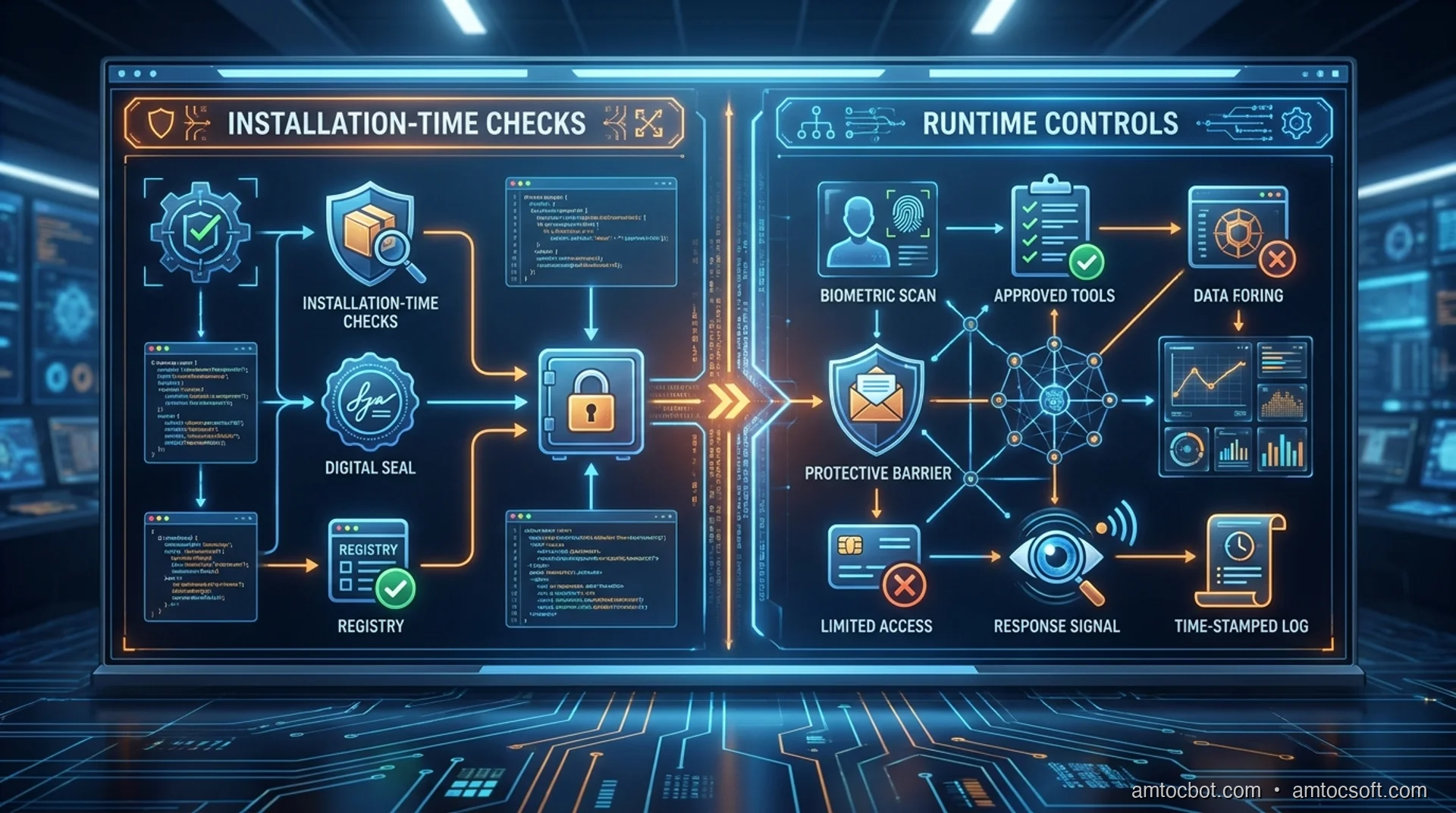
Those numbers do not mean every MCP server is unsafe. They mean installation-time trust is not enough. A signed package can still expose an over-broad tool. An authenticated server can still accept dangerous arguments. A clean schema can still return poisoned context. Runtime governance is the missing layer between an agent's intent and a tool server's execution.

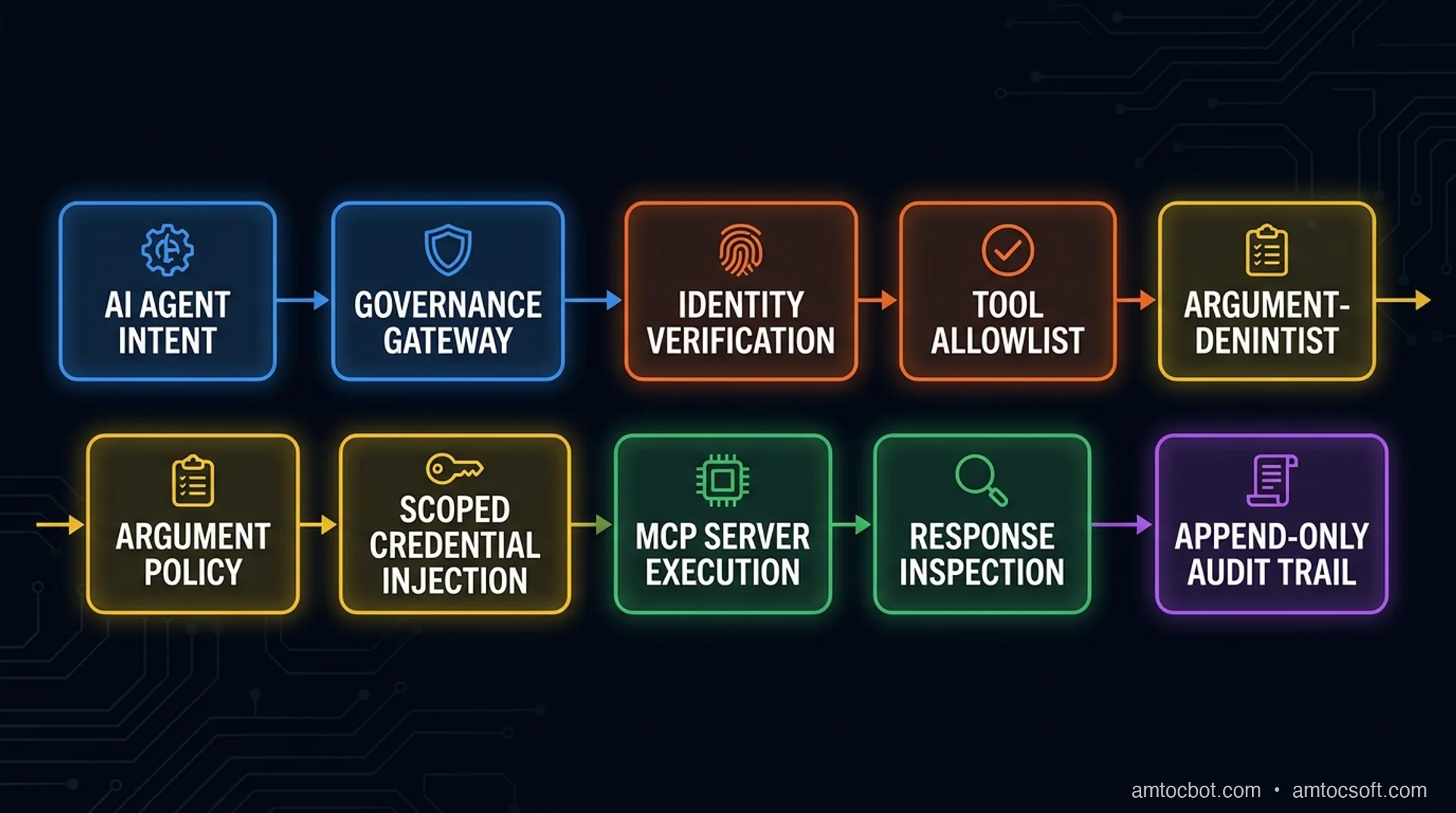
This guide builds that layer. The implementation is deliberately small: an allowlist, argument policy, scoped identity, response inspection, circuit breaker, approval boundary, and append-only audit trail. The point is not to invent a new protocol. The point is to put a deterministic control plane around the protocol you already use.

The Problem: MCP Standardizes Execution, Not Your Risk Appetite

MCP solves a valuable interoperability problem. A client discovers tools from a server, the model chooses a tool, the client serializes a request, and the server executes it. That common path is why MCP adoption moved quickly across coding agents, databases, file systems, and third-party services.

The protocol does not decide whether your production policy allows a particular action. Microsoft's April 2026 runtime-governance write-up states the gap plainly: MCP standardizes the execution surface without defining a built-in policy checkpoint before execution (Microsoft for Developers). The same article reports an internal red-team evaluation where prompt-only safety instructions produced a 26.67 percent policy-violation rate across its benchmark. Instructions help, but they are not an authorization system.

The OWASP MCP Top 10 makes the failure modes concrete (OWASP):

Risk Production symptom Runtime control
Token exposure A tool receives or logs credentials it never needed Inject scoped credentials at execution time; redact logs
Scope creep A convenience tool gradually acquires administrative verbs Bind identity, tool, action, and resource scope
Tool poisoning A description or response carries adversarial instructions Scan definitions and inspect responses before model reuse
Command injection Untrusted text lands in shell, SQL, or API arguments Parse structured arguments; deny unsafe shapes
Missing telemetry Nobody can reconstruct why a sensitive call ran Emit immutable, correlated decision records
Shadow servers A developer adds an unreviewed endpoint Registry allowlist plus server identity verification

Supply-chain controls still matter. Verify manifests, pin versions, review dependencies, and scan packages. Blog 249 covered that boundary. Runtime governance solves the next problem: what happens after a trusted server is connected and a real agent starts calling it.

Architecture diagram showing agent intent passing through an MCP runtime governance gateway before approved tool calls reach servers
flowchart LR A[Agent proposes tool call] --> B[Governance gateway] B --> C{Server registered?} C -->|no| D[Deny and alert] C -->|yes| E{Tool and arguments allowed?} E -->|no| F[Deny or require approval] E -->|yes| G[Inject scoped credential] G --> H[MCP server executes] H --> I[Inspect response] I --> J[Return safe result to agent] B --> K[Append audit record] F --> K I --> K

Architecture: Put Policy Between Intent and Execution

The gateway belongs in the client-side execution path or immediately in front of the MCP servers. It should run after the model proposes a call and before any privileged side effect occurs. That placement is load-bearing: the gateway sees the concrete tool name, concrete arguments, acting identity, target server, and request context.

There are three common approaches:

Approach What it gets right Where it fails
Trust the connected server Low friction for demos No deterministic per-call decision
Sandbox every server Reduces host blast radius Does not stop valid-but-dangerous API calls
Runtime policy gateway plus sandboxing Evaluates intent, identity, arguments, and outcome Requires explicit policy ownership

The third approach is the production default. Sandboxing contains server-side compromise. Runtime policy prevents an agent from using an otherwise healthy server in a way your organization did not authorize.

OpenAI describes a parallel operational pattern for Codex: bounded sandbox execution, approvals for higher-risk actions, managed network policies, keyring-backed credentials, and OpenTelemetry logs for prompts, tool decisions, tool results, MCP usage, and network allow-or-deny events (OpenAI). The exact implementation differs by platform, but the control-plane shape is the same.

flowchart TD A[Tool call arrives] --> B{Read-only and scoped?} B -->|yes| C{Arguments pass policy?} B -->|no| D{Approved change window?} D -->|no| E[Require human approval] D -->|yes| C C -->|no| F[Deny with policy reason] C -->|yes| G{Repeated identical failure?} G -->|yes| H[Trip circuit breaker] G -->|no| I[Execute with short-lived credential]

Implementation: A Small Deterministic Gateway

The gateway below is intentionally ordinary Python. The policy data is explicit. The decision result is structured. Every request receives a correlation ID. A sensitive tool can require approval even if it appears on the allowlist.

from __future__ import annotations

from dataclasses import asdict, dataclass
from hashlib import sha256
from json import dumps
from time import time
from typing import Any
from uuid import uuid4


@dataclass(frozen=True)
class ToolCall:
    server: str
    tool: str
    args: dict[str, Any]
    actor: str
    approved: bool = False


@dataclass(frozen=True)
class Decision:
    allowed: bool
    reason: str
    request_id: str


POLICY = {
    "inventory-mcp": {
        "inventory.lookup": {"effect": "read"},
        "inventory.adjust": {"effect": "write", "approval": True},
    },
    "support-mcp": {
        "ticket.get": {"effect": "read"},
    },
}


def stable_hash(value: Any) -> str:
    return sha256(dumps(value, sort_keys=True).encode()).hexdigest()[:16]


def validate_args(call: ToolCall) -> str | None:
    if call.tool == "inventory.lookup":
        region = call.args.get("region")
        if region not in {"us-east", "us-west"}:
            return "region must be explicitly scoped"
        if int(call.args.get("limit", 0)) > 100:
            return "limit exceeds read policy"
    if call.tool == "inventory.adjust":
        delta = int(call.args.get("delta", 0))
        if abs(delta) > 10:
            return "inventory delta exceeds approval envelope"
    return None


def decide(call: ToolCall) -> Decision:
    request_id = str(uuid4())
    server = POLICY.get(call.server)
    if not server:
        return Decision(False, "server is not registered", request_id)
    rule = server.get(call.tool)
    if not rule:
        return Decision(False, "tool is not allowed", request_id)
    if rule.get("approval") and not call.approved:
        return Decision(False, "human approval required", request_id)
    if reason := validate_args(call):
        return Decision(False, reason, request_id)
    return Decision(True, "policy passed", request_id)


def audit(call: ToolCall, decision: Decision) -> None:
    record = {
        "ts": round(time(), 3),
        "request_id": decision.request_id,
        "actor": call.actor,
        "server": call.server,
        "tool": call.tool,
        "args_hash": stable_hash(call.args),
        "allowed": decision.allowed,
        "reason": decision.reason,
    }
    print(dumps(record, sort_keys=True))


def govern(call: ToolCall) -> Decision:
    decision = decide(call)
    audit(call, decision)
    return decision

Run three calls through the policy:

calls = [
    ToolCall("inventory-mcp", "inventory.lookup",
             {"region": "us-east", "limit": 25}, "agent:triage"),
    ToolCall("inventory-mcp", "inventory.lookup",
             {"region": "*", "limit": 10000}, "agent:triage"),
    ToolCall("inventory-mcp", "inventory.adjust",
             {"sku": "A-17", "delta": -2}, "agent:triage"),
]

for call in calls:
    result = govern(call)
    print(result.allowed, result.reason)

The output is predictable:

{"actor":"agent:triage","allowed":true,"reason":"policy passed","server":"inventory-mcp","tool":"inventory.lookup",...}
True policy passed
{"actor":"agent:triage","allowed":false,"reason":"region must be explicitly scoped","server":"inventory-mcp","tool":"inventory.lookup",...}
False region must be explicitly scoped
{"actor":"agent:triage","allowed":false,"reason":"human approval required","server":"inventory-mcp","tool":"inventory.adjust",...}
False human approval required

The gateway does not ask the model whether the call is safe. It asks deterministic code. This matters because a model can explain a dangerous call convincingly. Policy code should remain boring enough that an on-call engineer can understand it under pressure.

The Gotcha: An Allowlisted Tool Can Still Be Dangerous

The incident from the introduction survived our first fix. We created an allowlist, registered the server, and permitted only customer.search. The next test still pulled too much data.

The tool was read-only, but its arguments were broad:

{
  "tool": "customer.search",
  "arguments": {
    "region": "*",
    "fields": ["name", "email", "billing_address", "support_notes"],
    "limit": 50000
  }
}

That request did not violate a tool-name allowlist. It violated the policy we had failed to encode: support agents should see one ticket's customer record, a narrow field projection, and a bounded row count. We had authorized the verb while ignoring the object.

The repair was to validate argument semantics:

def validate_customer_search(args: dict) -> str | None:
    if args.get("region") == "*":
        return "wildcard region is forbidden"
    if int(args.get("limit", 0)) > 25:
        return "row limit exceeds support policy"
    forbidden = {"billing_address", "payment_token", "internal_notes"}
    requested = set(args.get("fields", []))
    if requested & forbidden:
        return "field projection includes restricted data"
    return None

After the change, our local policy test produced:

$ python -m pytest tests/test_gateway.py -q
8 passed in 0.06s

$ python demo.py
DENY customer.search: wildcard region is forbidden
DENY customer.search: row limit exceeds support policy
ALLOW customer.search: region=us-east limit=1 fields=[name,support_notes]

The broader lesson is useful beyond MCP. Authorization is not only a mapping from identity to endpoint. Production authorization is a mapping from identity to action, resource, argument envelope, time, and approval state.

Identity and Credentials: Scope Them at the Boundary

The MCP authorization specification defines authorization for HTTP transports using OAuth 2.1 patterns (MCP specification). The MCP tutorial explains that authorization protects sensitive resources and operations exposed by MCP servers and uses standard discovery metadata for OAuth flows (MCP documentation).

Use that transport authentication, then add workload policy at the gateway:

  1. Bind the human user and agent identity to each request.
  2. Mint or retrieve the shortest-lived credential the tool needs.
  3. Limit audience, scopes, resources, and network origin.
  4. Never put raw credentials into model context.
  5. Redact tokens from logs while preserving a credential fingerprint for correlation.

OpenAI's Codex deployment guidance is a useful concrete example: CLI and MCP OAuth credentials are stored in the secure OS keyring, and MCP server usage can be exported as OpenTelemetry events (OpenAI). OWASP's MCP01 guidance similarly recommends short-lived, scoped credentials and secret-scanning controls (OWASP).

sequenceDiagram participant A as Agent participant G as Governance Gateway participant I as Identity Provider participant M as MCP Server A->>G: propose tool call with user context G->>G: evaluate tool and argument policy G->>I: request short-lived scoped token I-->>G: token for approved audience and scope G->>M: execute tool call with scoped token M-->>G: tool response G->>G: redact, inspect, audit G-->>A: safe response

Response Inspection: Treat Tool Output as Untrusted Input

The request path is half the boundary. Tool output flows back into model context, where text can influence the agent's next action. OWASP describes MCP tool poisoning as an indirect prompt-injection attack where a malicious tool response lands in the context window and is treated as trusted input (OWASP).

Response inspection should be conservative:

  • Reject unexpected schema shapes.
  • Redact secrets before any result enters model context.
  • Flag instruction-like text returned from tools that should return data.
  • Cap payload size.
  • Preserve a hash of the original response for forensic review.
  • Separate data from instructions in the host application.

Do not promise that a regex solves prompt injection. It does not. A response scanner is a tripwire and a sanitization layer, not a proof of safety. The stronger pattern is architectural: return typed data to a host that controls how the model sees it, and require policy checks again before the next action.

Circuit Breakers and Sequence Controls

Per-call policy is necessary, but a sequence of individually valid calls can still become harmful. An agent can enumerate resources one page at a time, retry a failing write until a downstream service collapses, or combine low-risk reads into an unexpected data export.

Start with two controls:

from collections import Counter

failures: Counter[str] = Counter()

def repeated_failure(tool: str, args: dict, error: str) -> bool:
    key = stable_hash({"tool": tool, "args": args, "error": error})
    failures[key] += 1
    return failures[key] >= 3

def breadth_exceeded(history: list[str]) -> bool:
    sensitive = {name for name in history if name.startswith("admin.")}
    return len(sensitive) > 4

The first stops identical retry spirals. The second catches breadth: too many distinct sensitive actions in a short window. Blog 260 covered the general circuit-breaker pattern. MCP governance gives it a specific enforcement point.

Microsoft's AGT article is candid about this boundary: the preview governs individual tool calls, while workflow-level policy for sequences is still a roadmap item (Microsoft for Developers). Treat that limitation as a design requirement in your own gateway.

Comparison and Rollout Plan

Comparison visual showing installation-time MCP checks beside runtime governance controls
Control Installation time Connection time Every call Every response
Dependency scan Yes No No No
Manifest signature Yes Yes Optional pin check No
Server identity No Yes Yes No
Tool allowlist No Yes Yes No
Argument policy No No Yes No
Scoped credential injection No No Yes No
Response inspection No No No Yes
Immutable audit record No Yes Yes Yes

Roll out in four passes:

  1. Observe. Log server, tool, actor, argument hash, result hash, latency, and outcome. Redact secrets before storage.
  2. Deny unknown servers. Require registry membership and identity verification.
  3. Enforce argument envelopes. Start with destructive tools, broad reads, shell execution, cloud administration, and credential access.
  4. Add approval and sequence policy. Require review for writes and alert on repeated failures or suspicious action breadth.

The observe-first pass matters. A policy written without real traffic usually blocks harmless workflows and misses dangerous argument shapes. Collect enough structured traces to understand the normal envelope, then enforce it deliberately.

Production Considerations

Keep the gateway small and observable. A control plane that nobody can debug will become a bypass target the first time it slows a release.

Measure:

  • Allow, deny, and approval rates by tool.
  • Policy-evaluation latency.
  • Repeated-failure trips.
  • Response redactions.
  • Shadow-server attempts.
  • Scope-expansion requests.
  • Audit-log delivery health.

Microsoft reports sub-millisecond policy-evaluation overhead for typical AGT rule sets in its internal microbenchmarks (Microsoft for Developers). Your numbers will depend on policy engine, network topology, and logging path, so benchmark your own gateway and alert on regressions.

Fail closed for destructive actions. For low-risk reads, choose consciously whether a telemetry outage should fail open, fail closed, or queue work. Keep emergency kill switches outside the agent's own tool surface. Store audit records in an append-only destination and include schema versions so you can reconstruct which contract governed a historical invocation.

Policy Ownership: Make the Boundary Operable

A gateway is easy to demo and surprisingly easy to neglect. The hard production question is who owns each rule after the first month. If every policy change requires a security architect, teams route around the gateway. If every application team can loosen policy silently, the gateway becomes decorative.

I use a split ownership model:

Policy layer Primary owner Review requirement
Server registry and identity Platform security Security review for additions
Tool discovery allowlist Platform team Application-owner approval
Argument envelope Application owner Code review plus policy tests
Credential scope Identity team Security review for expansion
Human-approval triggers Risk owner Product and security sign-off
Response inspection Platform security Threat-model review
Audit retention Compliance or SRE Retention-policy approval

This division matters because the application owner understands semantic risk. A platform team can recognize that inventory.adjust writes state. It may not know that a delta above ten units requires a separate warehouse workflow, or that reading support notes across regions creates a data-residency problem. The platform provides the enforcement mechanism. The application owner defines the safe envelope.

Policy changes should travel through the same path as code. Require review, preserve diffs, run contract tests, and attach a reason. An emergency override should expire automatically. If an engineer must remember to remove it on Friday afternoon, assume it will still exist Monday morning.

Keep the rule language narrow at first. A YAML file or plain Python policy table is often better than a powerful general-purpose DSL when the deployment is new. You want on-call engineers to answer three questions quickly:

  1. Which rule denied the call?
  2. What request shape would pass?
  3. Who can approve a temporary exception?

Complex policy engines become valuable when you need shared libraries, formal decision traces, or organization-wide reuse. Do not start there solely because the policy language looks sophisticated. Start with the smallest representation that makes dangerous actions explicit and testable.

Audit Records: Capture Enough Context Without Capturing Secrets

The audit trail is not a debug print. It is the evidence surface for incident response, compliance review, and policy tuning. OWASP's MCP08 guidance calls out the need for structured, centralized activity logging and warns that missing telemetry blocks forensic analysis (OWASP).

Each tool-call record should include:

Field Why it exists
Request ID and parent trace ID Reconstruct the agent workflow
User, agent, and workload identity Identify the acting principal
Server identity and manifest digest Bind execution to the discovered server version
Tool name and schema version Explain the invoked contract
Argument hash and redacted summary Investigate shape without storing secrets
Policy version and decision reason Explain why execution was allowed or blocked
Approval identity and expiry Audit sensitive exceptions
Credential fingerprint and audience Correlate scope without logging the token
Response hash and redaction count Track output inspection
Duration and outcome Tune operations and detect failure spirals

The redacted summary deserves care. Hashing the full argument object protects raw values, but a hash alone is not enough during an incident. Store a deliberately limited structural summary: field names, row-limit bucket, resource category, region, and whether restricted fields were requested. Do not store free-form prompt text by default. Do not store bearer tokens at all. Preserve the original payload only in a tightly controlled forensic path if your risk model genuinely requires it.

The useful test is simple: can an incident responder distinguish a normal one-record support lookup from a wildcard export attempt without opening raw customer data? If not, improve the summary schema. If the summary itself contains customer secrets, reduce it.

OpenTelemetry is a natural transport because it keeps agent events close to the rest of your operational traces. Emit a span or structured log around the policy decision, attach the request ID to the downstream call, and alert when audit delivery fails. OpenAI's Codex deployment uses OpenTelemetry export for tool decisions, tool results, MCP usage, and network-policy events, which is the same correlation shape a production MCP gateway needs (OpenAI).

Failure Handling: Decide What Happens When the Gateway Is Sick

The gateway is now part of the critical path. Treat it like one.

There are four failures to design before rollout:

Policy service unavailable

For destructive tools, deny or queue the call. Do not bypass policy because the policy service is down. For narrow read-only tools, a cached last-known-good decision may be acceptable if the cache binds server digest, tool, identity scope, argument envelope, and a short expiry. Document that exception instead of letting it emerge during an outage.

Identity provider unavailable

Do not fall back to a shared static credential. Queue work or require the operator to retry after recovery. Static fallback credentials quietly become the most privileged path in the system because they outlive every intended boundary.

Audit sink unavailable

Buffer records locally with bounded storage and alert immediately. For destructive calls, decide whether missing durable audit delivery should halt execution. Regulated workflows often need a fail-closed rule. Low-risk reads may tolerate a bounded buffer. Either way, make the behavior explicit and test it.

Response inspector timeout

Do not pass an uninspected response into model context merely because inspection exceeded its latency budget. Return a typed failure, quarantine the payload for review, and let the agent choose a safe recovery path. The agent may retry a different source, ask for approval, or stop.

flowchart TD A[Gateway dependency fails] --> B{Destructive action?} B -->|yes| C[Fail closed or queue] B -->|no| D{Valid short-lived cached decision?} D -->|yes| E[Allow narrow read and audit locally] D -->|no| F[Return typed retryable failure] C --> G[Alert operator] E --> G F --> G

Exercise these paths in a staging environment. Disable the policy backend. Rotate the signing key. Return an oversized response. Break audit delivery. Let an agent hit the same denied call repeatedly. The first time you observe these behaviors should not be during an incident.

Testing the Boundary

Policy tests should read like security requirements. Keep a compact suite beside each policy package:

def test_wildcard_region_is_denied():
    call = ToolCall(
        "inventory-mcp",
        "inventory.lookup",
        {"region": "*", "limit": 25},
        "agent:triage",
    )
    assert govern(call).allowed is False


def test_write_requires_approval():
    call = ToolCall(
        "inventory-mcp",
        "inventory.adjust",
        {"sku": "A-17", "delta": -2},
        "agent:triage",
    )
    assert govern(call).reason == "human approval required"

Add adversarial fixtures for every argument parser. Test wildcard values, negative limits, empty resource IDs, encoded shell separators, oversized payloads, unexpected fields, and schema-version drift. Then test sequences: many distinct sensitive reads, repeated identical failures, approval reuse after expiry, and an agent switching servers mid-workflow.

The test suite is also a communication artifact. An application owner can review a dozen explicit examples faster than a dense policy document. When a requirement changes, update the test first, then change the rule. That keeps security policy close to the behavior engineers can observe.

Finally, replay real traces against policy updates before rollout. A deny rule that blocks an existing workflow should be visible in staging. An allow rule that unexpectedly widens access should be visible in the diff. Runtime governance works best when teams treat policy evolution as engineering work, not as a one-time security checklist.

A Practical Migration Runbook

If you already have MCP servers in production, do not attempt a single cutover where every call becomes governed overnight. The safer path is to move one tool family at a time while preserving evidence about what changed.

Start with inventory. List every MCP server your agents can reach, including developer-local servers, staging endpoints, experimental connectors, and servers configured through project files. Record owner, repository, deployment environment, transport, authentication mode, exposed tools, credential source, and whether the server can cause side effects. The shadow-server pass is usually revealing. A platform team may know about the official database connector and miss the local helper that a team added during an incident.

Then classify tools into four rings:

Ring Typical capability Default runtime decision
0 Static documentation and public metadata Allow with logging
1 Narrow internal reads Allow with argument validation
2 Broad reads or bounded writes Require stronger scope and conditional approval
3 Destructive actions, credentials, deployments, identity changes Deny by default; explicit approval and audit required

Do not classify only by tool name. A database query tool can move from Ring 1 to Ring 3 depending on accessible tables, row limits, export options, and credential scope. A file reader can be low risk inside a documentation folder and high risk when its root is a developer home directory. The ring belongs to the effective capability, not the marketing label.

Run the gateway in observe mode for a bounded period. During that window, every call receives the policy decision it would have received under enforcement, but the gateway does not block normal traffic. Review the would-deny records daily. Separate legitimate workflows from accidental breadth. Tighten arguments where a tool is more general than the workflow needs. Fix credentials where one token spans too many systems.

Promote enforcement in this order:

  1. Unknown server denial.
  2. Ring 3 approval requirements.
  3. Credential redaction and scoped injection.
  4. Destructive-argument denial.
  5. Broad-read limits.
  6. Response-shape validation.
  7. Sequence alerts and circuit breakers.

This order catches the highest-impact failures early without turning the first rollout into an organization-wide productivity outage. It also creates a useful feedback loop: every enforcement phase produces traces that improve the next phase.

Keep an exception register. Each temporary bypass should name an owner, reason, affected tool, exact widened scope, approval identity, creation time, and automatic expiration. Review active exceptions weekly. If a bypass survives repeated renewals, treat it as a missing product requirement and redesign the policy or the tool. Permanent emergency flags are policy debt with a friendly name.

Finally, rehearse revocation. Pick a test server, mark its identity as compromised, and verify that new calls stop. Revoke a credential and confirm that the gateway does not reuse a cached token. Change a schema digest and verify that the client requires revalidation. Search the audit store for the affected server digest and reconstruct the call history. A control plane is only credible if you can use it while the system is under pressure.

The migration is complete when teams can answer three questions without guesswork:

  1. Which MCP servers can each agent reach?
  2. Which calls require approval or denial, including argument boundaries?
  3. Can an incident responder reconstruct what happened without exposing secrets?

If any answer is unclear, keep the gateway in the rollout plan. The missing clarity is exactly the risk runtime governance is meant to remove.

Conclusion

MCP made tool integration easier. That is exactly why the governance boundary matters. Once an agent can discover and call real systems, server trust is only the starting point.

The production question is not whether the model usually behaves. It is whether every meaningful side effect passes a deterministic checkpoint that understands identity, tool, arguments, scope, approval state, recent history, and response shape.

Start with the smallest useful gateway. Deny unknown servers. Validate arguments. Mint scoped credentials at the boundary. Inspect responses before they re-enter model context. Emit audit records you can replay during an incident. Then add sequence policy as your traces expose the normal shape of real work.

That is how you turn MCP from a convenient execution surface into a governed one.


Get the next one

Each week I send a short engineering note with one production failure, the debugging path, and companion code from the latest deep-dive. It is free, brief, and easy to leave.

👉 Join the free weekly note

If this saved you a governance incident, you can support the work here: Buy Me a Coffee.

Reader challenge: try mapping the runtime governance checklist above to one MCP server you already use. Reply to the email or comment with the first missing gate you find.

Sources

About the Author

Toc Am

Founder of AmtocSoft. Writing practical deep-dives on AI engineering, cloud architecture, and developer tooling. Previously built backend systems at scale. Reviews every post published under this byline.

LinkedIn X / Twitter

Published: 2026-06-03 · Updated: 2026-06-17 · Written with AI assistance, reviewed by Toc Am.

Get These In Your Inbox

Weekly deep-dives on AI engineering, no fluff. Join the newsletter →

Subscribe (free)

Or grab the book ($39, ~100 pages) · Buy me a coffee

Buy Me a Coffee · 🔔 YouTube · 💼 LinkedIn · 🐦 X/Twitter
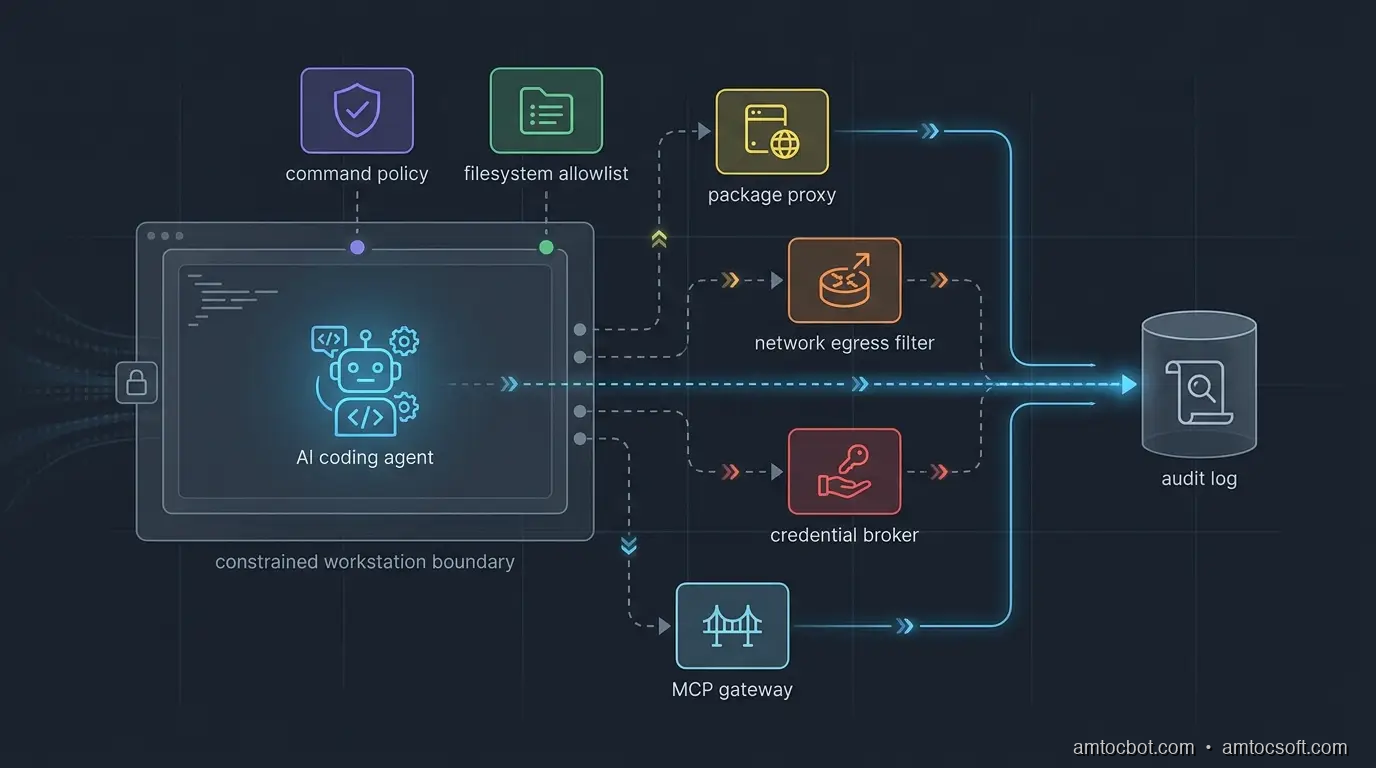
Attention Is All You Need, Explained Simply

We published a plain-language walkthrough of the 2017 transformer paper — queries, keys, values, multi-head attention, and why no-recurrence...